





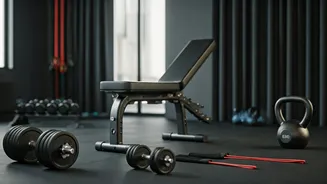



Rethinking the Classic Split
For decades, the prevailing wisdom in many gyms has been to dedicate entire workouts to specific muscle groups: chest on Monday, back on Tuesday, and so on. This approach, known as a body-part split, allows for high volume and focus on individual muscles.
[21] However, it often requires five or six days a week in the gym to ensure every muscle is hit. [11] For many people with busy schedules, this commitment is simply not practical. Miss a day, and an entire muscle group goes untrained for a week. This is where the logic of full-body training presents a compelling alternative.
The Power of Higher Frequency
The key advantage of full-body workouts lies in training frequency. When you lift weights, you trigger a process called muscle protein synthesis (MPS), which is the engine for muscle growth. [19] Research shows that this elevated state of muscle building typically lasts for about 36 to 48 hours after a workout. [8, 19] With a traditional split, you might train your chest on Monday, and it won't be stimulated again until the following Monday. This leaves five full days where the growth signal is dormant. [19] By training your whole body three times a week, you can stimulate each major muscle group every 48 hours, keeping your body in a more consistent muscle-building state. [14, 19] This higher frequency has been shown to be superior for hypertrophy (muscle growth) when weekly training volume is equal. [19]
Unmatched Time Efficiency
One of the most significant real-world benefits of full-body sessions is their efficiency. Because you're hitting all major muscle groups in a single session, you don't need to be in the gym as often. [2, 12] Two to three well-structured full-body workouts per week can deliver incredible results. [1, 4, 14] This approach is also more flexible. If life gets in the way and you have to skip a session, it's not a disaster; you'll have only missed one-third of your weekly volume for each muscle, rather than neglecting an entire body part. [1, 11] These workouts are often built around compound exercises—like squats, deadlifts, and presses—that work multiple muscles at once, giving you the most 'bang for your buck' in terms of time and effort. [6, 13, 21]
Metabolic and Hormonal Advantages
Engaging large muscle groups from both your upper and lower body in a single workout creates a significant metabolic demand. [5] This leads to a higher calorie burn during and after the workout compared to isolating smaller muscles. [5, 11] Furthermore, intense resistance training, particularly using compound movements that recruit a lot of muscle mass, stimulates a robust hormonal response. This includes an increase in growth hormone and testosterone, both of which are crucial for muscle repair, growth, and fat metabolism. [26, 27] One study found that a resistance-based workout like BodyPump produced a 69% greater increase in growth hormone compared to a calorie-matched cardio session. [29]
Who Is It For?
Full-body training is remarkably versatile. It's often recommended for beginners because the frequent repetition of foundational movements helps to master proper form and build neuromuscular connections faster. [6, 15, 22] However, its benefits don't stop there. It's ideal for people with limited time who can only make it to the gym two or three times a week. [1, 11] It's also excellent for fat loss goals, due to the high energy expenditure. [15] Even advanced lifters can benefit from incorporating full-body sessions to break through plateaus, improve recovery, or maintain muscle mass during a busy period. [13, 20]
How to Structure Your Session
A well-designed full-body workout doesn't have to be complicated. The goal is to choose one exercise for each major movement pattern to ensure a balanced physique. A simple and effective template for a three-day-a-week plan could look like this: * **Squat movement:** (e.g., Goblet Squats, Barbell Back Squats) [10] * **Hinge movement:** (e.g., Romanian Deadlifts, Good Mornings) [10] * **Push movement:** (e.g., Bench Press, Push-ups) [10] * **Pull movement:** (e.g., Bent-Over Rows, Pull-ups) [10] * **Optional:** A shoulder-specific press and a core exercise. [7] Aim for 2-4 sets per exercise in the 8-12 rep range for muscle growth. [7] Remember to allow at least one day of rest between sessions to allow for adequate recovery. [10, 14]