







What Are AI Agents, Exactly?
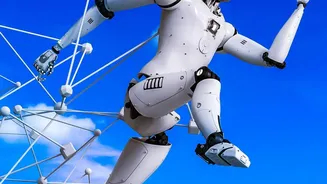
Forget the chatbots you prompt for answers. An AI agent is a different class of technology altogether. Think of it less like a tool and more like a digital employee that you assign goals to. An AI agent is software that can perceive its digital environment,
reason about an objective, create a plan, and then execute multi-step tasks to achieve that goal with limited human supervision. While an AI assistant like a chatbot responds to your specific commands, an autonomous agent takes a goal—like “plan my business trip to Mumbai” or “compile the quarterly sales report”—and figures out the necessary steps on its own. It can access tools, use different applications, and adapt its plan based on new information, much like a human would.
Your New Automated Teammate
The core difference AI agents bring to the office is the shift from task assistance to workflow ownership. Instead of you manually booking flights, then a hotel, then adding it to your calendar, you could simply give an agent the goal. The agent would then interact with booking websites, cross-reference your calendar for availability, and handle the entire process from start to finish. In an office setting, these agents could take over entire recurring processes. For instance, an HR agent could handle the initial stages of recruitment, from screening resumes to scheduling first-round interviews. A marketing agent could analyze campaign performance data, identify underperforming ads, and draft a report with recommendations for the team to review. This moves AI from being a passive tool to an active participant in getting work done.
More Time for Strategy, Less for To-Do Lists
The primary promise of AI agents is not to make humans obsolete, but to free them from repetitive, administrative work. By automating complex but routine workflows, these agents could give employees back significant portions of their day. This reclaimed time can be redirected toward tasks that require uniquely human skills: strategic thinking, creative problem-solving, building client relationships, and team leadership. Instead of spending hours gathering data and creating slides, a manager could focus on interpreting the agent-generated report and deciding on the next course of action. Developers could be freed from routine debugging to focus on system architecture, while salespeople can focus on closing deals instead of manual data entry into a CRM.
The Rise of the AI Manager
This shift will also change the nature of many jobs. As AI agents become more prevalent, the role of the human worker will evolve from a doer to a director. Employees will become managers of AI agents, responsible for setting clear goals, supervising their work, and evaluating their output. The most valuable skills in an agent-assisted workplace will include the ability to break down complex work into delegable goals, ensure the quality and accuracy of AI-generated work, and govern these systems to operate safely and within company policy. This doesn't necessarily mean everyone needs to become a coder, but it does mean developing a new kind of digital literacy focused on collaboration with autonomous systems.
The Challenges Ahead
The transition won't be without its hurdles. For one, deploying autonomous agents requires careful governance to manage risks like flawed assumptions or data privacy breaches. An error made by an agent early in a process could cascade if not caught. Furthermore, while many jobs will be augmented, tasks that are highly repetitive are at risk of being fully automated, necessitating a focus on reskilling and workforce adaptation. Organizations will need to invest in training and redefine roles to ensure that human employees are prepared to work alongside their new digital colleagues, focusing on judgment and oversight rather than rote execution.