





First, What Are Prebiotics?
Before we dive into the food, let's clear up a common point of confusion. You've likely heard of probiotics—the live, beneficial bacteria found in foods like curd and other fermented items. Prebiotics are different. They are specific types of dietary
fibre that our bodies can't digest. Instead, they travel to the large intestine where they become the perfect food source, or 'fertilizer', for those friendly probiotic bacteria. Think of it this way: probiotics are the good bacteria, and prebiotics are the food that helps them thrive. This process is crucial for a healthy gut microbiome, which in turn supports everything from digestion and immunity to nutrient absorption.
The Power of Everyday Indian Ingredients
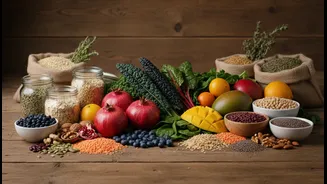
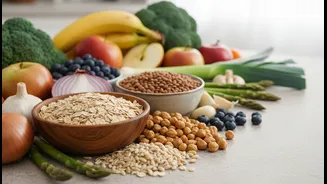
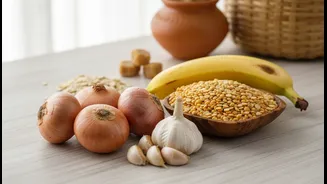
The good news is that traditional Indian cuisine is naturally rich in prebiotics. Many of the foundational ingredients used in our kitchens for centuries are prebiotic powerhouses. The most common and potent sources are garlic (lahsun) and onions (pyaaz). These ingredients contain prebiotic fibres like inulin and fructooligosaccharides (FOS) that selectively feed beneficial bacteria. Even when cooked, they provide significant benefits, though raw onions in salads or chutneys offer a stronger prebiotic punch. Lentils (dal), chickpeas (chana), and other legumes are also excellent sources, forming the cornerstone of both our protein intake and our gut health.
A Prebiotic Guide for Every Season
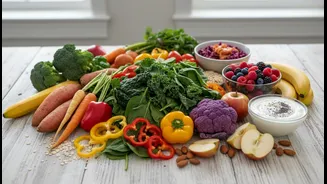
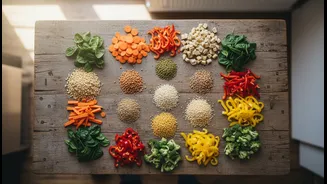
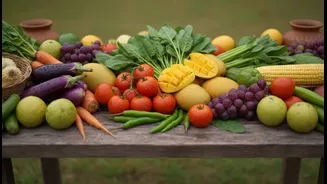
Eating with the seasons is not only more affordable and sustainable but also ensures a diverse intake of nutrients for your gut. During the hot summer months, slightly unripe bananas are fantastic sources of resistant starch, a potent prebiotic. As we move into the monsoon season, fruits like apples (eaten with the skin) and guavas provide pectin, another beneficial prebiotic fibre. The cooler winter months bring an abundance of root vegetables like carrots and beetroots, which can be easily incorporated into sabzis, dals, and salads to feed your gut. Leafy greens like spinach and methi, also abundant in winter, help your gut produce compounds that can reduce inflammation.
Beyond Fresh Produce: Year-Round Staples
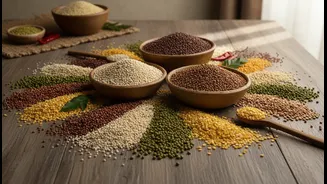
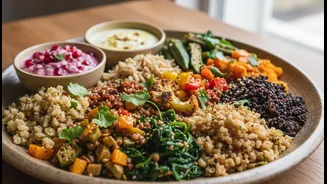
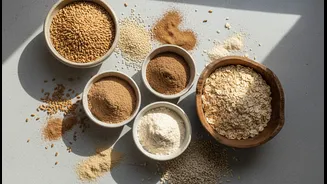
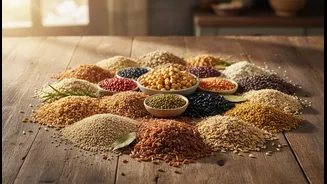
Your pantry holds even more affordable prebiotic options that are available all year. Whole grains, which were staples long before refined flours became popular, are excellent for gut health. Millets like ragi, jowar, and bajra, as well as barley (jau) and oats, contain prebiotic fibres like beta-glucan and resistant starch. These grains help support a diverse microbiome and release energy slowly. Even cooked and cooled rice develops resistant starch, making that bowl of leftover rice a simple gut-friendly food. Flaxseeds (alsi) are another great addition; when ground, they can be easily sprinkled over curd, chaas, or smoothies to boost your daily prebiotic intake.
Simple Ways to Boost Your Intake
Incorporating more prebiotics doesn't require a complete diet overhaul. Start by making small, consistent changes. Ensure the base of your curries and sabzis includes a generous amount of onion and garlic. Choose whole grain or millet rotis over refined flour options a few times a week. Snack on a slightly firm banana or an apple instead of packaged snacks. Including a variety of dals and legumes in your weekly meal plan is one of the easiest and most effective strategies. A simple bowl of moong dal, for example, is not just comfort food but also a fantastic way to nourish your gut microbes without causing bloating.