





The Wall of Math Anxiety
For countless students across India, subjects like mathematics, physics, and chemistry are defined by a wall of intimidating equations. In a classroom of forty or more, it’s impossible for a single teacher to provide personalised attention to everyone.
Some students grasp concepts quickly, while others need to hear an explanation three, four, or five different ways before it clicks. This gap often leads to what educators call 'math anxiety'—a feeling of tension and fear that interferes with a student's ability to solve problems. When students can't get help the moment they're stuck, they fall behind. This isn't a failure of the student or the teacher; it's a structural limitation of our traditional education model. The homework struggle is real, and for many, the only options are expensive private tutors or simply giving up.
More Than a Smarter Calculator
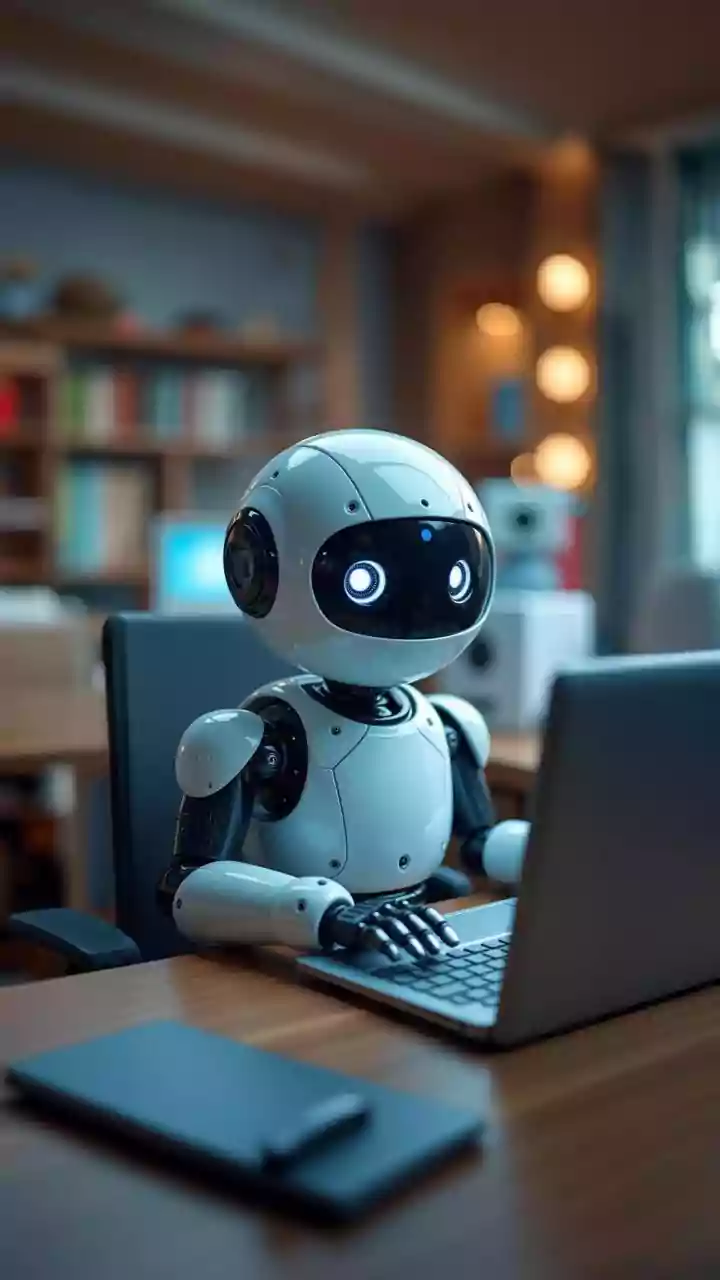
This is where interactive AI chat systems come in. Think of them not as a simple calculator that just spits out an answer, but as a Socratic guide. Tools like Khan Academy's Khanmigo, powered by models like GPT-4, are already demonstrating this potential. A student can upload a picture of a quadratic equation and ask, "I don't get this." Instead of just solving it, the AI can respond with, "Great question! Do you remember the quadratic formula? Let's start there." It can break down each step, explain the 'why' behind the 'what', and use analogies to clarify abstract concepts. If the student is still confused, they can ask, "Why do we complete the square?" or "Can you explain that in a simpler way?" The AI never gets tired, never judges, and can adapt its teaching style until the student truly understands. This isn't about cheating; it's about learning.
Democratising Personalised Learning
The most powerful argument for rolling out these systems is equity. High-quality, one-on-one tutoring has always been a privilege reserved for those who can afford it. It creates a significant advantage, widening the gap between students from different economic backgrounds. AI chat systems can level the playing field. With just a smartphone and an internet connection, any student—whether in a bustling metro city or a remote village—can access a world-class explanatory tool. This technology offers the promise of democratising education, ensuring that a student's potential in STEM is not limited by their access to resources. It provides a safe space to ask 'stupid' questions without fear of embarrassment in front of peers, fostering curiosity and genuine intellectual engagement.
Addressing the Legitimate Concerns
Of course, this proposal is not without its critics. The most common concern is that students will use these tools to simply get answers and cheat on their homework. This is a valid risk, but one that can be managed with thoughtful implementation. These systems should be framed as learning aids, not answer keys. Educators can design assignments that focus on the process and conceptual understanding rather than just the final answer. Another concern is the accuracy of AI, which can occasionally 'hallucinate' or provide incorrect information. While this is improving rapidly, it highlights the need for these tools to be used as a supplement to, not a replacement for, formal instruction. The human teacher remains the ultimate authority, guiding the curriculum and verifying understanding.
A Superpower for Teachers
Ultimately, interactive AI should be seen as a powerful tool for educators, not a threat to their profession. By offloading the repetitive, step-by-step explanations, AI frees up a teacher's valuable time. They can focus on more complex, creative, and critical aspects of teaching: leading inspiring classroom discussions, mentoring students, and providing targeted support to those who are struggling the most. Imagine a teacher being able to review a dashboard that shows which concepts their students are asking an AI about most frequently. This provides invaluable, real-time feedback, allowing them to adjust their lesson plans to address common points of confusion. In this model, technology doesn't replace the teacher; it empowers them.