



The Challenge of Urban Skies
The biggest obstacle for any aspiring urban astronomer is light pollution. The bright, ambient glow from streetlights, buildings, and vehicles creates a phenomenon known as 'sky-glow,' which washes out all but the brightest celestial objects. Where a rural
sky might reveal thousands of stars and the Milky Way's gentle streak, a city sky often presents a handful of stars and planets. This can make trying to identify constellations or spot celestial events a near-impossible task for the unaided eye, turning a potentially awe-inspiring experience into a frustrating one.
Your Pocket Planetarium
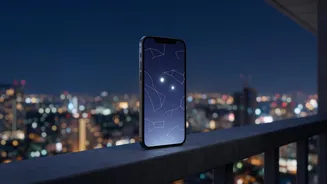
This is where stargazing apps become an essential tool. These applications use your smartphone's built-in GPS, compass, and gyroscope to know your exact location and the direction you're pointing your phone. They then generate an accurate, real-time map of the sky above you. The most powerful feature for city viewing is augmented reality (AR). By activating your phone's camera, the app overlays this celestial map onto your actual view, showing you precisely which stars, planets, and constellations are hidden behind the urban glow. Suddenly, the blank patch of sky above a high-rise building becomes a window into the cosmos.
Top Apps to Light Up Your Night
While many apps offer similar core functions, a few stand out for their features and user-friendliness. SkyView Lite is celebrated for its intuitive AR interface that makes it easy for beginners to simply point their phone at the sky and identify objects. Star Walk 2 is another excellent choice for newcomers, offering beautiful visuals, a calendar of astronomical events, and a 'Time Machine' feature to see the sky in the past or future. For those seeking deeper realism, Stellarium Mobile provides a vast database and highly accurate depictions of the night sky, making it a favorite among serious hobbyists.
More Than Just Identification
Modern stargazing apps go beyond simple star-naming. Many include detailed information and 3D models of celestial bodies, turning your viewing session into an educational journey. You can receive notifications for upcoming meteor showers, eclipses, or visible passes of the International Space Station (ISS) and other satellites. Some apps also feature a red-light mode, which tints the screen red to help preserve your night vision while you're observing. These features help you plan what to look for and understand the science and mythology behind what you're seeing.
Tips for the Best Urban Viewing
While an app is your best friend, a few extra steps can significantly improve your experience. Find the darkest possible spot available to you, like a park, a rooftop, or even a balcony shielded from direct streetlights. Turn off your house lights and allow your eyes at least 15-20 minutes to adjust to the darkness; this will help you see fainter objects. While apps can help you see 'through' the light pollution, checking for a clear, cloudless weather forecast is still crucial. For more advanced viewing of nebulae, some enthusiasts even use special light pollution filters with telescopes to enhance contrast.