



Decoding the SPF Number
First, let's clear up what SPF (Sun Protection Factor) actually means. The number primarily measures protection against UVB rays, the kind that cause sunburn. It's a multiplier for how much longer it would take your skin to burn compared to having no
protection. For example, SPF 30 theoretically lets you stay in the sun 30 times longer without burning. However, the protection isn't linear. SPF 30 blocks about 97% of UVB rays, while SPF 50 blocks 98%. That 1% difference might seem small, but no sunscreen, not even SPF 100, can block 100% of UV rays. Relying on a high number for all-day protection is a myth, as the product's effectiveness inevitably fades.
Why Your Sunscreen Stops Working
Several factors conspire to break down that protective barrier on your skin throughout the day. The active ingredients in sunscreen, whether chemical or mineral, degrade when they absorb or reflect UV radiation. This means the very act of doing its job wears it out. Furthermore, sunscreen doesn't just stay perfectly in place. It comes off when you sweat, swim, or towel off. Even simple friction from your clothes or touching your face can rub away the protective film. Over a couple of hours, that initial even layer becomes patchy and thin, leaving your skin vulnerable long before your day in the sun is over.
The Two-Hour Rule Is Not a Suggestion
This is why dermatologists and health organisations are united on their core recommendation: reapply sunscreen at least every two hours when outdoors. Think of it as maintaining your shield. Reapplication doesn't reset the clock, allowing you to spend more total time in the sun; it simply maintains the level of protection advertised on the bottle. Forgetting to reapply is a common reason people get sunburned despite using a high SPF. In fact, if you've been swimming or sweating heavily, you need to reapply even more frequently—often as soon as you towel off.
Are You Even Using Enough?
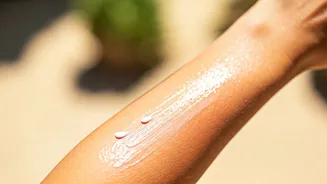
The second critical piece of the puzzle is quantity. The SPF rating on the bottle is based on a lab test that uses a much thicker layer than most people apply. To get the advertised protection, you need to use about two milligrams of product per square centimetre of skin. For most adults, this translates to roughly one ounce—or a full shot glass—to cover all exposed areas of the body. For your face and neck alone, the recommendation is about half a teaspoon, which can be easily measured using the two-finger rule (squeezing a line of sunscreen down your index and middle fingers). Applying too little can drastically reduce the effective SPF.
Make Reapplication a Habit
Making reapplication practical is key. If you're outdoors for an extended period, set a two-hour timer on your phone as a reminder. If you're wearing makeup, reapplying a lotion can be tricky. In this case, consider options like powder sunscreens or SPF sprays for touch-ups, though be mindful that achieving full, even coverage with these can be more difficult. Some dermatologists even suggest a double application in the morning—applying one layer, waiting 15-20 minutes for it to absorb, and then applying a second to cover any spots you missed the first time. No matter the method, consistency is what provides the most reliable defence.