



Light's Universal Speed Limit
Everything in the universe is bound by rules, and one of the most fundamental is the speed of light. Light travels incredibly fast—about 300,000 kilometres per second. At that speed, it could circle the Earth more than seven times in a single second. It
feels instantaneous, and for everything in our daily lives, it might as well be. When you flip a switch, the light bulb seems to illuminate the room instantly. But over the vast, almost incomprehensible distances of space, that 'instant' becomes a long, long journey. Nothing with mass can travel faster than light, making it the ultimate cosmic speed limit. This single fact is the key to understanding why the night sky is not a snapshot of the present, but a rich, layered portrait of the past.
The Cosmic Measuring Stick
Because distances in space are so enormous, measuring them in kilometres is impractical. Instead, astronomers use a unit called a 'light-year'. This is often mistaken for a measure of time, but it’s a measure of distance. A light-year is the distance that light travels in one year. Given light's speed, this equates to roughly 9.5 trillion kilometres. So, when we say a star is 10 light-years away, we mean it is 95 trillion kilometres from Earth. More importantly, it means the light we see from that star tonight began its journey ten years ago. You are not seeing the star as it is now; you are seeing it as it was a decade in the past. This simple unit of measurement transforms every telescope, and even our own eyes, into a form of time machine.
Greetings from Ancient History
Let’s apply this to the stars you might see from India tonight. Consider Deneb, one of the brightest stars in the constellation Cygnus (the Swan). It is approximately 2,600 light-years away. The light hitting your retina from Deneb tonight started its journey around 600 BCE. When that light began travelling, the Mahajanapadas were flourishing across the Indian subcontinent, and the Buddha had just begun his teachings. The Roman Republic was still in its infancy, and the Parthenon in Athens had not yet been built. Every twinkle from Deneb is a photon that has been travelling through the cosmos since before a huge swathe of recorded human history even happened. Other stars tell similar stories. The light from Polaris, the North Star, is about 433 years old—it left around the time the Mughal Empire was solidifying its rule under Akbar.
Closer Neighbours, Younger Light
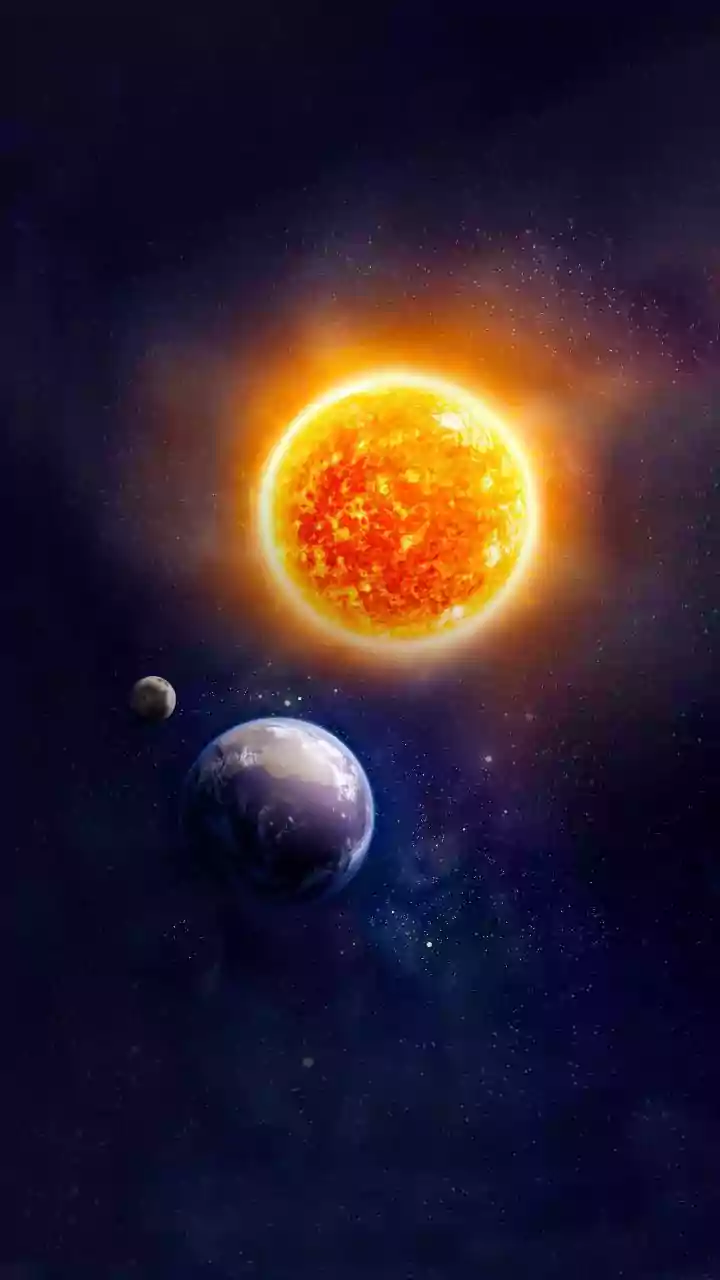
This principle scales down as well. Not all starlight is ancient. The brightest star in our night sky, Sirius, is one of our closest stellar neighbours, at just 8.6 light-years away. The light from Sirius is less than a decade old—it left when the smartphone in your pocket was likely a model that is now several generations out of date. It gets even more immediate within our own solar system. The light from our own Sun isn't instant, either. It takes approximately 8 minutes and 20 seconds to travel from the Sun's surface to Earth. So, if the Sun were to suddenly vanish, we wouldn't know about it for over eight minutes. Every sunrise you witness is technically an event that already happened eight minutes ago in the past.
Looking into Deep Time
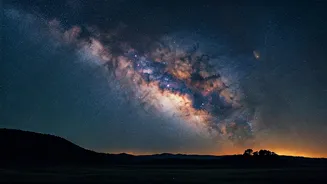
The concept becomes truly mind-bending when we look beyond individual stars in our own galaxy. On a very clear, dark night, far from city lights, it’s possible to see a faint, fuzzy patch in the sky. This is the Andromeda Galaxy, the closest major galaxy to our own Milky Way. That faint smudge of light is 2.5 million light-years away. The light you are seeing from Andromeda began its journey when our earliest human ancestors, of the genus *Homo*, were just beginning to walk the Earth. You are literally looking millions of years into the past with your unaided eye. Professional telescopes like the Hubble and James Webb Space Telescope are designed to be even more powerful time machines, peering at galaxies so far away that they see them as they were shortly after the Big Bang, over 13 billion years ago.