





The Golden Age of Family Soaps
For decades, Indian home entertainment was defined by the daily soap opera. From the early days of Doordarshan's 'Hum Log' and 'Buniyaad' that united the nation, the satellite TV boom of the 90s gave way to the era of 'saas-bahu' sagas. Shows like 'Kyunki
Saas Bhi Kabhi Bahu Thi' weren't just programs; they were cultural phenomena that dictated family schedules. The format was predictable yet potent: a sprawling joint family, dramatic plot twists, and episodes that stretched for years. The business model was built on TRPs (Television Rating Points) and advertising revenue, encouraging producers to churn out content daily and prolong storylines indefinitely to keep viewers hooked. This model created a generation of television stars and dominated primetime viewing across the country.
The Twin Catalysts: Cheap Data and Smartphones
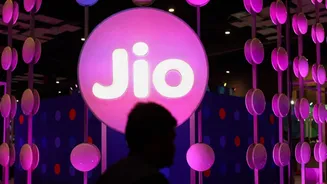
The ground began to shift in the mid-2010s. The true revolution arrived with the proliferation of affordable smartphones and, most critically, the crash in mobile data prices. The launch of Reliance Jio in 2016 is often cited as a key turning point, making high-speed internet accessible not just in metros but across the length and breadth of India. Suddenly, millions of Indians, particularly the youth, had a screen in their pocket and an affordable pipeline to a world of content beyond their television set. This created the perfect ecosystem for Over-The-Top (OTT) or streaming platforms like Netflix, Amazon Prime Video, and homegrown players like Hotstar, ZEE5, and SonyLIV to enter and capture a new, digitally-savvy audience.
A New Canvas for Storytelling
Web originals offered something radically different from their television counterparts. Firstly, they were free from the creative constraints of daily television and the pressure of advertiser-friendly content. Operating under a different regulatory framework, creators could explore mature themes, complex characters, and gritty narratives that were impossible on broadcast TV. Secondly, the format was different. Instead of never-ending sagas, web series adopted a seasonal structure with a finite number of episodes. This allowed for tighter scripts, higher production values comparable to cinema, and a clear narrative arc with a beginning, middle, and end. Shows like 'Sacred Games', 'Mirzapur', and 'Scam 1992' weren't just successful; they were trailblazers, proving that there was a massive appetite for nuanced, high-quality Indian stories.
From 'Appointment Viewing' to Binge-Watching
This new form of content fundamentally changed viewing habits. The traditional 'appointment viewing', where families gathered at a fixed time, gave way to personal, on-demand consumption. The concept of binge-watching, or consuming multiple episodes in one sitting, became the new norm. Entertainment was no longer a collective family experience but an individual one, tailored to personal taste and schedule. This shift also democratized stardom. Actors who were often typecast or overlooked by mainstream cinema found a platform to showcase their talent in complex roles, becoming household names in the process. Pankaj Tripathi and Manoj Bajpayee, for instance, became digital sensations, their careers redefined by the depth offered in web series.