








The Golden Rule: Flip the Pack
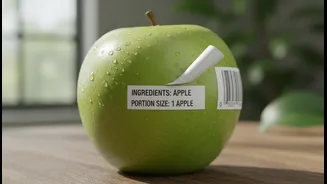
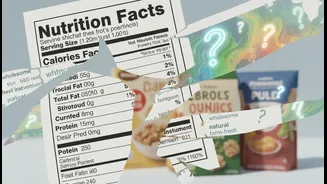
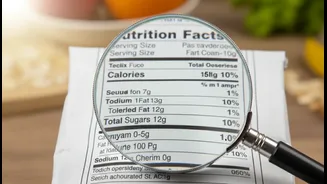
Before we decode the claims on the front, remember the single most important rule of smart snacking: the front of the pack is marketing, but the back is regulation. In India, the Food Safety and Standards Authority of India (FSSAI) mandates that manufacturers
list all ingredients and provide a nutritional information panel. This is where the truth lies. The splashy words on the front are designed to catch your eye, but the ingredient list and nutrition table tell the real story. Make it a habit to ignore the hype and turn the package over first.
“Natural” and “Organic”: Health Halos That Mislead
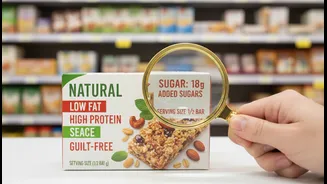
The word “natural” sounds wonderfully wholesome, but it is one of the most ambiguous terms in food marketing. There is no strict FSSAI definition for it, meaning a product full of sugar and processed ingredients can still use the claim. Similarly, while “organic” has more rigorous certification standards, it doesn’t automatically mean a product is healthy. An organic biscuit is still a biscuit, and it can be high in sugar, fat, and calories. Don’t let these words lull you into a false sense of security; always check the nutrition facts.
The Sugar Trap: “Sugar-Free” vs. “No Added Sugar”
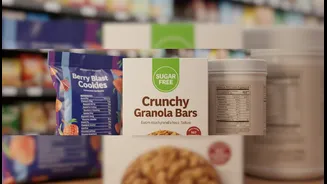
This is a major point of confusion. A “sugar-free” label means a product contains less than 0.5 grams of sugar per serving, but it often contains artificial sweeteners or sugar alcohols, which can have their own health implications. “No added sugar” simply means no sugar was added during processing. However, the product could be naturally high in sugar from fruit concentrates or milk solids (lactose). A fruit bar with “no added sugar” can still pack a sugary punch. The only way to know for sure is to check the “Total Sugar” line in the nutrition table.
The Grain Game: “Multigrain” vs. “Whole Grain”
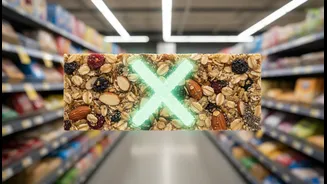
“Multigrain” sounds healthier than plain flour, but the term only means that more than one type of grain was used. Often, these are refined grains, like maida, which have been stripped of their fibre and nutrients. “Whole grain,” on the other hand, means the entire grain kernel—bran, germ, and endosperm—is intact, providing fibre, vitamins, and minerals. For a truly healthier option, look for the words “100% whole grain” or ensure that a whole grain (like whole wheat or oats) is the very first ingredient listed on the back of the pack.
Decoding Protein and Serving Size Claims
Fitness snacks love to boast about being “High Protein.” While protein is essential, this claim can be a distraction. A protein bar might have 15 grams of protein but also 20 grams of sugar, making it more of a candy bar. Always compare the protein content to the sugar and fat content. Another common trap is the serving size. A small bag of “healthy” chips might seem low in calories, but the nutritional information is often for just one serving, while the bag contains two or three. You may end up consuming double or triple the calories, fat, and salt you intended.
How to Read the Ingredient List Like an Expert
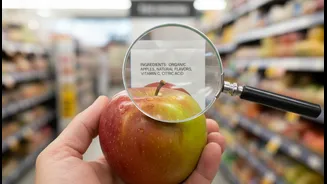
The ingredient list is your most powerful tool. Ingredients are listed in descending order by weight. If the first three ingredients are refined flour (maida), sugar, or some form of oil (like palm oil), the product is primarily made of those things, no matter what the front says. Also, be aware of hidden sugars which go by many names: high-fructose corn syrup, dextrose, maltodextrin, and fruit juice concentrate are just a few. A shorter, more recognizable ingredient list is almost always a better sign.