





First, What Are the Orionids?
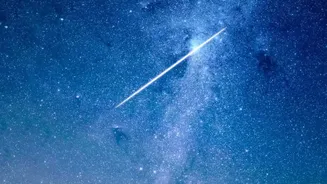
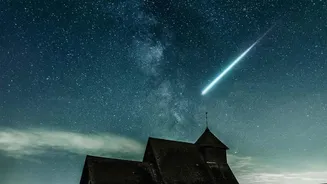
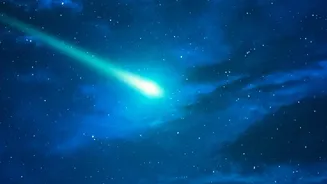
The Orionid meteor shower is one of the most beautiful celestial events of the year. The shooting stars you see are not stars at all, but tiny fragments of ice and dust left behind by the famous Halley's Comet. When Earth’s orbit crosses this debris trail,
the particles burn up in our atmosphere at incredible speeds—about 66 kilometres per second. This speed is what makes the Orionids special; they are known for being exceptionally bright and fast, often leaving glowing trails, or “trains,” that can linger for a few seconds after the meteor has vanished. The shower gets its name from the constellation Orion the Hunter, as the meteors appear to radiate from a point near the bright star Betelgeuse.
Mark Your Calendar: Dates and Times
The Orionid meteor shower is active from early October to early November, but the best time to watch is during its peak. For 2026, the peak occurs on the night of October 21-22, specifically in the hours before dawn. This year, there is a challenge: a bright waxing gibbous Moon will light up the sky for much of the night. However, there is a perfect window for viewing. The Moon is expected to set around 3 a.m. local time, leaving the sky dark until dawn begins to break. Your prime viewing time is therefore from roughly 3 a.m. until just before sunrise on the morning of October 22.
Escape the City Glow
The biggest obstacle for any city-based stargazer is light pollution. While you might catch a few of the brightest meteors from a balcony or rooftop, your best bet is to find a darker location. This doesn't necessarily mean a trip to the Himalayas. Consider driving 30-40 kilometres to the outskirts of your city, where the sky is significantly darker. Local parks, quiet rural roads, or the grounds of a resort away from the main city are all good options. In many Indian cities, the post-monsoon period in October offers exceptionally clear, dust-free skies, which will work in your favour. Use a light pollution map app on your phone to identify darker zones near you before you head out.
Know Where to Look
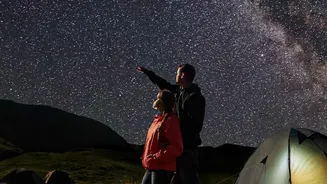
Once you're settled, you need to know which direction to look. The radiant point is in the constellation Orion, which will be rising in the east after midnight. You can use a simple stargazing app to locate it. However, the best viewing strategy is not to stare directly at Orion. Meteors will appear all across the sky, and those that appear farther from the radiant will have longer, more dramatic trails. A good technique is to lie back and look straight up, taking in as much of the sky as possible. Find the darkest patch of sky you can, away from any residual city glow or direct moonlight before it sets.
Your Stargazing Checklist
Preparation is simple but key to an enjoyable experience. No telescopes or binoculars are needed; the naked eye is the best tool for watching a meteor shower. Here is what you should bring: - A blanket, yoga mat, or a reclining lawn chair for comfortable viewing. - Warm clothing like a jacket or shawl, as even in warmer climates, the pre-dawn hours can get chilly. - A flask of hot tea or coffee and some snacks. Meteor watching is a game of patience. - A torch with a red light filter. A red light helps you see your surroundings without ruining your night vision, unlike the harsh white light from a phone screen.
Let Your Eyes Adapt
This might be the most important tip of all. Your eyes need at least 20 to 30 minutes to fully adapt to the darkness. When you first arrive at your spot, you may not see many stars. Resist the urge to check your phone during this time, as a single glance at a bright screen can reset your night vision. Be patient. After about half an hour, you will be amazed at how many more stars become visible. The longer you wait in the dark, the more meteors you are likely to see. This simple act of patience is the urban stargazer’s greatest tool, allowing you to catch even the fainter shooting stars.