



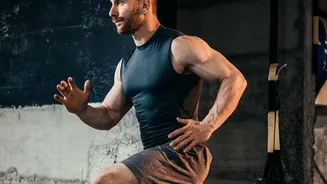
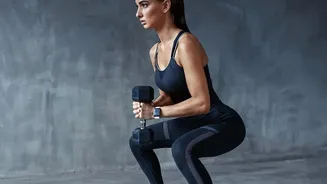
Looking for a workout that builds more than just muscle? Shadow boxing is a dynamic, no-equipment-needed exercise that sharpens your mind and body, enhancing coordination in ways that few other fitness routines can. It’s a full-body challenge.
What Exactly Is Shadow Boxing?
At its core,
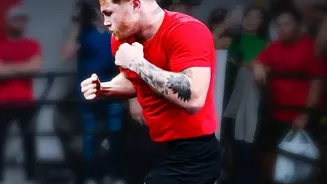
shadow boxing is the practice of performing boxing movements as if you were facing an opponent, but without any physical contact. You move, punch, and defend against a target that exists only in your mind. While it’s a foundational training method for professional fighters, its benefits have made it increasingly popular as a standalone fitness activity. Unlike hitting a heavy bag, shadow boxing forces you to focus entirely on your own form, movement, and balance without the distraction of impact. This makes it an incredibly effective tool for building a strong mind-body connection.
The Link Between Movement and Coordination
The primary benefit of shadow boxing for coordination comes from the complex interplay of movement it demands. You aren't just throwing your arms around; you are synchronizing your hands, feet, hips, and core. Every punch starts from the ground up, requiring you to shift your weight, pivot your feet, and rotate your torso all at once. This constant, deliberate movement trains proprioception—your body's internal awareness of where its parts are in space. By visualizing an opponent, you also have to react and adjust, combining offensive punches with defensive slips and footwork, which hones your agility and reaction time.
More Than Just Coordination
While enhanced coordination is a key outcome, the fitness benefits don't stop there. Shadow boxing is a fantastic cardiovascular workout that elevates your heart rate and builds endurance. A sustained session can be a serious calorie-burner, comparable to jogging but with the added mental engagement that makes the time fly by. It also builds muscle endurance, particularly in the shoulders, arms, and core, which are constantly engaged to maintain your guard and power your punches. Furthermore, many find it to be an excellent form of stress relief, allowing you to channel energy in a positive and focused way.
Getting Started: The Basic Stance
Before you throw a single punch, establishing a solid stance is crucial. Stand with your feet about shoulder-width apart. If you're right-handed, your left foot will be forward (this is called an 'orthodox' stance). Your lead foot should point mostly forward, while your rear foot is angled slightly outward for stability. Keep a slight bend in your knees and your weight evenly distributed, staying light on the balls of your feet. Your hands should be in a 'guard' position—lead hand by your cheekbone, rear hand by your chin, with your elbows tucked in to protect your body. This balanced, ready position is the foundation for all your movements.
Four Foundational Punches
Beginners should start by mastering the four basic punches. Focus on form over speed. First is the Jab, a quick, straight punch with your lead hand. Next is the Cross, a powerful, straight punch with your rear hand that involves rotating your hip and shoulder for force. The Hook is a semi-circular punch thrown with either hand, aimed at the side of your target. Finally, the Uppercut is a short, rising punch thrown from close range. With every punch, remember to exhale sharply and bring your hand straight back to your guard position.
Putting It All Together in a Workout
To create a simple workout, use a timer for two- or three-minute rounds with a minute of rest in between, just like in a real boxing match. Start with a warmup of light movement. In the first round, focus only on your footwork and your jab. In the next round, add the cross, practicing the '1–2' (jab–cross) combination while moving. In subsequent rounds, integrate hooks and uppercuts, and start to mix in defensive moves like slipping your head from side to side after a combo. The goal isn't to be perfect, but to stay in motion and build a rhythm.