



A Sweet Discovery in Deep Space
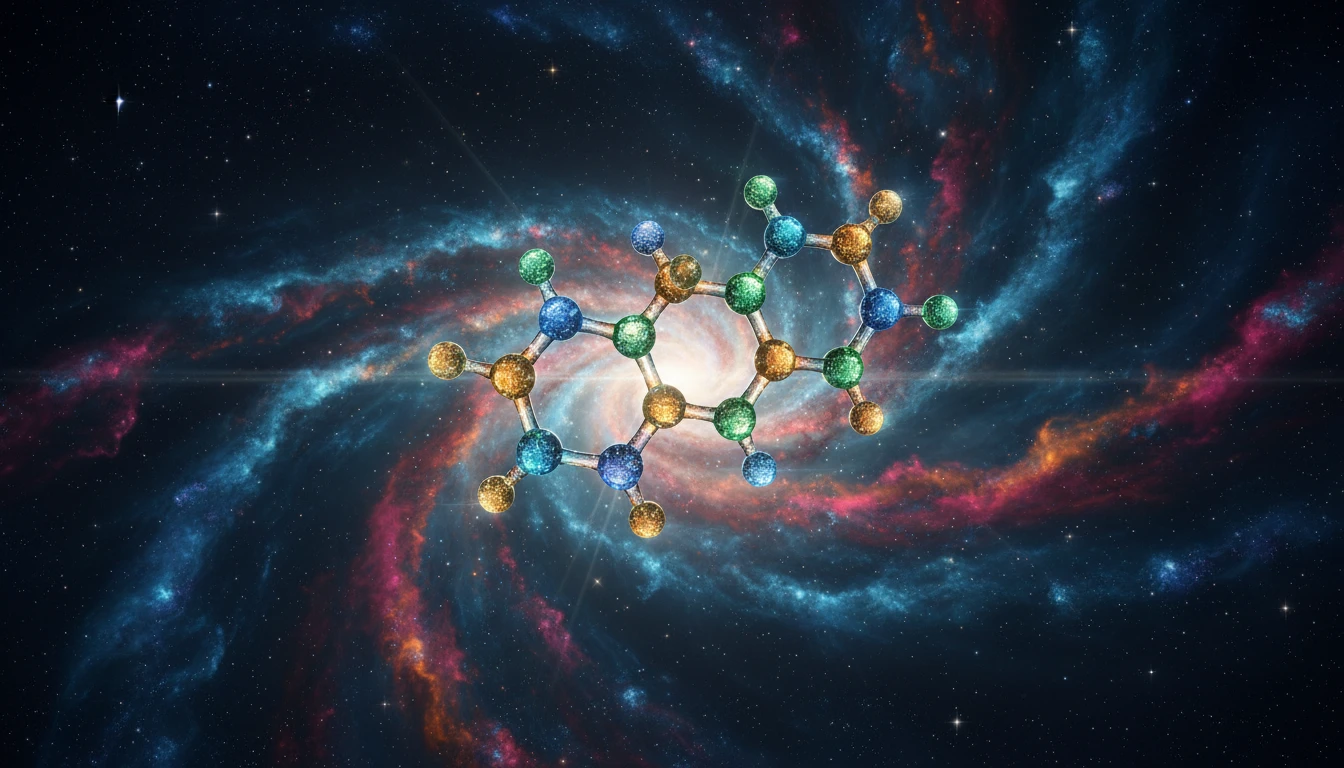
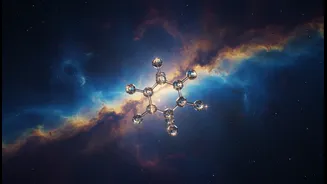
In a remarkable first, astronomers have detected a 'true sugar' molecule floating in the interstellar medium — the vast, cold space between star systems. Using powerful radio telescopes in Spain, an international team of researchers found erythrulose,
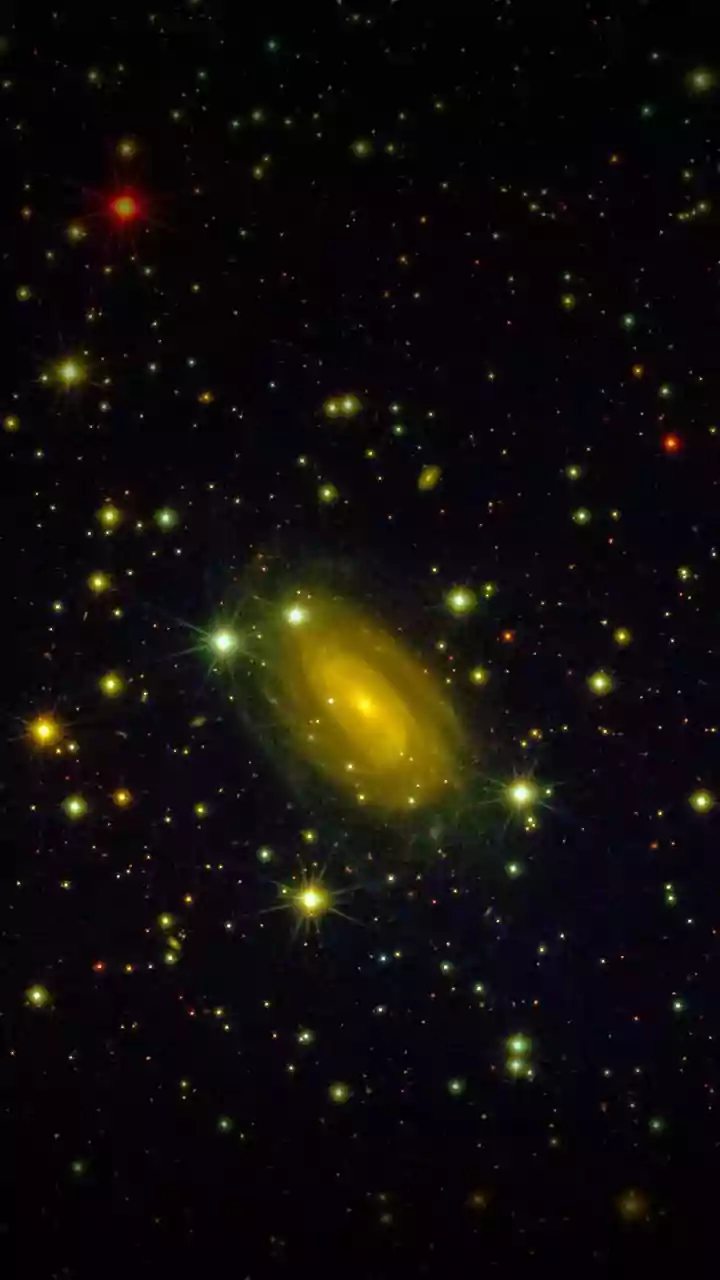
a four-carbon sugar, within a giant cloud of gas and dust near the centre of our Milky Way galaxy. Located about 27,000 light-years from Earth in a molecular cloud known as G+0.693-0.027, this finding is significant because it's the first time such a complex sugar has been identified in interstellar space, not just in meteorites that have landed on Earth. This suggests the building blocks for life might be forming in the cosmos long before planets even exist.
Not Your Average Kitchen Sugar
When we hear 'sugar', we might think of the crystals we put in our tea. But in chemistry, sugars are a broad class of carbohydrates vital for life. Erythrulose, the newly discovered molecule, is found on Earth in raspberries and is also used in some self-tanning products. More importantly, it belongs to the same family of molecules as ribose, the sugar that forms the backbone of RNA, a close cousin of DNA. While simpler sugar-like molecules have been found in space before, erythrulose is a 'true sugar' with a more complex four-carbon structure, making it a more significant prebiotic ingredient. Its presence confirms that surprisingly complex chemistry is happening in the harsh environment of deep space.
The Cosmic Recipe for Life
This discovery is a major boost for 'prebiotic chemistry', the study of how life's ingredients first formed. For a long time, scientists have debated whether these crucial components, like sugars and amino acids, formed in the 'primordial soup' on early Earth or if they were delivered from space by comets and asteroids. Finding erythrulose freely floating in a stellar nursery suggests that these key ingredients are cooked up in space and are available when new star systems and planets form. This supports the idea that Earth may have gotten a head start on life, with prebiotic molecules arriving ready-made from the cosmos. The sugar found isn't essential for life itself, but it can easily convert into forms that are crucial for kick-starting biological processes.
How Astronomers Go Sugar-Hunting
Identifying a single type of molecule thousands of light-years away is a monumental task. Scientists at the Centro de Astrobiología in Spain used highly sensitive radio telescopes to listen for faint signals coming from the gas cloud. Every molecule vibrates and rotates in a unique way, emitting radio waves at specific frequencies—a sort of molecular fingerprint. By comparing the signals from space with the known fingerprint of erythrulose measured in a lab, they could confirm its presence with certainty. The detection was surprising because the team had initially been looking for simpler, three-carbon sugars and found none, suggesting our understanding of how these molecules form in space needs rethinking.
A Universe Ready for Life?
This finding does not mean we've found life elsewhere. What it does mean is that some of the most fundamental ingredients for life as we know it are common throughout the galaxy. If complex sugars can form in the clouds that give birth to stars and planets, it raises the possibility that countless other worlds may have also been seeded with these life-giving molecules. As study co-author Izaskun Jiménez-Serra noted, this opens the door for life to develop elsewhere in the universe in a way similar to how it did on Earth. It transforms our view of space from a barren void to a vast chemical factory, actively creating the components necessary for biology.