

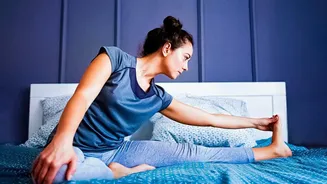
Paschimottanasana, or the Seated Forward Bend, is a cornerstone of yoga that looks simple but presents a profound challenge. Its effectiveness and safety hinge on one key area: the hamstrings. Understanding this connection is vital.
What is Paschimottanasana?
Paschimottanasana is
a classic seated yoga posture where you extend your legs forward and fold your torso over them. The name comes from Sanskrit, with 'Paschima' meaning 'west' or 'the back of the body', and 'uttana' meaning 'intense stretch'. Therefore, it's often called the 'Intense Stretch of the West', referring to the deep stretch it provides along the entire back of the body, from your heels to your head. This pose is more than just a physical stretch; it is an act of turning inward. The forward-folding nature is inherently calming and restorative, inviting practitioners to draw their attention away from external distractions and tune into their inner state.
The Hamstring Connection
For many, the main challenge in Paschimottanasana is not the back, but the hamstrings. This group of muscles runs along the back of your thighs, from your hips to your knees. Modern sedentary lifestyles, which often involve long hours of sitting, can lead to chronically short and tight hamstrings. When you attempt to fold forward with tight hamstrings, the muscles pull on the pelvis, preventing it from tilting forward. To compensate, the body often rounds the lower back, which shifts the stretch away from the hamstrings and places unhealthy strain on the spinal discs and ligaments. Therefore, the ability to perform this pose correctly is less about back flexibility and more about hamstring openness.
A Step-by-Step Guide to Safe Practice
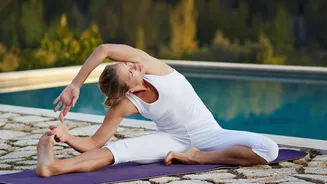
Proper alignment is key to reaping the benefits of Paschimottanasana without risking injury. Start by sitting on your mat in Dandasana (Staff Pose), with your legs extended straight in front of you. If you feel your lower back rounding, sit on the edge of a folded blanket to help tilt your pelvis forward. Inhale and lengthen your spine, lifting your arms overhead. As you exhale, begin to hinge forward from your hips, not your waist. Think about bringing your belly towards your thighs, rather than your nose to your knees; this encourages a long spine. Rest your hands wherever they land comfortably—on your shins, ankles, or feet. With each inhale, try to lengthen your torso, and with each exhale, see if you can deepen the fold. Never force the movement.
Modifications for Tight Hamstrings
The goal of yoga is not to achieve a 'perfect' shape, but to work intelligently with your body. If tight hamstrings limit your fold, modifications are essential. The simplest and most effective modification is to bend your knees generously. You can even place a rolled-up blanket under your knees for support. This simple adjustment takes the strain off the hamstrings and lower back, allowing you to maintain a long spine as you hinge from the hips. Another excellent tool is a yoga strap. Loop the strap around the balls of your feet and hold it with both hands. Use the strap to help you maintain a long spine as you fold, rather than using it to aggressively pull yourself deeper into the pose.
Benefits Beyond the Stretch
When practiced correctly, Paschimottanasana offers a wealth of benefits. The deep stretch along the entire posterior chain helps to counter the effects of prolonged sitting, improving posture and relieving tension in the spine. The gentle compression of the abdomen massages the digestive organs, which can aid in digestion and relieve bloating. On a more subtle level, the inward nature of the pose has a profound calming effect on the nervous system. It helps to quiet the mind, reduce stress and anxiety, and foster a sense of inner peace.
Common Mistakes to Avoid
Two common errors can lead to strain or injury in this pose. The first is aggressively rounding the back in an effort to bring the head to the knees. This compromises the spine and negates the hamstring stretch. Always prioritize a long spine over the depth of your fold. The second mistake is yanking on your feet or using arm strength to force yourself deeper. This can strain the hamstring attachments near the sit bones. Instead, use your breath as your guide, allowing each exhale to soften and release you into the posture naturally.