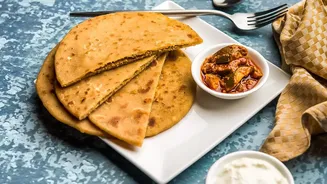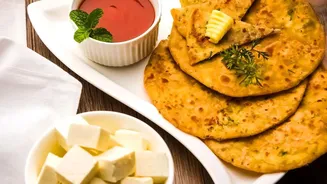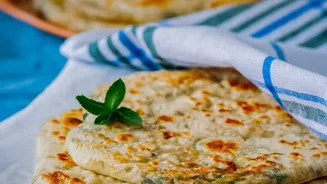

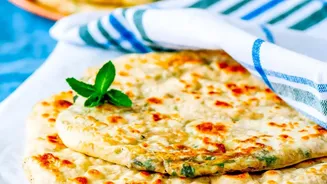


Craving a warm, soft paratha but want to skip the wheat? This gluten-free Jowar Radish Paratha is your answer. Master the art of making perfectly soft, flavourful parathas with sorghum flour for a wholesome and delicious meal.
A Healthy, Gluten-Free Choice
Jowar, or sorghum, is a nutritious
ancient grain that's naturally gluten-free. It is packed with dietary fibre, protein, iron, and antioxidants, making it an excellent alternative to wheat. Its high fibre content aids digestion and helps in managing blood sugar levels, while its rich nutrient profile boosts energy. Radish, or mooli, adds a sharp, peppery flavour and essential moisture to the parathas. This combination not only provides a unique taste but also creates a filling, low-calorie meal perfect for any time of the day.
Gathering Your Ingredients
Before you begin, assemble all your ingredients. This recipe makes approximately 6-8 parathas. You will need: For the dough: 2 cups jowar (sorghum) flour 2 cups hot water 1 teaspoon salt 1 teaspoon oil or ghee For the filling: 1 medium radish (mooli), grated 1/2 cup finely chopped radish leaves (optional) 1-2 green chillies, finely chopped 1 inch ginger, grated 1 teaspoon carom seeds (ajwain) 1/2 teaspoon red chilli powder Salt to taste Ghee or oil for cooking
The Secret to a Soft Dough
The key to soft jowar parathas lies in the dough preparation. Since jowar flour has no gluten, it needs special handling. Start by bringing two cups of water to a rolling boil in a saucepan. Add the salt and oil. Once boiling, turn off the heat and immediately add the jowar flour. Mix everything quickly with a spoon or spatula until it forms a crumbly mass. Cover the pan and let it rest for 5-10 minutes. This process, called gelatinization, helps the flour absorb the moisture, making the dough pliable. Once the mixture is cool enough to handle, transfer it to a large plate or bowl and knead it for 4-5 minutes until you have a smooth, soft dough. If the dough feels too dry, add a little more warm water; if it's too sticky, add a sprinkle of jowar flour.
Preparing the Radish Filling
Properly preparing the radish is crucial to prevent your parathas from breaking. Place the grated radish in a bowl and sprinkle a generous amount of salt over it. Let it sit for about 10-15 minutes. You will notice the radish has released a significant amount of water. Squeeze the grated radish firmly with your hands to remove as much liquid as possible. This step ensures the filling is dry and won't make the dough soggy. In a separate bowl, combine the squeezed radish, chopped radish leaves (if using), green chillies, grated ginger, carom seeds, red chilli powder, and a pinch of salt. Mix well.
Combining, Rolling, and Shaping
Now it's time to bring it all together. You can either mix the filling directly into the dough or stuff it. For an easier, more integrated paratha, add the prepared radish filling directly into the kneaded jowar dough and knead again until everything is well combined. Divide the dough into 6-8 equal portions and roll them into smooth balls. To roll the parathas, dust a clean surface with jowar flour. Flatten a dough ball and gently roll it out using a rolling pin. Since jowar dough can crack at the edges, don't apply too much pressure. An alternative method is to place the dough ball between two sheets of parchment paper or a plastic sheet and roll it out. This helps in getting a uniform circle without cracks.
Cooking to Perfection
Heat a tawa or flat griddle over medium-high heat. Once hot, carefully place a rolled paratha on it. Let it cook for about a minute or until you see small brown spots appear on the underside. Flip the paratha using a spatula. Apply a little ghee or oil on the top surface and spread it evenly. Flip it again and apply ghee on the other side. Gently press down on the paratha with the spatula to help it cook evenly and puff up slightly. Cook until both sides have golden-brown spots and are cooked through.