
A Panoramic Window on the Universe
The Roman Space Telescope's superpower is its incredible field of view. While sharing the same primary mirror size as the Hubble Space Telescope at 2.4 meters, Roman's Wide Field Instrument can capture an area of the sky at least 100 times larger than
Hubble can in a single snapshot. Think of it as the difference between looking at the cosmos through a keyhole versus a panoramic window. This capability will allow Roman to map huge swathes of the sky with the same sharpness as Hubble, but thousands of times faster. In its initial five-year mission, it is expected to observe more than a billion galaxies and create a new, vast atlas of the universe. This efficiency doesn't just save time; it enables a whole new kind of astronomy based on big data, revealing large-scale cosmic structures that are impossible to see with a narrow focus.
Hunting for Dark Energy and Dark Matter
One of Roman’s primary missions is to confront two of the most profound puzzles in physics: dark energy and dark matter. Together, they are believed to make up about 95% of the universe, but they remain invisible and poorly understood. Roman will tackle the mystery of dark energy—the enigmatic force causing the universe's expansion to accelerate—using multiple methods. It will survey thousands of distant exploding stars, known as Type Ia supernovae, which act as cosmic mile markers to measure the expansion rate over time. It will also map the clustering of billions of galaxies to trace the influence of dark energy on the growth of cosmic structures. To hunt for dark matter, Roman will study a phenomenon called weak gravitational lensing, where the gravity of unseen matter subtly distorts the light from distant galaxies. By measuring these tiny distortions across millions of galaxies, astronomers can map the invisible scaffolding of dark matter throughout the universe.
A New Census of Alien Worlds
While telescopes like Kepler and TESS have found thousands of exoplanets by watching for the dimming of a star as a planet passes in front, Roman will primarily use a different technique called gravitational microlensing. This method can detect planets that are much farther from their star, as well as rogue planets that drift through space without a host star at all. When a star and its planets pass in front of a more distant star, their combined gravity acts like a lens, briefly magnifying the background starlight. The resulting light patterns can reveal the presence, mass, and orbit of these exoplanets. During its mission, Roman is expected to discover thousands of new worlds, potentially increasing the number of known exoplanets dramatically and providing a more complete census of planetary systems in our galaxy.
A Complement to Hubble and Webb
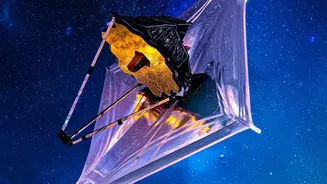
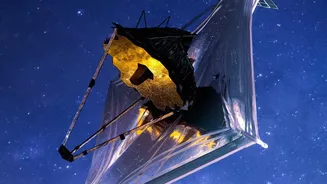
Roman is not a replacement for the Hubble or James Webb Space Telescopes but a powerful complement to them. Each observatory is designed to explore the universe in a different way. While Hubble provides sharp, detailed views in visible and ultraviolet light and Webb peers deep into the infrared to see the earliest galaxies, Roman is the great surveyor. It can be thought of as a wide-angle lens, while Hubble and Webb are zoom lenses. Roman will identify countless objects of interest—unusual galaxies, stellar explosions, or intriguing planetary systems—over vast areas. Then, Webb and Hubble can be called in to perform focused, detailed follow-up observations. Together, these three great observatories will give astronomers both the big picture and the close-up view needed to piece together the history and evolution of our universe.