

The Mystery of Earth's 'Evil Twin'
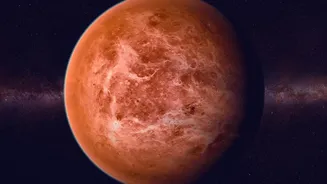
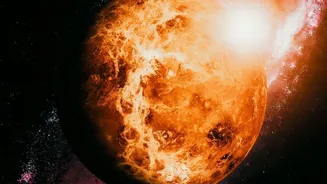
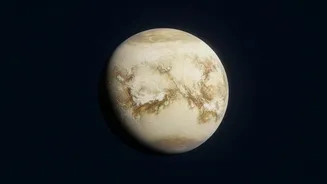
Venus is often called Earth's twin due to its similar size and mass, but the comparison ends there. It boasts a crushing surface pressure 90 times that of Earth, temperatures hot enough to melt lead, and a thick, toxic atmosphere of carbon dioxide and sulfuric
acid clouds. For years, scientists have seen evidence of a volcanic past, with a surface covered in more volcanoes than any other planet in our solar system. The big, unanswered question, however, has been whether any of these volcanoes are still active today. Finding proof has been a monumental challenge, given the planet's dense and corrosive cloud cover which makes direct observation of the surface incredibly difficult.
Sulfur Dioxide: The Volcanic Fingerprint
This is where a specific chemical, sulfur dioxide (SO2), enters the picture. On Earth, SO2 is a tell-tale sign of volcanic activity. Scientists believe the same principle applies to Venus. The planet's upper atmosphere is bathed in intense sunlight, which should, chemically speaking, destroy any SO2 molecules in a matter of days. Therefore, the continued presence of SO2 at high altitudes implies that something is constantly replenishing it from below. The most logical explanation is that volcanic eruptions are acting like massive pistons, punching plumes of gas through the dense cloud deck and into the upper atmosphere. This makes SO2 a crucial 'chemical fingerprint' for active volcanism.
A Decades-Long Detective Story
The theory isn't just a recent idea. Missions stretching back to NASA's Pioneer Venus in the late 1970s have recorded large, unexplained fluctuations in the amount of SO2 in the Venusian atmosphere. More recently, the European Space Agency’s Venus Express orbiter, which studied the planet from 2006 to 2014, also observed significant spikes and subsequent sharp drops in SO2 concentrations. These dramatic changes strongly suggest episodic events — like a series of volcanic eruptions — are pumping the gas into the atmosphere, which then slowly dissipates. While this evidence is compelling, scientists are still searching for the definitive 'smoking gun' that links a specific SO2 plume to a specific eruption on the surface.
ISRO's Quest for an Answer
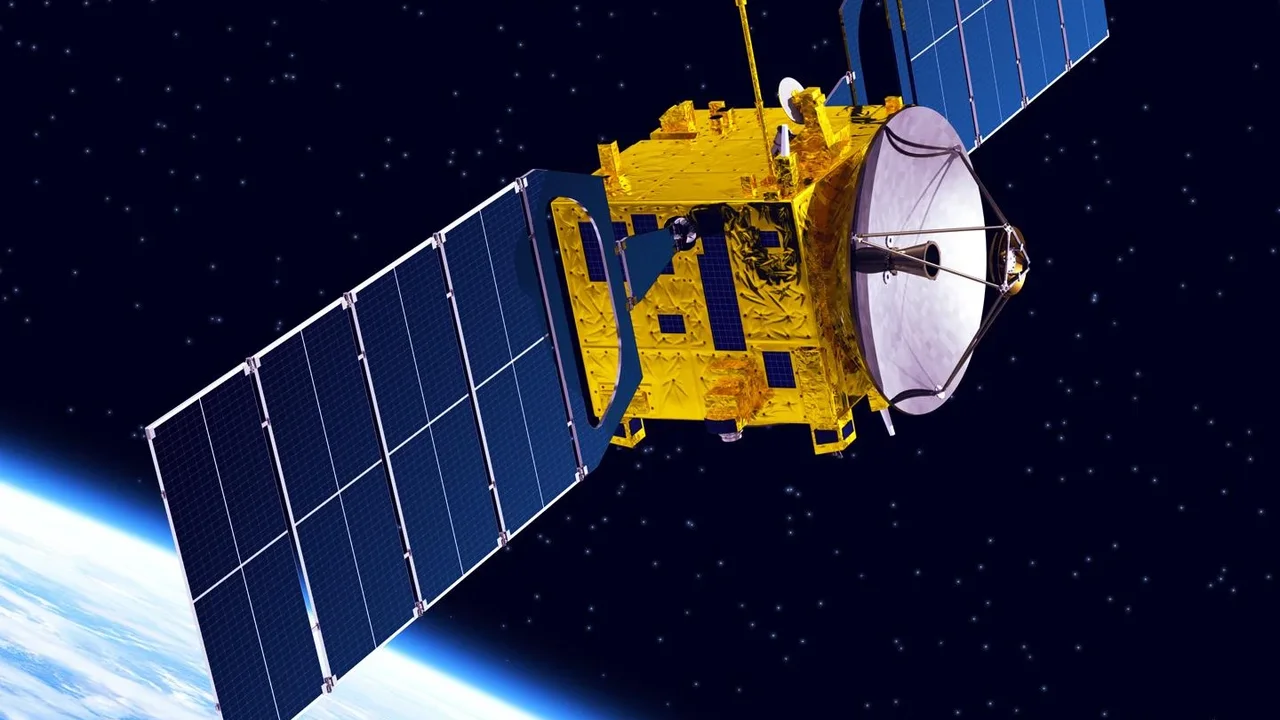
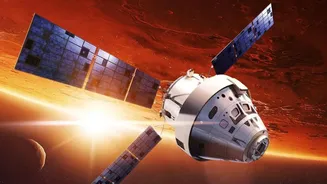
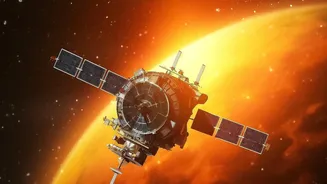
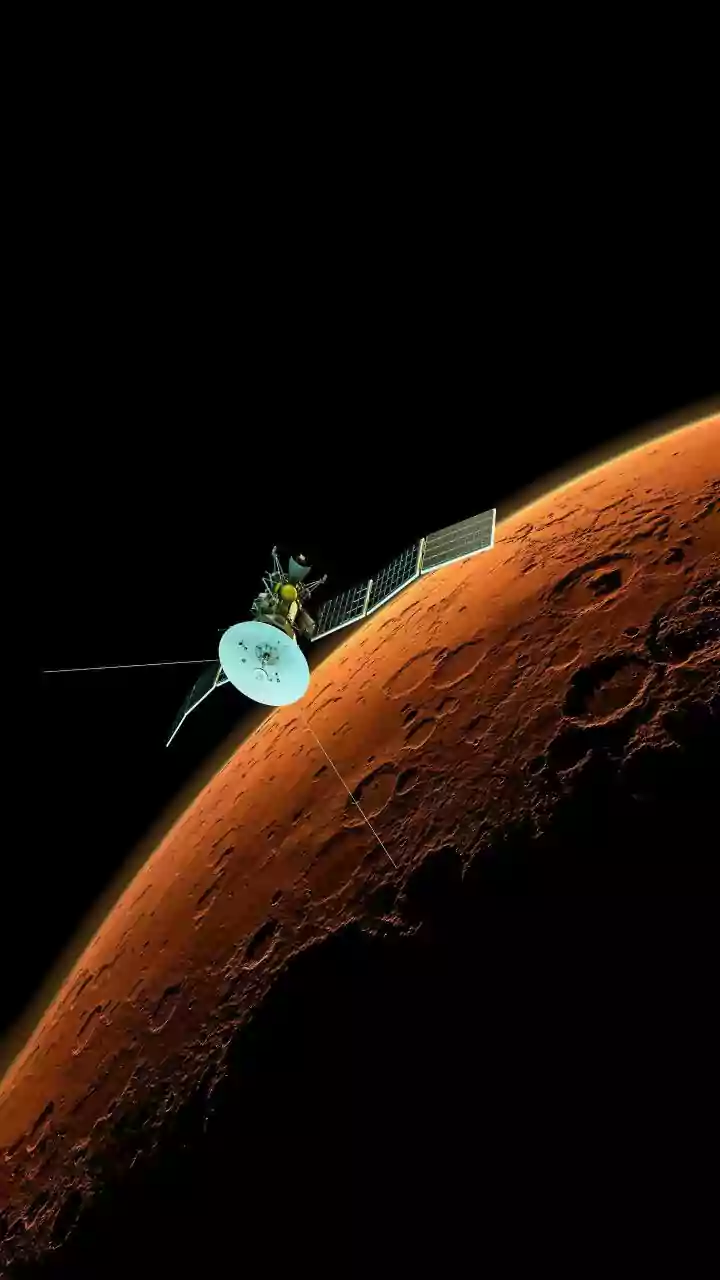
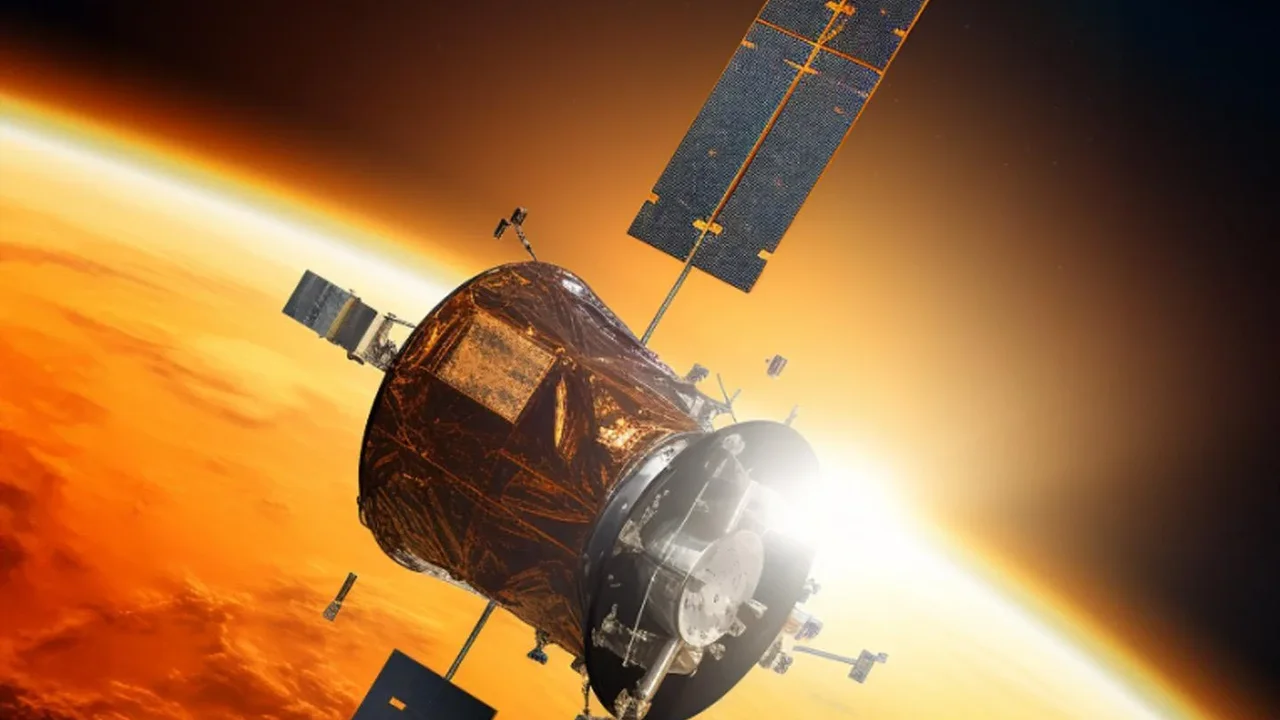
This is where the Indian Space Research Organisation (ISRO) is set to play a pivotal role. The upcoming Shukrayaan mission, India's first orbiter to Venus, is being designed specifically to tackle these outstanding questions. Scheduled for a launch in the coming years, Shukrayaan will carry a suite of advanced instruments to study the Venusian surface and atmosphere in unprecedented detail. One of the mission's primary scientific goals is to search for active volcanism. Instruments like a synthetic aperture radar will map the surface to identify recent lava flows and hotspots, while other sensors will analyze the atmospheric composition, looking for those tell-tale spikes in gases like sulfur dioxide.
Shukrayaan: The Next Chapter
By confirming the link between SO2 concentrations and active volcanoes, ISRO's Shukrayaan could solve one of the biggest puzzles in planetary science. The mission represents a significant step for India's space program, building on the successes of the Chandrayaan (Moon) and Mangalyaan (Mars) missions to explore a new and challenging frontier. If Shukrayaan can provide definitive proof that Venus is geologically active, it would not only be a major achievement for ISRO but would also fundamentally change our understanding of how terrestrial planets like Earth and Venus evolve over time. It would confirm that beneath its toxic clouds, our planetary neighbour is not a dead world but a dynamic and active one.