





A Crucial Safety Drill in the Sky
The Indian Space Research Organisation (ISRO) has successfully conducted the first Test Vehicle Abort Mission-1 (TV-D1). This was not just another launch; it was a meticulously planned dress rehearsal for a worst-case scenario. The primary goal was to
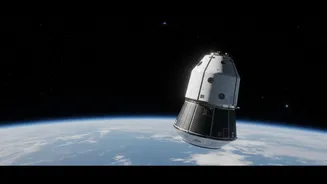
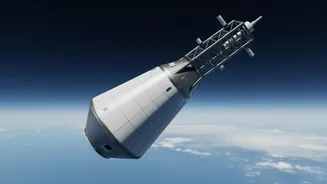
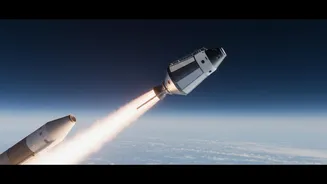
test the Crew Escape System (CES), which is essentially an astronaut's ultimate insurance policy. In the event of an anomaly or failure during the ascent of the rocket, the CES is designed to jettison the Crew Module—the capsule carrying the astronauts—away from the malfunctioning launch vehicle and bring it back to safety. This recent test simulated such an emergency at a high altitude, validating that the entire system works exactly as planned.
Picture-Perfect Execution Over the Bay
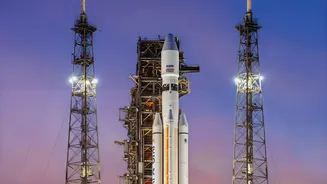
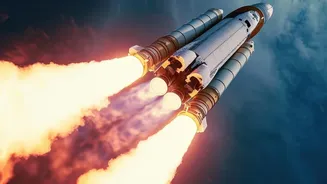
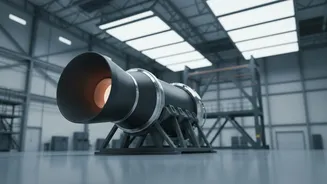
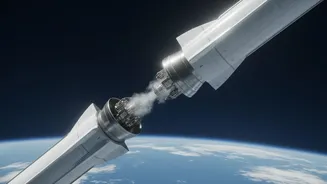
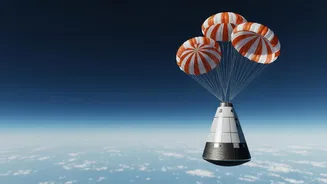
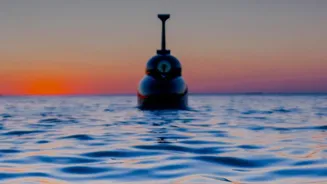
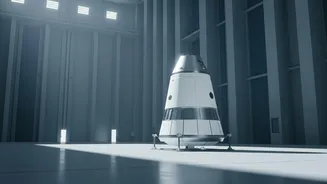
The test began with the launch of a single-stage liquid-propellant rocket from the Satish Dhawan Space Centre in Sriharikota. This test vehicle carried a fully instrumented, unpressurised version of the Gaganyaan Crew Module. At an altitude of about 17 kilometres, a deliberate abort condition was simulated. The Crew Escape System immediately fired its powerful, quick-acting solid motors, pulling the Crew Module clear of the rocket at supersonic speed. Once at a safe distance, the escape system separated, and a sequence of parachutes was deployed to slow the module's descent. The test culminated in a gentle splashdown in the Bay of Bengal, approximately 10 kilometres from the coast. ISRO Chairman S. Somanath confirmed the successful accomplishment, stating that the Crew Escape System performed exactly as intended.
The Astronaut's Ultimate Insurance Policy
For any nation venturing into human spaceflight, ensuring the crew can survive any potential launch failure is the highest priority. The Crew Escape System represents this commitment in physical form. It must be able to detect a problem, activate, and pull the crew to safety in milliseconds. This system is one of the most complex and critical components of the entire Gaganyaan programme. Its successful demonstration is not just a technical victory but a massive confidence boost. It proves that the life-saving mechanisms designed to protect India's 'Gaganauts' are robust and reliable. This successful test is part of a series of rigorous trials, including integrated air drop tests and pad abort tests, all designed to validate every aspect of crew safety.
One Giant Leap for Indian Spaceflight
This successful trial brings India significantly closer to achieving its goal of indigenous human spaceflight capability. With this milestone, India is steadily progressing towards joining the elite club of nations—the United States, Russia, and China—that can independently send humans to space. The Gaganyaan programme is not just about sending three astronauts to a low Earth orbit of 400 kilometres for a three-day mission; it's about establishing a foundation for a long-term Indian human space exploration program. This could eventually lead to a 'Bharatiya Antariksh Station' (Indian Space Station) by 2035. Each successful test, from the human-rated LVM3 rocket systems to the deceleration parachutes, builds upon the last, paving the way for the final crewed mission.
What's Next on the Launchpad?
While the TV-D1 test was a resounding success, ISRO's work is far from over. This flight is the first of several planned abort missions designed to test the Crew Escape System under different flight conditions. Activities for the next Test Vehicle Mission (TV-D2) are already in progress. Following these abort tests, ISRO plans to conduct at least two uncrewed orbital missions. The first of these, targeted for late 2026, will feature the humanoid robot 'Vyommitra' to validate the performance of the life support systems. These uncrewed flights will serve as the final dress rehearsals before the historic first crewed Gaganyaan mission, which is targeted for 2027.