








A Historic First in Orbit
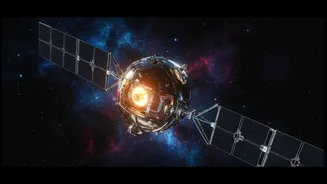
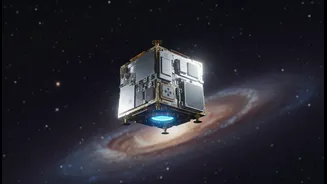
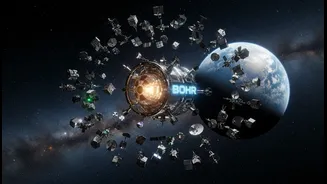
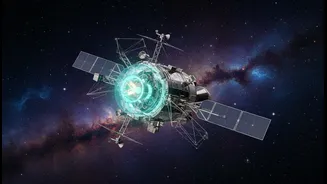
On July 7, a SpaceX Falcon 9 rocket launched the BOHR satellite, a small, softball-sized craft with a groundbreaking mission. Developed by Miami-based company City Labs, BOHR—short for Betavoltaic Orbital High-Reliability—is the world's first commercially
built and operated nuclear-powered satellite. While government agencies like NASA have used nuclear power for deep-space probes like Voyager for decades, this launch represents a pivotal moment: the transition of space-based nuclear power from a government-only tool to a commercially available technology. The mission is not just a technical first; it's also a regulatory one. BOHR is the first spacecraft to be approved for launch under a new framework established by the US Federal Aviation Administration (FAA) in 2019, creating a clear pathway for future commercial nuclear missions.
How Does It Work?
Unlike the large radioisotope thermoelectric generators (RTGs) on NASA probes that use the heat from decaying plutonium, BOHR uses a different, more compact technology called a betavoltaic battery. The power source, branded NanoTritium, uses tritium, a radioactive isotope of hydrogen. As tritium decays, it releases beta particles (electrons). A semiconductor material within the battery captures these particles and converts their energy directly into electricity, similar to how a solar panel converts photons of light into power. The result is a steady, continuous trickle of power that can last for more than 20 years without maintenance or recharging. It's important to note that BOHR is a demonstration mission. The satellite itself still relies on traditional solar panels for its main operations. The tiny nuclear battery is a payload, designed to prove the technology works as expected in the harsh environment of space.
Why This Is a Game-Changer
The vast majority of satellites depend on solar panels, which come with significant limitations. They don't work in the permanent shadow of a lunar crater, during the long nights of a polar winter, or in the faint light of deep space. Batteries can help but degrade over time. Nuclear power offers a solution: a persistent, reliable power source that is unaffected by sunlight, location, or extreme cold. City Labs CEO Peter Cabauy stated that this capability enables “persistent, always-on payload operations that are not constrained by sunlight or battery life.” While the current NanoTritium battery produces only a very small amount of power—measured in microwatts—it's enough to run low-power sensors or security keys for decades. The successful demonstration of this technology in orbit is the crucial first step toward scaling it up for more demanding applications in the future.
The Future of Space Power
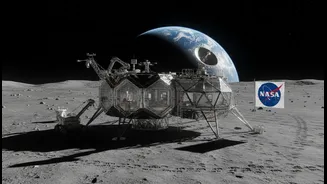
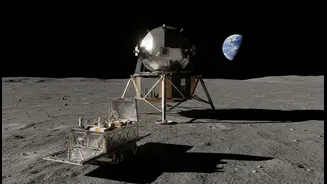
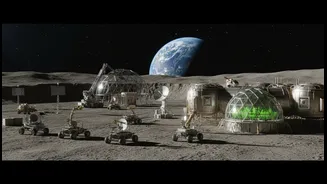
The implications of commercially available nuclear power are immense. Such systems could one day power rovers exploring permanently shadowed craters on the Moon, which are believed to hold water ice. They could enable constellations of satellites that can operate without interruption, regardless of their orbit, and support long-duration missions to the outer planets where sunlight is a distant speck. Other companies, like Westinghouse and Avalanche Energy, are also developing different types of space nuclear power, from small microreactors to compact fusion concepts. These larger systems aim to provide kilowatts or even megawatts of power, enough to run a lunar base, power advanced in-space manufacturing, or propel spacecraft on faster journeys to Mars and beyond. The BOHR mission, while small in scale, has kicked open the door for this new commercial ecosystem.
Safety and Regulation
The term "nuclear" understandably raises safety questions. However, the technology used in the BOHR satellite is fundamentally different from a nuclear reactor. The betavoltaic battery uses tritium, an isotope whose low-energy beta particles cannot penetrate human skin and travel only a short distance in the air. This makes the material significantly easier to handle safely. The BOHR mission underwent a comprehensive safety review, independently validated by Sandia National Laboratories, to secure its FAA launch approval. This successful regulatory process has now created a template for other commercial companies to follow, demystifying the path to launching nuclear-powered systems and potentially accelerating innovation across the space industry.