



The Mistake We All Make
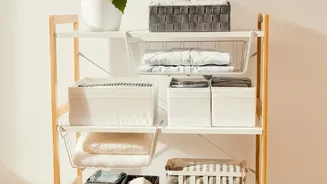
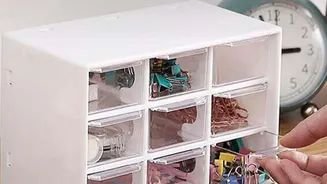
Professional organisers agree that one of the most common mistakes people make is buying storage containers before they've done anything else. This approach often backfires, leading to more clutter as you now have a collection of bins that don't fit your
shelves or your belongings. It’s like buying a photo frame before choosing the art; you have no idea if it will be the right size or style. This premature shopping trip results in wasted money, wasted time dealing with returns, and a frustrating sense of failure. The containers you thought would be a solution simply add to the problem, becoming clutter themselves.
The Power of a Tape Measure
Before you even think about browsing online for the perfect acrylic bins, take out a tape measure. This is the single most important step in any organisation project. You need to measure the usable space of every shelf or drawer you intend to organise. Record three key numbers: the width (side to side), the height (from the shelf surface to the one above it), and the depth (from the front edge to the back wall). It's crucial to account for any obstructions like hinges, pipes under a sink, or screw heads that might eat into your usable space. Professional organisers suggest leaving a small buffer—perhaps half an inch in width and height—so that bins can slide in and out easily without scraping.
First, Declutter and Assess Your Inventory
You can't effectively organise clutter. The first step after measuring is always to declutter. You must decide what you actually need to store. Go through your items and determine what deserves to keep its place in your home. This process of making decisions is what truly creates organisation—not the containers you buy. Once you know exactly what you're keeping, you might find that you have fewer items than you thought. This prevents you from overbuying containers for things you were going to discard anyway. Group similar items together. This will give you a clear visual inventory of what needs a home and what kind of container, if any, would be most suitable.
Discovering Hidden Opportunities
Armed with your measurements and a clear inventory, you can now look at your space with fresh eyes. You may discover that you don't need new organisers at all. Perhaps turning a long, shallow basket sideways makes it a perfect fit. Maybe the items you have can be rearranged more logically within the existing space now that you've removed what you don't need. Measuring also helps you see potential you might have missed, like an opportunity for stackable containers to take advantage of tall shelf heights or finding the perfect narrow box for that awkward gap beside a drawer. Sometimes, the most effective solution is simply using what you already have more intelligently.
When You Do Need to Buy, Buy Smarter
If you’ve measured, decluttered, and still determined that a new container is the answer, you are now prepared to shop effectively. With your precise dimensions in hand, you can confidently select products that will maximize your space. You will know the exact height, width, and depth you need, preventing the frustrating experience of bringing home a bin that hangs off the shelf or is too tall to fit. Consider what the container will hold; heavy items need robust materials, while delicate fabrics need smooth surfaces to prevent snagging. By doing the prep work, your purchase becomes a strategic investment in a lasting system, not a hopeful guess that adds to the mess.