




The Core Cardio Question
Both aerobics and trampolining, also known as rebounding, are excellent for cardiovascular health. Aerobics, with its structured routines of dance-like movements, is designed to keep your heart rate elevated in a target zone, improving endurance and lung
capacity. Trampolining achieves a similar, if not sometimes greater, cardiovascular effect. A frequently cited NASA study found that rebounding can be significantly more efficient than running on a treadmill. The constant acceleration and deceleration of bouncing challenges your heart and lungs, making it a powerful aerobic workout. Some research suggests ten minutes of jumping can be equivalent to a 30-minute run.
A Softer Landing: Joint Impact
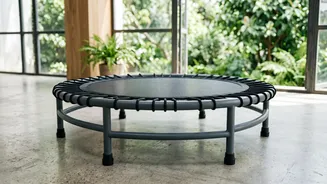
Herein lies one of the most significant differences between the two. Traditional high-impact aerobics can put considerable stress on your joints, particularly the knees, hips, and ankles. While low-impact versions exist, the jumping and stepping in many routines can be jarring. Trampolining, on the other hand, is celebrated for being a low-impact exercise. The flexible surface of the mini-trampoline absorbs a majority of the landing force—some estimates say up to 80%—which drastically reduces stress on your joints. This makes it an ideal option for individuals with joint sensitivities, those recovering from certain injuries, or anyone looking for a vigorous workout without the associated wear and tear.
Muscle Engagement and Toning
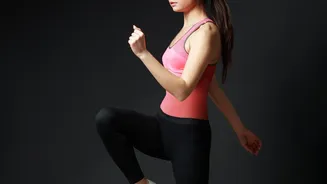
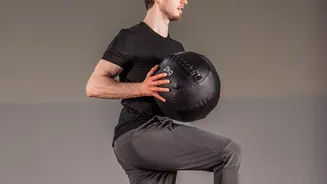
Aerobics provides a great full-body workout, toning legs, glutes, and the core as you move through choreographed sequences. However, trampolining engages muscles in a unique way. The unstable surface forces your body to constantly make micro-adjustments to stay upright. This continuous effort recruits deep stabilizing muscles in your core, back, and pelvic floor that are often missed in other workouts. Bouncing works your legs and glutes effectively, but it also provides a full-body workout by engaging over 400 muscles in a session, according to some fitness experts.
The Unique Demand of Balance
This is where trampolining truly sets itself apart. The act of bouncing on an unstable surface provides a constant and dynamic challenge to your sense of balance. This process helps to improve your proprioception—your body's awareness of its position in space. With every jump and landing, your brain receives feedback from your muscles and joints, training your body to react more quickly and maintain stability. Over time, this can lead to enhanced coordination and a reduced risk of falls, a benefit that is particularly valuable as we age. While aerobics also requires coordination, it doesn't challenge the body's balancing systems with the same intensity.
Accessibility and The 'Fun Factor'
Both forms of exercise score high on enjoyment, which is a key factor for long-term consistency. Aerobics classes offer a social, high-energy environment with motivating music and an instructor to guide you. Trampolining has an element of playful nostalgia that can make exercise feel less like a chore. In terms of accessibility, aerobics classes are widely available in gyms and community centres. For trampolining, you would need to either find a specialized studio or invest in a mini-trampoline (rebounder) for home use, which requires a small amount of dedicated space.