








A Personal Interview Coach, Available 24/7
In India's competitive job market, preparation is everything. For many young professionals, that used to mean asking friends to conduct mock interviews or reciting answers in front of a mirror. Today, Gen Z has a more sophisticated tool: AI chatbots.
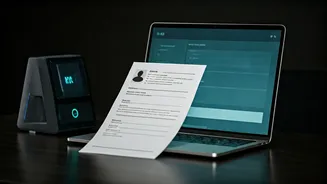
Platforms like ChatGPT are being used as tireless, on-demand interview coaches. Job seekers can paste a job description and their resume, and in return, get a list of highly specific questions they might face. This isn't just about generic queries; the AI can generate technical, behavioural, and situational questions tailored to the exact role and industry, providing a realistic preview of the actual interview. This allows candidates to move beyond rote memorisation and into a more strategic mode of preparation.
The Confidence-Building Practice Room
The primary benefit reported by users is a significant boost in confidence. Interviews are inherently stressful, but AI offers a private, judgment-free space to practice. Candidates can simulate interviews, asking the AI to act as a hiring manager and provide instant feedback on their answers. AI tools can analyse responses for clarity, suggest stronger phrasing, and even help structure answers using established frameworks like the STAR method (Situation, Task, Action, Result). This process of rehearsal and refinement helps demystify the interview process, reducing anxiety and allowing candidates to walk into the real conversation feeling more assured and prepared to articulate their value.
The Recruiter's Perspective: A Double-Edged Sword
While candidates are embracing AI, what do recruiters think? The sentiment is mixed. On one hand, some see it as a sign of resourcefulness. A candidate who uses tools to prepare effectively can be seen as proactive. However, there is a growing concern about authenticity. Recruiters are becoming adept at spotting the tell-tale signs of AI-generated responses: answers that are overly polished, generic, and lack personal insight. A candidate who sounds like a chatbot is an immediate red flag. Follow-up questions are the ultimate test; a person relying too heavily on a script will often stumble when asked to elaborate or provide deeper context. Some companies have even started using AI to detect AI-generated answers during video interviews.
Smart Prep vs. Risky Over-reliance
The line between smart preparation and cheating is a crucial one. Experts and hiring managers agree that using AI to research a company, brainstorm potential questions, or refine the structure of your thoughts is a perfectly acceptable and even wise use of the technology. The problems arise when candidates copy and paste answers verbatim or, worse, use AI in real-time during a virtual interview. This is not only dishonest but also counterproductive. Recruiters are hiring a person, not an algorithm. They want to understand how you think, solve problems, and fit into their team culture. A generic, perfect-sounding answer reveals none of that.
Best Practices for Using AI Ethically
To leverage ChatGPT effectively without raising red flags, a few best practices are essential. Use it as a starting point, not a final script. Generate ideas and structures, but always rewrite the answers in your own voice, infused with your unique experiences and personality. Use the mock interview feature to practice your delivery and thinking on your feet, not to memorise lines. A report from late 2024 noted that 87% of Indian job seekers have used generative AI to enhance their resumes, highlighting a massive adoption of these tools for career tasks. The key is to blend the efficiency of AI with the irreplaceable authenticity of human experience. The goal is to let the technology help you prepare, so your true self can shine through in the interview.