


Inside the Cosmic Nursery
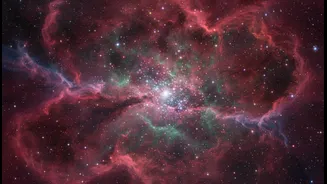
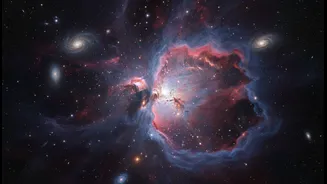
Across the cosmos, vast, cold clouds of gas and dust drift through interstellar space. These stellar nurseries, some stretching for hundreds of light-years, are the wombs of future suns. For centuries, what happened inside these opaque clouds was largely
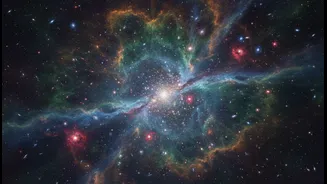
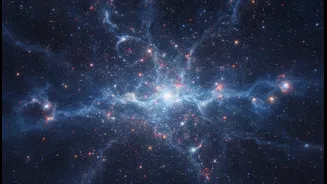
a mystery, hidden behind a thick veil of dust. But now, with the infrared eyes of observatories like the James Webb Space Telescope, astronomers can peer through the cosmic dust and witness the very first steps of creation. What they see are dense knots of matter, slowly drawing together under the relentless pull of their own gravity. These are the seeds of stars, the quiet beginnings of a process that will eventually light up the galaxy. The images sent back to Earth are not just scientifically valuable; they are stunningly beautiful, showing intricate filaments of gas and glowing pockets where the next generation of stars is sparking to life.
The Fiery Birth of a Sun
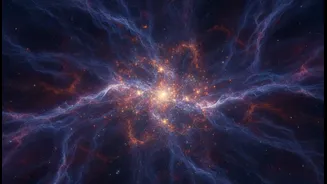
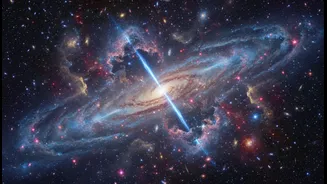
As a clump of gas and dust collapses, it begins to spin, pulling more material into a rotating disk while the core grows hotter and denser. This nascent star is known as a protostar. When the core temperature and pressure reach a critical point—millions of degrees—nuclear fusion ignites. In this moment, a star is truly born, beginning a life of shining that can last for billions of years. But this birth is not a gentle affair. Young stars are messy and violent. As they feed on the surrounding disk of material, many also blast out powerful, tightly focused jets of gas at incredible speeds. When these jets slam into the surrounding interstellar cloud, they create spectacular glowing patches of nebulosity known as Herbig-Haro objects. These outflows act like a cosmic feedback system, clearing away gas and dust, which can both prevent other stars from forming nearby and sculpt the landscape of the entire stellar nursery.
We Are Made of Stardust
This is where the cosmic story becomes deeply personal. The very first stars in the universe were made almost entirely of hydrogen and helium, the simple elements created in the Big Bang. Inside their fiery cores, nuclear fusion forged heavier elements. When these massive, first-generation stars died in cataclysmic supernova explosions, they scattered these new elements—like carbon, oxygen, and iron—across space. Subsequent generations of stars, including our own Sun, formed from this enriched material. This means that the carbon in our DNA, the oxygen in the air we breathe, and the iron in our blood were all created inside the heart of a star that lived and died long ago. When we study the birth of new stars, we are watching the next chapter in this ongoing cycle of cosmic recycling. We are, in the most literal sense, stardust looking back at its own origins.
Blueprints for New Worlds
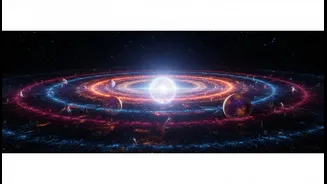
The study of star birth is also inextricably linked to the search for life elsewhere in the universe. The swirling disks of gas and dust that surround protostars are not just stellar leftovers; they are protoplanetary disks, the construction sites for new solar systems. Within these disks, tiny grains of dust and ice begin to stick together, growing into pebbles, then planetesimals, and eventually, full-fledged planets. By observing these disks around stars of different ages, astronomers can piece together the timeline of planet formation. They can see the chemical ingredients available for building worlds and learn how often Earth-like planets might form in habitable zones. Telescopes like JWST are providing an unprecedented census of these planetary nurseries, offering crucial clues about whether systems like our own are common or a cosmic rarity. Every young star with a disk is a potential blueprint for a new Earth.
The Hook That Saves Us
So how does star birth 'save' us? It doesn’t protect us from asteroids or reverse climate change. Its salvation is more profound. It saves us from cosmic loneliness and a poverty of perspective. In a world often consumed by division and short-term crises, the story of star formation offers a unifying, humbling context. It is the grand narrative of where we came from and our place in the universe. Understanding that we are part of this magnificent, ongoing process of creation connects us to something infinitely larger than ourselves. It sparks curiosity, fuels our search for knowledge, and inspires awe. This is the 'cosmic hook'—an irresistible pull to understand our origins, written in the light of newborn stars. This knowledge provides a perspective that is essential for a thoughtful and forward-looking species, reminding us of the shared, incredible journey of all life on this planet.