


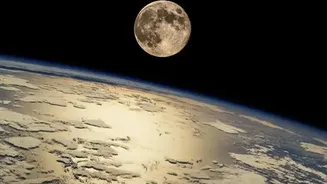
Earth: The Ultimate Exoplanet Blueprint
The hunt for exoplanets—planets orbiting stars other than our Sun—has yielded thousands of discoveries. But finding a planet is one thing; understanding if it could host life is another challenge entirely. These worlds are incredibly far away, visible
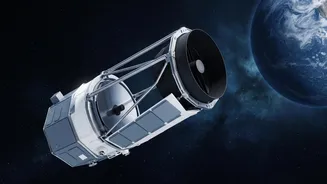
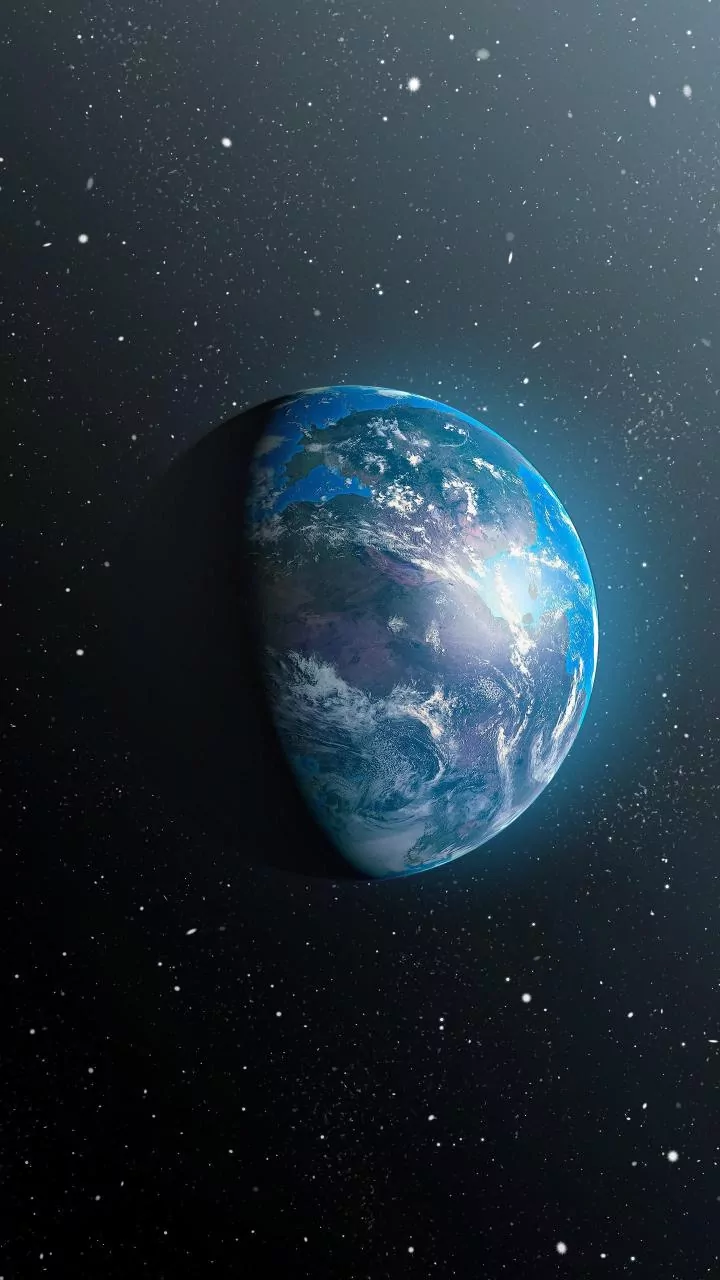
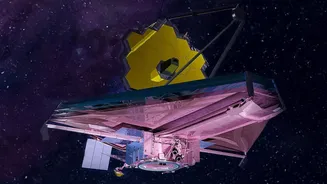
only as faint specks of light, if at all. This is where Earth becomes indispensable. It's our only confirmed example of an inhabited planet, providing a crucial reference point. Scientists use Earth as a model to test their theories and refine their methods, essentially asking: If we were aliens looking at our solar system, what signs would tell us Earth is alive? By studying our own world's atmospheric composition, surface features, and light signatures, astronomers can build a playbook for what to look for when they point powerful telescopes like the James Webb Space Telescope (JWST) toward the stars.
Reading Our Planet's Chemical Barcode
One of the most powerful techniques is called transmission spectroscopy. When an exoplanet passes in front of its star from our point of view (an event called a transit), starlight filters through its atmosphere. Different gases in that atmosphere absorb specific wavelengths of light, leaving behind a unique chemical "barcode" that telescopes can read. To calibrate this method, astronomers pretend Earth is a distant exoplanet. They have used spacecraft on their way to other destinations, or even observations of moonlight (which is reflected sunlight that has passed through Earth's atmosphere), to analyze our planet's own transmission spectrum. These studies confirm that key gases—known as biosignatures—are detectable. These include the combination of oxygen, a byproduct of photosynthesis, and methane, which on Earth is largely produced by living organisms. The simultaneous presence of these two gases is a strong hint of biological activity, as they would normally react and destroy each other without a constant source replenishing them.
The 'Pale Blue Dot' Perspective
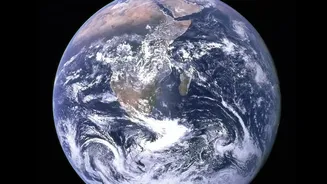
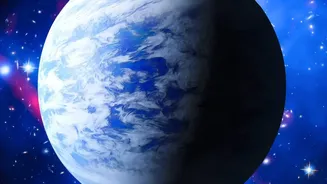
Beyond just the atmosphere, the light reflected from Earth itself holds clues. As our planet rotates, its colour and brightness subtly change. The blue of the oceans, the green of forests, the white of clouds and ice caps, and the brown of continents all combine to create a variable light signal. By observing Earth as a single, unresolved point of light—much like how we see exoplanets—scientists can learn to interpret these variations. A dip in certain colours might suggest vast oceans, while seasonal changes in green light could hint at widespread vegetation. These patterns, observed from afar, help astronomers build models to decode the faint light from exoplanets and guess whether they might have continents, oceans, or even plant life.
Searching for Signs of Technology
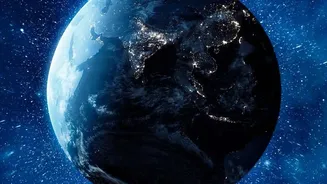
The search isn't just for biological life. Scientists are also looking for "technosignatures"—evidence of advanced, technology-using civilizations. Again, Earth is the only template we have. What signs of our own technology could be seen from another star? These could include the presence of artificial chemicals in our atmosphere, such as industrial pollutants like chlorofluorocarbons (CFCs), which would be hard to explain through natural processes alone. Other potential technosignatures are the glow of city lights on a planet's night side, or even modulated radio or laser signals being broadcast into space. By understanding the strength and characteristics of our own technosignatures, researchers can better estimate what kind of technology would be needed to detect similar signs from a civilization light-years away.