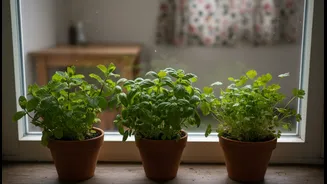






Mint (Pudina)
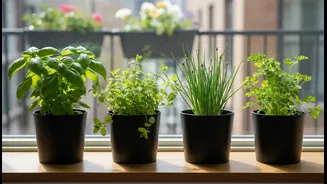
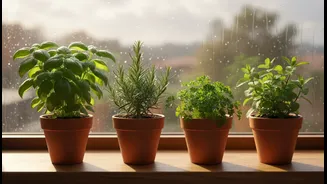
Mint is arguably the most forgiving and easiest herb for a beginner to grow indoors. Known for its resilience, it thrives in partial shade and loves the consistent moisture that the monsoon season naturally encourages. In fact, its aggressive growth is often
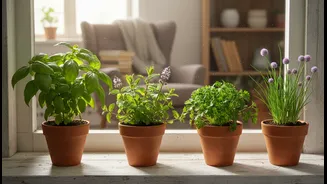
best contained within a pot, making it an ideal candidate for a windowsill. For Indian households, fresh pudina is a staple. Imagine plucking leaves for a refreshing chutney, a cooling glass of nimbu paani, or a fragrant addition to your evening chai. To get started, you can easily grow mint from a cutting. Simply place a healthy stem in a glass of water and wait for roots to appear before planting it in a pot with well-draining soil. Keep it in a spot that receives indirect light, water it regularly, and it will reward you with a continuous supply of aromatic leaves.
Coriander (Dhania)
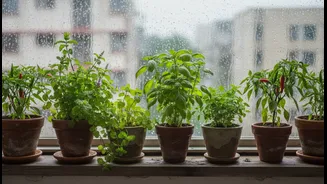
No Indian kitchen is complete without fresh dhania, and the good news is you can grow it on your windowsill, even during the monsoon. While coriander loves sun, it can be sensitive to the intense heat of Indian summers, which causes it to 'bolt' or flower prematurely. The cooler temperatures and gentler, indirect light of the monsoon are often more favorable for encouraging lush leafy growth. Coriander is known to grow well in the moist weather of the rainy season. For best results, use a deep pot to accommodate its taproot and sow seeds every few weeks to ensure a continuous harvest. Gently crush the seeds before planting to speed up germination. Soon, you'll have fresh, pungent leaves ready to garnish dals, curries, and raitas, bringing a burst of flavour that shop-bought herbs can't match.
Parsley
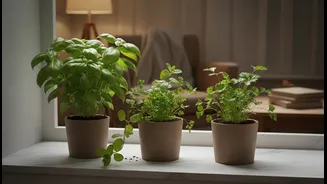
Often mistaken for a simple garnish, parsley is a nutrient-packed herb that adapts surprisingly well to indoor, low-light conditions. It naturally grows in partial shade, making it genetically prepared for a less-than-sunny spot in your home. Both flat-leaf (Italian) and curly varieties can be grown indoors, though the flat-leaf type is often preferred for its stronger flavour. While it can be slow to germinate from seed, patience pays off with a plant that can provide fresh cuttings for months. It does best with bright, indirect light, so an east-facing window is ideal. Ensure the pot has good drainage and water it regularly, and you'll have a peppery, fresh herb on hand to brighten up salads, sauces, and soups, adding a touch of green to even the greyest monsoon day.
Lemon Balm
For those looking to try something a little different, lemon balm is a delightful and surprisingly easy choice. A member of the mint family, it shares a tolerance for cooler temperatures and moderate indoor light. While it appreciates a few hours of sun, it can become leggy and less fragrant in low light, so it's a good idea to rotate the pot and pinch back the tips regularly to encourage bushier growth. The real prize is its wonderful, calming lemon scent and flavour. The leaves are perfect for making a soothing herbal tea—a perfect companion for a rainy afternoon—or for adding a citrusy twist to salads and drinks. It grows well in containers, and like mint, its cheerful green leaves and uplifting aroma can be a real mood booster during the long, damp days of the monsoon.