







The Wisdom of Monsoon Eating
The arrival of the monsoon brings relief from summer's heat, but it also ushers in a period of high humidity and dampness, which can weaken our digestive system and immunity. For generations, Indian culinary traditions have adapted to this change. The focus
shifts to meals that are warm, light, and easy to digest. This ancient wisdom, rooted in Ayurvedic principles like 'Ritucharya' (seasonal regimen), suggests that our digestive fire, or 'agni', is weaker during the rains. Consequently, the ideal monsoon diet avoids heavy, oily, and raw foods, instead celebrating ingredients that support digestion and bolster the body's defences against seasonal ailments. This is where the powerful combination of herbs, spices, and fermented foods takes centre stage.
The Warming Power of Spices
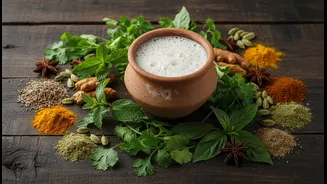
The spice box is the first line of defence in a monsoon kitchen. Spices are not just for flavour; they are chosen for their therapeutic properties. Warming spices like ginger, turmeric, black pepper, cloves, and cinnamon are used generously. Ginger, often found in chai and curries, is renowned for its ability to combat colds and aid digestion. Turmeric, the 'golden spice', is a potent anti-inflammatory and immunity booster. Black pepper, called the 'king of spices', enhances nutrient absorption and helps clear respiratory congestion. These spices work together in dishes like peppery rasam, hearty khichdi, and healing kadhas (herbal decoctions) to keep the body warm, stimulate metabolism, and fight off infections that are common during this season.
Harnessing Fresh Herbal Goodness
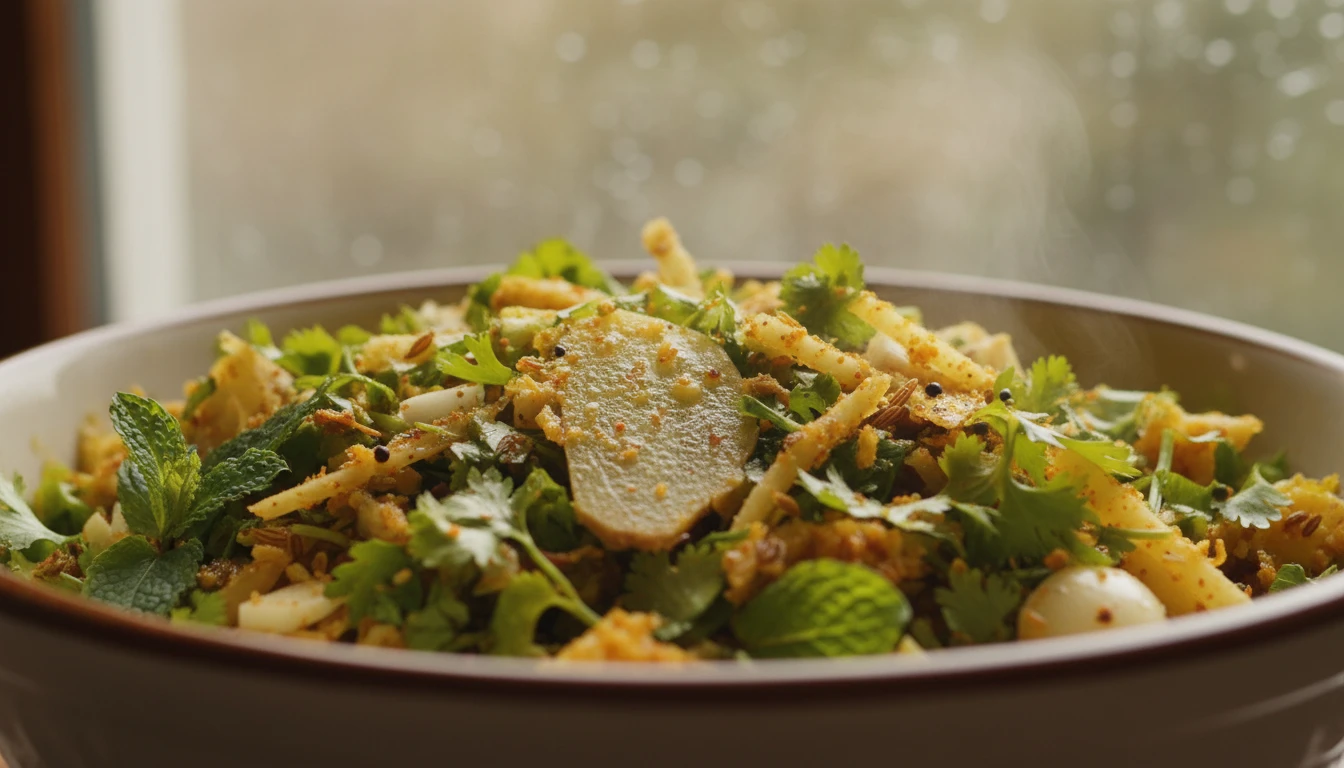
Alongside dried spices, fresh herbs play a crucial role. Ingredients like tulsi (holy basil), mint, and coriander are staples. Tulsi is revered for its ability to support respiratory health and is a common ingredient in monsoon teas and kadhas. Mint and coriander add freshness to dishes and are known for their digestive and antibacterial properties. They are often used to make vibrant chutneys that accompany popular monsoon snacks like pakoras and samosas, providing a burst of flavour while making the fried foods a little easier to digest. These herbs are packed with antioxidants and help fortify the body's natural defences when it's most vulnerable.
The Fermentation Fascination
Fermentation is the third, crucial pillar of the monsoon diet. Fermented foods are rich in probiotics, the beneficial bacteria that are vital for good gut health. A healthy gut is directly linked to a strong immune system, which is especially important during the rainy season. Traditional Indian meals frequently include probiotic-rich foods. South Indian staples like idli and dosa are made from fermented batter, making them light and easy to digest. Curd (yoghurt) and buttermilk (chaas) are consumed across the country to cool the system and aid digestion. Even pickles (achar), when traditionally prepared through lacto-fermentation, can be a source of good bacteria. Another example is Kanji, a tangy North Indian drink made from fermented carrots or beets, which is known to boost immunity.
A Plate Full of Harmony
The magic of monsoon recipes lies in how these three elements—spices, herbs, and fermented foods—are woven together. Consider a simple, comforting meal of Masala Khichdi served with a side of fresh curd and a tangy lemon pickle. The khichdi itself is cooked with warming, digestive spices like turmeric, cumin, and ginger. The curd provides a dose of probiotics, and the pickle adds another layer of fermented goodness. Another example is a bowl of rasam, a thin South Indian soup, which is heavy on black pepper and tamarind, often enjoyed with steamed rice and a dollop of ghee. This synergy isn't accidental; it's a time-tested culinary system designed to deliver comfort, flavour, and wellness in every bite, perfectly aligning the body with the rhythm of the season.