



A Tale of Two Moons
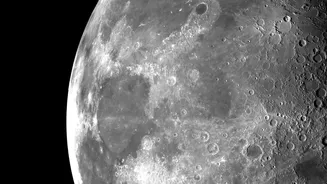
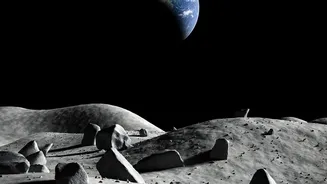
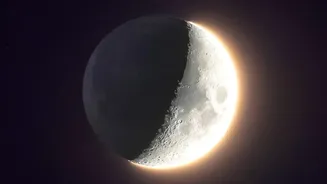
Anyone who has looked at a globe of the Moon can see the stark contrast. The near side, the face tidally locked to always point toward Earth, is characterized by vast, dark, smooth plains called 'maria' or seas. These are ancient, solidified lava flows
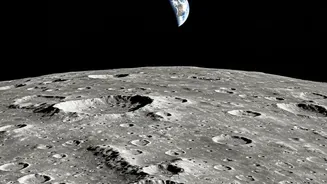
that fill enormous impact basins. In contrast, the far side is a rugged, chaotic landscape. It is almost entirely covered in craters of all sizes, with a much thicker, mountainous crust and very few maria. This fundamental split, known as the lunar dichotomy, has puzzled scientists since the Soviet Luna 3 probe first photographed the far side in 1959. It’s as if they are two different worlds fused together.
The Clue in the Crust
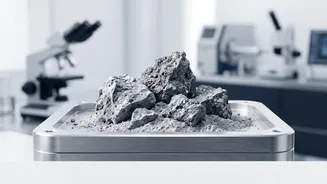
For years, the leading explanation centered on the crust's thickness. The far side's crust is significantly thicker and more ancient. But the mystery remained: why did it form that way? Recent evidence, including analysis of the first-ever samples returned from the lunar far side by China's Chang'e missions, points to a new culprit: heat. The theory is that the two hemispheres had wildly different thermal histories. The near side stayed hotter for much longer after the Moon's initial formation. New analysis suggests that far-side lava formed at temperatures roughly 100°C cooler than lava on the near side, providing the first direct evidence of this internal temperature difference.
A Concentration of 'KREEP'
The key to this heat imbalance appears to be a unique geological cocktail known by the acronym KREEP. This stands for potassium (K), rare-earth elements (REE), and phosphorus (P). These elements, along with others like thorium and uranium, are 'incompatible', meaning they didn't easily fit into the crystal structures of cooling minerals in the Moon's early magma ocean. As a result, they became concentrated in the final dregs of molten material. These elements are also radioactive, and they produce heat as they decay. Orbiters have mapped the Moon and found that this KREEP material is overwhelmingly concentrated on the near side, creating what's known as the Procellarum KREEP Terrane. This essentially created a giant, natural heated blanket under one side of the Moon.
Tracing Back to a Violent Birth
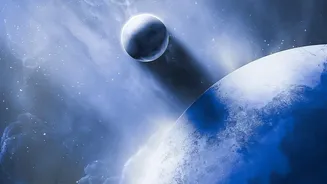
But how did all this heat-producing material end up on one side? The answer may lie in the Moon's violent birth and its early relationship with Earth. The leading theory of lunar formation is the Giant-Impact Hypothesis: that a Mars-sized object named Theia slammed into a young Earth, and the Moon coalesced from the resulting debris. In its infancy, the Moon was much closer to a still-glowing, molten Earth. One side of the Moon would have been constantly baked by the radiant heat from our planet, while the far side cooled more rapidly. This initial temperature difference could have triggered large-scale convection within the lunar magma ocean, effectively pushing the lighter crustal materials toward the cooling far side and dragging the dense, KREEP-rich residual magma toward the hotter near side.
Putting the Puzzle Together
This thermal imbalance explains the visual differences we see today. The hotter near side, with its thinner crust and underlying blanket of heat-producing KREEP, was a hotbed of volcanic activity for billions of years. When large asteroids struck, they could easily puncture the thin crust, allowing magma to flood out and form the vast, dark maria. On the far side, the crust was too thick and the mantle too cool. Even massive impacts couldn't easily break through to trigger widespread volcanism, leaving the ancient, cratered highlands largely intact. The result is the two-faced moon we are now finally beginning to understand.