






Why Bodyweight Training Works
Using your own body for resistance is a powerful way to build muscle, improve endurance, and enhance flexibility. This method, also known as calisthenics, is perfect for beginners because it allows you to master foundational movements safely before adding
any external weight. Exercises like squats, push-ups, and planks are functional, meaning they mimic everyday motions like lifting groceries or climbing stairs, making daily life easier. The best part? Bodyweight workouts are convenient, cost nothing, and can be done anywhere, from your living room to a hotel room, making it easier to stay consistent.
The Foundational Four Exercises
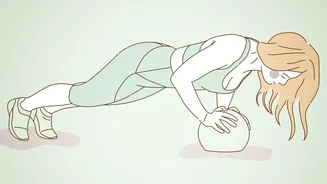
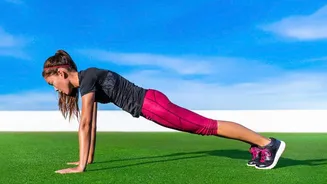
To start, focus on a few key exercises that target multiple muscle groups for a full-body workout. 1. Squats: This powerhouse move primarily targets your quadriceps, hamstrings, and glutes. Stand with feet shoulder-width apart, keep your chest up, and lower your hips as if sitting in a chair. Aim to keep your thighs parallel to the floor. 2. Push-ups: A classic for a reason, push-ups build strength in your chest, shoulders, and triceps. If a standard push-up is too challenging, start with your hands on a wall or an elevated surface like a chair, or perform them on your knees. 3. Plank: This is an isometric exercise that works your entire core, including your abs and back. Hold a push-up position, keeping a straight line from your head to your heels, and engage your core to prevent your hips from sagging. 4. Lunges: Lunges are excellent for your glutes, hamstrings, and quadriceps, while also improving your balance and stability. Step one leg forward, bending both knees to 90 degrees, ensuring your front knee stays over your ankle.
Hack Your Routine: Progress and Variation
The secret to building muscle with bodyweight exercises is a principle called progressive overload. This simply means you need to consistently challenge your muscles. You don't need weights to do this. Instead, you can: Increase Reps: Try adding one or two more repetitions to each set every week. Slow Down the Movement: Increasing the 'time under tension' by performing an exercise more slowly can make it significantly harder and more effective for muscle growth. Reduce Rest Time: Shortening the rest period between sets keeps your heart rate up and challenges your muscular endurance. Try Harder Variations: Once you've mastered the basic squat, you can try jump squats. When push-ups on your knees feel easy, progress to full push-ups.
Your Beginner Weekly Workout Plan
Consistency is more important than intensity when you're starting out. Aim for three strength training sessions per week on non-consecutive days to give your muscles time to recover and grow. A simple full-body routine is a great way to begin. Sample 20-Minute Routine (perform 2-3 rounds): Bodyweight Squats: 15 reps Rest: 30 seconds Knee or Incline Push-ups: 10 reps Rest: 30 seconds Alternating Lunges: 10 reps per leg Rest: 30 seconds Plank: Hold for 30 seconds Rest: 60 seconds before starting the next round. Always start with a 5-minute warm-up of light movement like marching in place and arm circles, and finish with a cool-down stretch.