




A Tale of Two Ice Sheets
To understand what's happening in Antarctica, it's crucial to know that it's not one monolithic block of ice. The continent is geographically divided by the Transantarctic Mountains into two distinct regions: the East and West Antarctic Ice Sheets. For
a long time, scientists considered the colossal East Antarctic Ice Sheet, which holds the majority of the world's freshwater, to be relatively stable. Most of the immediate concern has been focused on the smaller, more vulnerable West Antarctic Ice Sheet (WAIS). This is because much of the WAIS rests on bedrock that is below sea level, making it highly susceptible to incursions of warm ocean water.
The Unravelling of the West
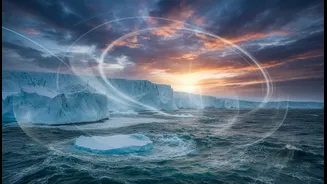
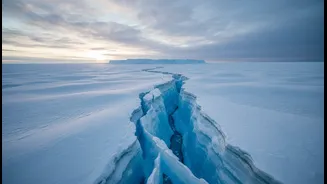
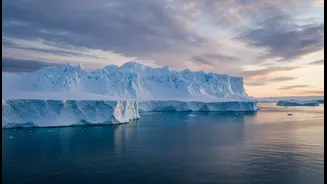
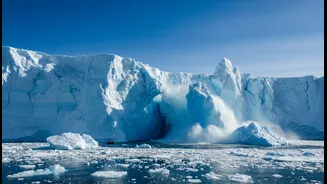
In West Antarctica, glaciers are in rapid retreat. The most famous of these is the Thwaites Glacier, often called the 'Doomsday Glacier'. It is enormous—roughly the size of Great Britain—and its complete collapse could raise global sea levels by over 65 centimetres. More worryingly, it acts as a natural plug holding back even more ice from the rest of the West Antarctic Ice Sheet. Recent research shows that warm, deep ocean water is seeping beneath the glacier, melting it from below and causing its grounding line—the point where the glacier lifts off the seabed and starts to float—to retreat inland. Scientists have observed that the ice shelf buttressing the glacier is fracturing and could collapse, a process that has accelerated in recent years. This destabilisation is a primary driver of Antarctica's contribution to rising sea levels.
The Sea Ice Paradox
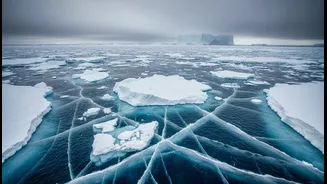
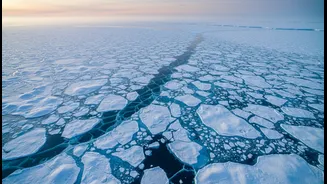
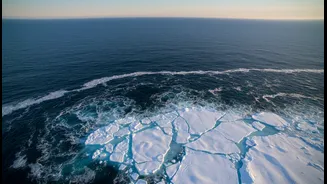
Separate from the land-based ice sheets is the sea ice that forms on the Southern Ocean's surface each winter. For decades, unlike in the Arctic, the extent of Antarctic sea ice was actually growing slightly. However, since 2016, that trend has dramatically reversed, with sea ice levels crashing to record lows for several consecutive years. Scientists now believe this sudden decline was caused by changes in wind patterns that churned up warmer, saltier water from the ocean depths, which in turn melted the ice from below. While the melting of floating sea ice doesn't directly raise sea levels, its absence has a significant knock-on effect. The white ice reflects sunlight back into space; when it's replaced by dark ocean water, the ocean absorbs more heat, accelerating warming and potentially exposing coastal land-based ice shelves to more wave action and further melting.
A Waking Giant in the East?
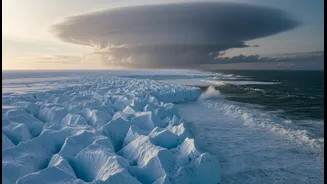
While the West has been the focus of concern, the so-called 'sleeping giant' of the East Antarctic Ice Sheet (EAIS) is showing worrying signs. Previously thought to be largely immune to warming, recent studies indicate that some of its massive glaciers, like the Totten and Denman glaciers, are thinning and losing ice because their bases also lie below sea level, exposed to warming ocean currents. Record-breaking heatwaves have also been recorded in the region. Although a complete collapse is not considered imminent, evidence suggests that parts of the EAIS have collapsed in the geological past under climate conditions similar to those we are approaching. Even a small percentage of loss from this massive ice sheet would have catastrophic consequences for global sea levels.
Why It Matters for India
The changes in Antarctica might seem distant, but their consequences are global. The continent's ice loss is a major contributor to global sea-level rise. For a country like India with a 7,500-kilometre coastline and numerous low-lying megacities like Mumbai, Kolkata, and Chennai, even a modest increase in sea levels amplifies the risks of storm surges, coastal erosion, and permanent flooding. Furthermore, the massive influx of cold freshwater from melting ice sheets can disrupt global ocean circulation patterns, which in turn can influence weather systems like the Indian monsoon, making rainfall more erratic and extreme.