




A Smarter Eye in the Sky
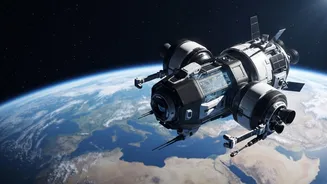
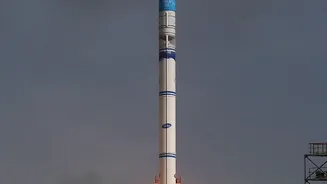
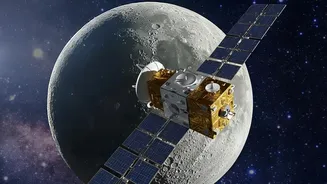
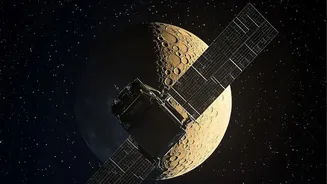
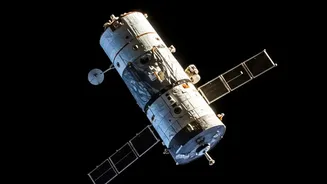
On October 1, a refrigerator-sized satellite named MVP is scheduled to launch, but its size belies its significance. This is a prototype for Google’s ‘Project Suncatcher,’ an ambitious initiative to test the viability of artificial intelligence hardware
in the harsh environment of space. Onboard are custom AI chips known as Tensor Processing Units (TPUs), designed to see how well they can operate beyond Earth's atmosphere, handling the dual challenges of extreme radiation and cooling in a vacuum. While this initial launch is an experiment, its success could validate the concept of building vast, solar-powered AI data centres in orbit. This represents a fundamental change from how satellites have traditionally worked, moving them from passive collectors of information to active, intelligent participants in their missions.
From Relaying Data to Making Decisions
For decades, the model for space missions has been straightforward: a satellite or probe gathers enormous amounts of raw data—images, readings, and signals—and beams it all back to Earth. Here, teams of scientists and powerful computers sift through everything to find the useful information, a process that is slow and incredibly bandwidth-intensive. A satellite might send back hundreds of images of a planet’s surface, only for most of them to be obscured by clouds. Onboard AI, also known as edge computing, flips this model on its head. Instead of sending the entire dataset, the satellite itself can analyse the information in real-time. It can be trained to recognise clouds and discard those images, identify scientifically interesting geological formations, or detect the heat signature of a wildfire and immediately alert ground stations, sending only the critical data. This saves immense time and resources, transforming the satellite from a simple camera into a discerning analyst.
Solving the Cosmic Lag
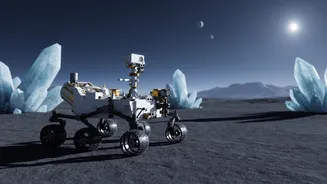
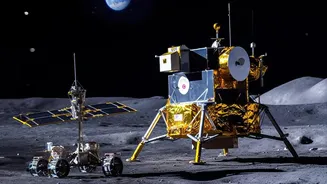
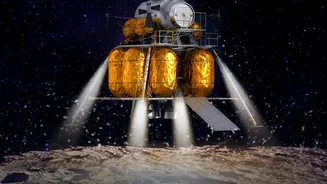
The true power of autonomy becomes critical the farther we venture from home. A radio signal sent to Mars can take over 20 minutes to arrive, making real-time control of a rover impossible. Operators must send instructions and then wait, slowing exploration to a crawl. An AI-powered rover, however, could navigate the Martian landscape on its own, using its cameras and sensors to identify hazards like rocks or steep craters and plot a safe path forward without waiting for commands from Earth. This ability to react instantly is vital. Autonomous systems can help spacecraft dodge space debris in crowded orbits, respond to sudden solar flares that could damage their electronics, or adjust their own systems if they detect an impending component failure. For deep space probes, this means they could independently decide to investigate a sudden, unexpected astronomical event, capturing data that would have been missed by the time humans on Earth even knew it was happening.
India’s Stake in the AI Space Race
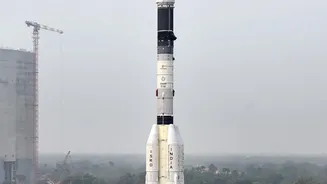
This global shift towards autonomous space systems is not lost on the Indian Space Research Organisation (ISRO). India, already a frugal and efficient power in space, sees AI and machine learning as essential for its next generation of missions. ISRO’s chairman recently noted that these technologies have become a “need of the hour,” moving from theoretical concepts to practical tools. In fact, AI-driven systems played a role in the historic soft landing of the Chandrayaan-3 mission, helping the lander analyse its position and velocity to ensure a safe touchdown. As ISRO plans for more ambitious projects, including the Gaganyaan human spaceflight program and future missions to Mars and Venus, the ability to deploy intelligent, autonomous systems will be crucial. The development of AI-powered satellites and rovers will enable India to conduct more complex scientific research, manage its growing number of space assets, and cement its position as a leader in space technology innovation.