






The Challenge of City Farming
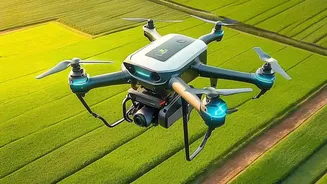
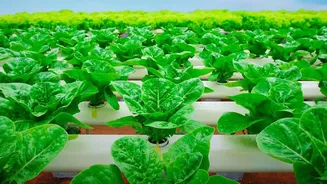
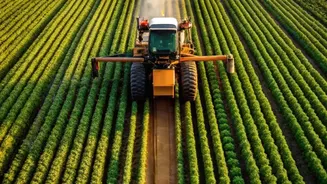
Urban agriculture is booming. From rooftop gardens to vertical farms in converted warehouses, growing food closer to where it’s consumed promises fresher produce and a smaller carbon footprint. Consumers driving this trend also demand organic, chemical-free
options. But this creates a major headache for city farmers. Pests don’t care about zoning laws, and traditional organic methods can be tough to implement in controlled, high-density environments. A single infestation in a vertical farm can ruin an entire crop. This is the problem that has sent agricultural technologists looking for a smarter, cleaner solution—one that works with nature, not against it.
An Invisible, Silent Fence
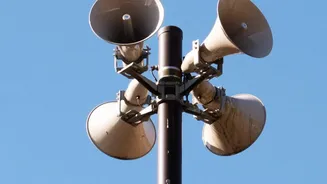
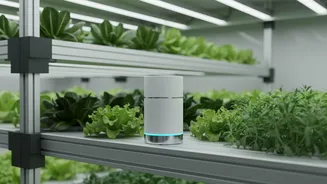
The solution sounds like science fiction: protecting plants with sound waves. The technology, known as bio-acoustic pest control, primarily uses ultrasonic frequencies—sound pitched too high for humans to hear. These devices emit precise sound waves that act as a powerful deterrent for many common agricultural pests. For certain insects, like specific species of moths, the high-frequency sounds mimic the echolocation of predator bats, their natural enemy. This triggers the moths’ instinct to flee, preventing them from landing on crops and laying eggs. For other pests like rodents and some birds, the sound creates an acoustically hostile environment they would rather avoid. It’s essentially a silent, invisible fence that persuades pests to go elsewhere, no chemicals required.
From Pest Control to Plant Health
While repelling pests is a major application, the power of sound in agriculture doesn't stop there. Researchers are exploring how sound waves can actively benefit plants. In one groundbreaking development, scientists have used high-frequency sound to atomize liquids into a fine mist that settles on leaves. This technique allows for the gentle application of protective, UV-blocking crystal coatings that act like a sunscreen for plants, without any heat or harsh chemicals that could damage the delicate tissue. Other studies have shown that specific frequencies can even influence plant hormones, encouraging stronger root development and faster growth. This dual potential—protection from external threats and promotion of internal health—makes sound a uniquely versatile tool for the future of farming.
Reality in the Greenhouse
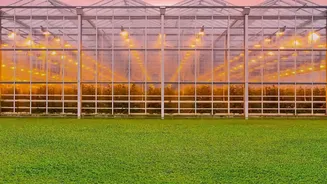
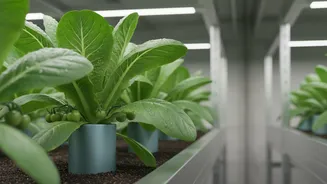
So, is this the end of pesticides? Not quite, but it’s a huge step forward. Bio-acoustic technology is most effective in controlled or semi-controlled environments like greenhouses and vertical farms, where sound waves aren't lost over vast open fields. The effectiveness also varies depending on the specific pest, as different species are sensitive to different frequencies. For instance, while it may dramatically reduce moth intrusions, it might have little effect on spider mites. Because of this, farmers see sound-based systems not as a magic bullet, but as a key component of a larger strategy called Integrated Pest Management (IPM). By using sound to handle the bulk of pest pressure, growers can drastically reduce—and often eliminate—their reliance on chemical sprays, achieving the organic standard that modern consumers demand.