



Understanding the Delta Aquariid Shower
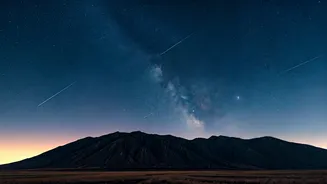
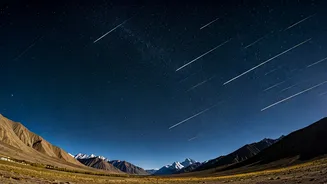
The Delta Aquariid meteor shower is an annual celestial event that is active from mid-July to late August. It is expected to peak on the night of July 29-30 in 2026. Unlike the brighter, more famous Perseids that follow in August, the Delta Aquariids
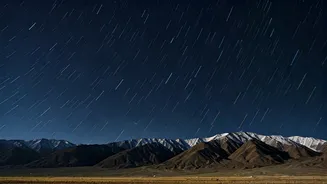
are known for being fainter and more subtle. At its peak under ideal, dark-sky conditions, the shower can produce a steady stream of 15 to 20 meteors per hour. These meteors are debris left behind by comets Marsden and Kracht. Because they are relatively faint, the key to a good viewing experience is finding a location with minimal light pollution and a clear, dark sky—which is where Ladakh's unique geography comes into play.
The High-Altitude Advantage
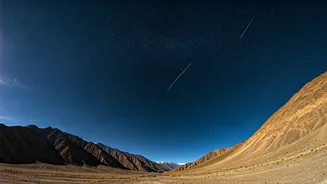
Ladakh's average elevation of over 10,000 feet is its first major superpower when it comes to stargazing. At such high altitudes, the Earth's atmosphere is significantly thinner. A thinner atmosphere means there are fewer particles to scatter and distort the faint light coming from the meteors. This results in what astronomers call better "seeing" and transparency—the sky appears darker and the stars sharper, allowing even the faintest meteors to become visible to the naked eye. Professional observatories are built on high mountains for this very reason: to get above as much of the blurring effect of the atmosphere as possible.
Escaping the City Glow
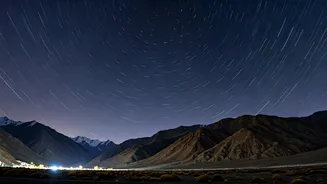
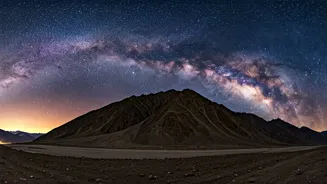
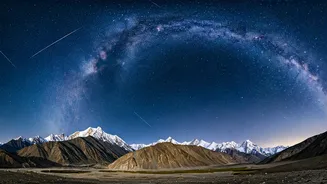
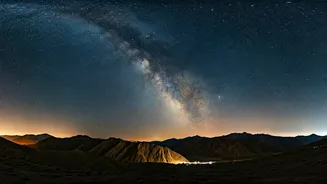
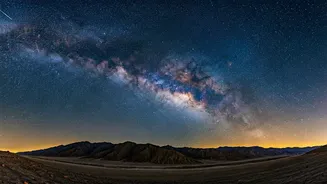
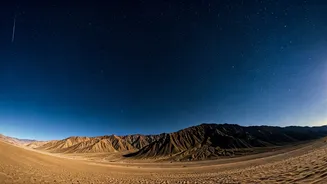
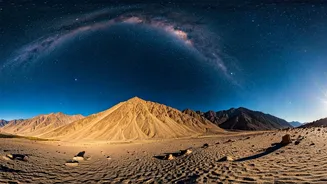
For most of India, pervasive light pollution from cities and towns washes out the night sky, making it impossible to see anything but the brightest stars and planets. Ladakh, with its sparse population and vast, remote landscapes, offers some of the darkest skies in the country. This absence of artificial light is crucial for viewing a faint shower like the Delta Aquariids. In recognition of its pristine skies, a 22-kilometre radius in the Hanle region was officially designated as India's first Dark Sky Reserve in December 2022. This sanctuary for darkness, home to the Indian Astronomical Observatory, works with the local community to minimise light pollution, creating an unparalleled stargazing environment.
A Welcome Break from the Monsoon
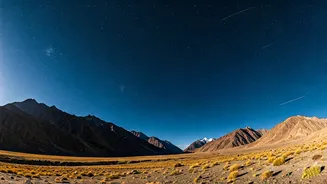
Perhaps Ladakh's most decisive advantage for the Delta Aquariids is its weather. The shower's peak in late July and early August coincides with the height of the monsoon season across most of the Indian subcontinent. However, Ladakh lies in a rain shadow created by the Himalayas, which blocks the moisture-laden clouds. As a result, while the rest of the country is often under a thick blanket of clouds and rain, Ladakh typically experiences clear, dry, and sunny days with cloudless nights, offering uninterrupted views of the cosmos. This unique climatic condition makes it one of the most reliable places in India to be for any astronomical event during the monsoon months.
Where and How to Watch
The ultimate destination within Ladakh is the Hanle Dark Sky Reserve, though getting there requires permits and planning. However, many other areas offer spectacular views, including the Nubra Valley, Pangong Tso, and Tso Moriri, all of which are far from significant light pollution. When planning a trip, remember to acclimatise to the high altitude for a few days in Leh before venturing to even higher, more remote areas. For the shower itself, no special equipment is needed. Find a comfortable spot, lie back, and give your eyes at least 20-30 minutes to fully adapt to the darkness. Be patient, and dress warmly, as night temperatures can drop significantly even in summer.