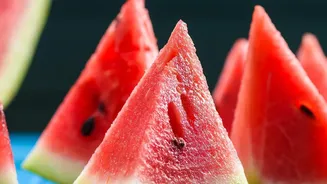






As the summer sun beats down, nothing offers relief quite like a juicy slice of watermelon. But once the sweet red flesh is gone, the thick white rind is often tossed aside. What if that rind could become your next delicious meal?
The Zero-Waste Kitchen
In many Indian households,
the philosophy of using every part of a vegetable is a long-standing tradition born from both thrift and a deep respect for food. From potato peels to cauliflower stems, resourceful home cooks have always found ways to turn scraps into flavourful dishes. Using watermelon rind fits perfectly into this zero-waste ethos. The practice isn't just about saving money; it's a sustainable approach that reduces kitchen waste and unlocks surprising culinary potential. The rind, which many people throw away, is a versatile ingredient waiting to be discovered. Once you peel away the tough outer green skin, the firm white part can be cooked much like any other vegetable.
A Surprisingly Nutritious Ingredient
Beyond its sustainable appeal, watermelon rind is also packed with nutrients. It is a good source of dietary fibre, which is essential for digestive health. The rind is particularly noted for being rich in citrulline, an amino acid that the body converts to arginine, which may help improve blood flow. It also contains valuable nutrients like vitamin C, potassium, and vitamin B6. While the red flesh is famous for its lycopene content, the rind offers its own unique set of benefits, making it a healthy addition to your meals.
Classic Tarbooz ke Chilke ki Sabzi
One of the most popular ways to cook watermelon rind in India is by making a simple and flavourful sabzi, or vegetable stir-fry. Known as 'Tarbooz ke Chilke ki Sabzi', this dish is common in states like Rajasthan and Gujarat. The rind has a neutral taste and a texture similar to a gourd, which allows it to absorb spices beautifully. To prepare it, first use a peeler to remove the tough, dark green outer skin. Dice the remaining white rind into small, bite-sized cubes. Heat oil in a pan, and temper with cumin seeds, mustard seeds, and a pinch of asafoetida (hing). Add the chopped rind, along with spices like turmeric, red chilli powder, and coriander powder. Sauté for a few minutes before adding a little water, covering the pan, and letting it cook for 15-20 minutes until the rind is tender. Finish with a sprinkle of amchur (dry mango powder) for tanginess and garam masala for warmth.
Tangy and Sweet Watermelon Rind Chutney
The versatility of the rind also shines in chutneys and pickles. A sweet and tangy chutney is another excellent way to ensure no part of the watermelon goes to waste. The process is straightforward and yields a delicious condiment that pairs well with rotis, parathas, or even as a spread. For a simple version, combine cubed watermelon rind in a pot with sugar, vinegar, finely chopped ginger, and spices like red chilli flakes and salt. Cook the mixture on low heat, allowing the rind to soften and the flavours to meld together until it reaches a thick, jam-like consistency. This preserve can be stored in the refrigerator and enjoyed for weeks.
Other Creative Uses
The culinary uses for watermelon rind don't stop there. For a South Indian twist, you can prepare a 'Majjige Huli' or 'Mor Kuzhambu', which is a yoghurt-based curry. In this preparation, tender-cooked rind is simmered in a spiced coconut and yoghurt gravy. You can also julienne the rind and add it to stir-fries for a crunchy texture, much like cucumber or jicama. For those who enjoy sweet treats, the rind can be used to make 'murabba', a traditional sweet fruit preserve, or even a 'halwa'. The possibilities are as vast as your culinary imagination.