


The Sun’s Violent Tantrums
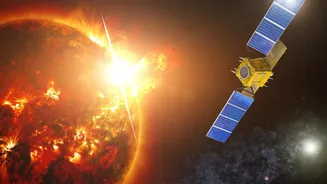
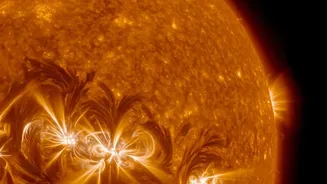
The Sun may seem like a steady source of light and warmth, but it has a volatile side. Occasionally, it unleashes a Coronal Mass Ejection (CME), a colossal explosion of plasma and magnetic fields from its outer atmosphere, the corona. These are not small
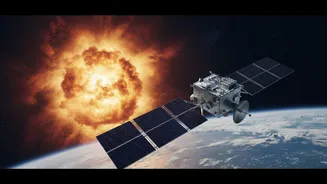
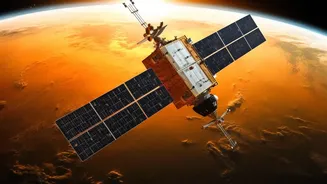
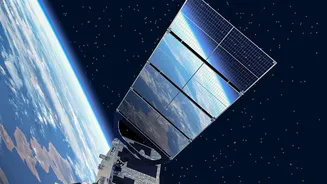
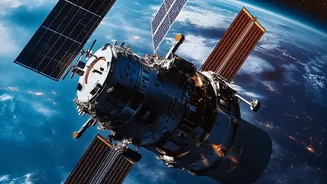
events; a single CME can blast billions of tons of solar material into space at speeds reaching up to 3,000 kilometres per second. If one of these solar storms is aimed at Earth, it can wreak havoc on our technology. The blast of charged particles can damage satellite electronics, degrade solar arrays, and even heat the upper atmosphere, creating extra drag that can pull satellites out of orbit.
A Network of Solar Sentinels
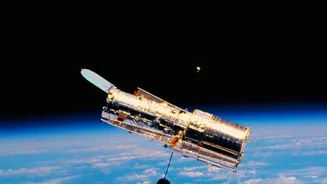
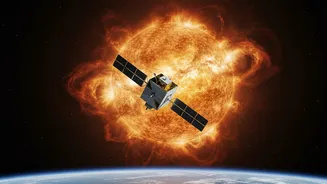
To protect our orbital assets, we first need to see a CME coming. This is the job of a fleet of solar observatories. Spacecraft like the Solar and Heliospheric Observatory (SOHO) and the STEREO-A spacecraft use instruments called coronagraphs to watch for the tell-tale signs of an eruption. These instruments block the Sun's blinding glare, allowing them to capture images of the much fainter corona and spot a CME as it leaves the Sun. More recently, India's Aditya-L1 mission has taken up a prime position at Lagrange Point 1 (L1), about 1.5 million km from Earth. From this vantage point, it gets an uninterrupted view of the Sun and can provide crucial early warnings of hostile space weather.
From Observation to Prediction
Spotting a CME is just the first step. The critical question is: where is it going? This is where sophisticated computer modeling comes in. Scientists feed data on a CME's speed, size, and direction—gathered from spacecraft like SOHO—into powerful predictive models. The primary tool used by forecasters, including at NOAA’s Space Weather Prediction Center, is a system called WSA-ENLIL. This is actually two models working together. The WSA model uses data from ground-based telescopes to simulate the solar wind near the Sun, and the ENLIL model (named for a Mesopotamian storm god) then simulates how the CME travels through that solar wind across the inner heliosphere. This provides a 1-to-4-day advance warning, predicting if, when, and how strongly a CME will impact Earth.
Shielding Our Lifelines in Orbit
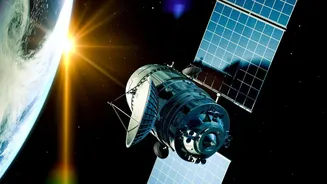
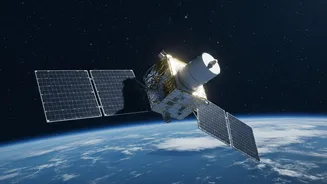
Once a credible threat is identified, the forecast is useless without action. Space weather forecasters issue alerts to government agencies, infrastructure operators, and commercial satellite companies. For spacecraft operators, this warning is a critical call to batten down the hatches. Protecting a satellite isn't about raising a physical shield; it's a series of strategic operational maneuvers. Operators might power down non-essential, sensitive electronics to prevent them from being fried by charged particles. They can reorient a spacecraft to ensure its most vital components are facing away from the incoming solar storm. In some cases, they can command a satellite to enter a protective 'safe mode,' a minimal-function state designed to weather the storm. These actions are vital to preserving the GPS, communication, and earth observation satellites that are woven into the fabric of our daily lives.