






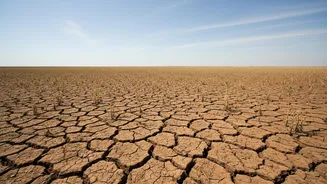


How Weak Is the Monsoon?
After a delayed start and a major deficit in June, the monsoon staged a brief recovery in July. However, the momentum did not last. As of mid-August, cumulative rainfall for the season remains below normal. The India Meteorological Department (IMD) had
forecast below-normal rainfall for both August and September, predicting precipitation could be less than 94% of the long-period average. As of August 14, the total area sown with summer (Kharif) crops was already about 2% lower than the previous year, with key crops like rice, tur, and maize seeing even larger drops in acreage. With the sowing window nearly closed, the nation's agricultural output now depends heavily on the rainfall received in the coming weeks.
The Science Behind the Slowdown
Several major climatic factors are working together to suppress the monsoon this year. The primary culprit is a strengthening El Niño event in the Pacific Ocean. El Niño is a warming of the ocean surface that disrupts global weather patterns and is historically linked to weaker monsoon rains in India. Forecasters have warned this El Niño could become one of the strongest on record. This is combined with other unhelpful conditions, such as a weak Somali Jet—a crucial wind system that pushes moisture from the Arabian Sea towards India—and a neutral Indian Ocean Dipole, which, if positive, could have helped offset El Niño's negative impact.
Trouble Brewing in the Fields
For India’s farmers, an erratic and weak monsoon is a direct threat to their livelihood. Nearly half of the country's farmland lacks irrigation, making rain-fed agriculture highly vulnerable. The delayed and deficient rains have already impacted the sowing of critical Kharif crops like rice, pulses, cotton, and sugarcane. In response, the government has identified nearly 200 districts as highly vulnerable to the impacts of El Niño and is preparing contingency plans. Farmers in some regions have been advised to switch to short-duration and less water-intensive crops to mitigate potential losses. However, lower yields seem increasingly likely, which will directly squeeze farm incomes.
The Ripple Effect on Your Wallet
The connection between rainfall and your grocery bill is direct and powerful. Lower agricultural output inevitably leads to a supply crunch, which in turn pushes up food prices. Economists are warning that a prolonged rainfall deficit could fuel food inflation, which was already on the rise in July. Items like pulses, oilseeds, and vegetables are particularly at risk. This price pressure could force the government to take measures like banning exports of certain commodities to ensure domestic availability, as has been seen with sugar. Ultimately, a weak monsoon means households across the country, especially in urban areas, may have to stretch their budgets further for essential food items in the coming months.
Policymakers on High Alert
The threat of a weak monsoon and rising food inflation has put both the government and the Reserve Bank of India (RBI) on high alert. A spike in food prices can drive up overall retail inflation, complicating the RBI's efforts to maintain price stability. While the central bank has so far held interest rates steady, persistent inflation could force a re-evaluation of its monetary policy later in the year. For its part, the central government is working with states to prepare for the fallout, focusing on revised district-level plans for agriculture and water management to cushion the blow for the most vulnerable communities.