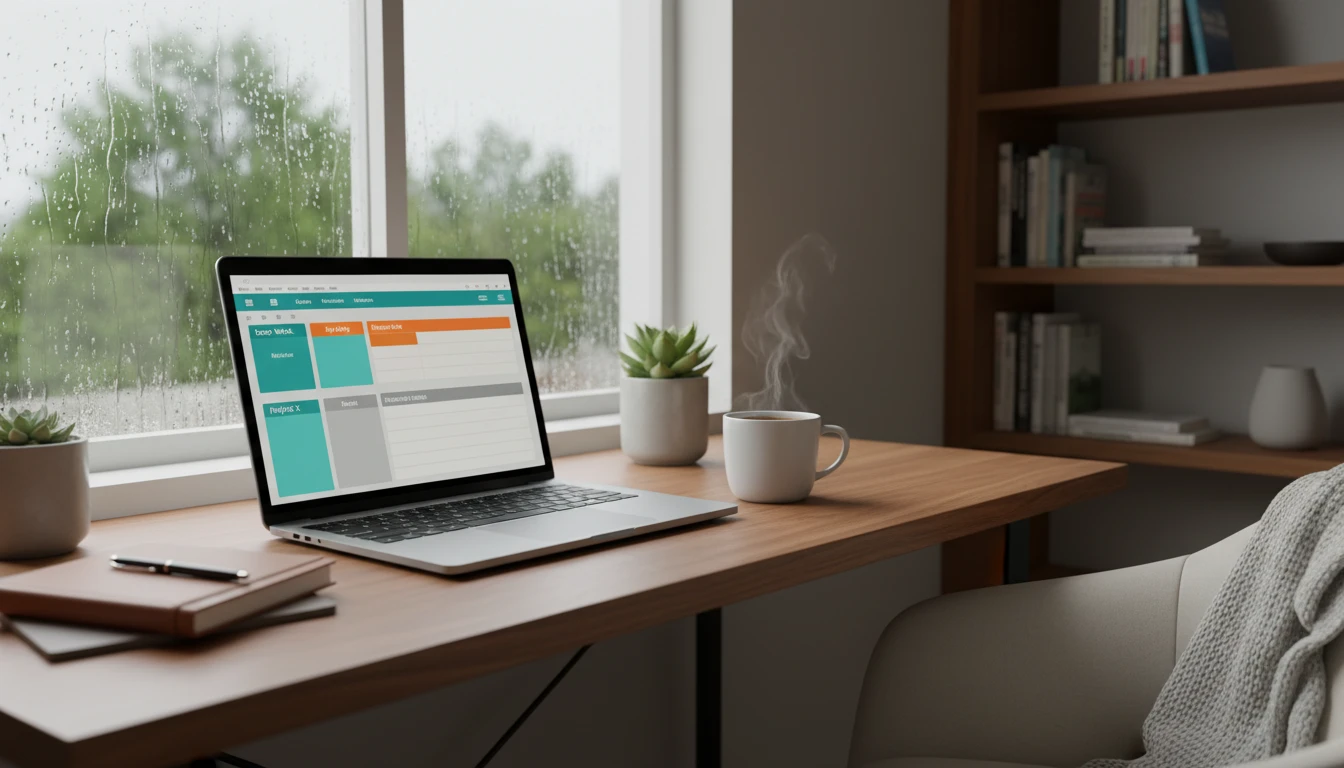










Create a 'Commute' Ritual
When you work from home, the lines between personal and professional time can blur, especially on a day you're stuck indoors. To signal a mental shift, create a mini-commute. This doesn't mean leaving the house. It can be as simple as changing out of your
pyjamas, walking around your home for five minutes, or making a specific 'work' cup of coffee before you sit down at your desk. This ritual helps your brain understand that it's time to start working, not relaxing, creating a psychological boundary that's harder to cross.
Optimise Your Light and Sound
Gloomy weather means less natural light, which can signal your brain to wind down and relax. Counter this by making your workspace bright. Open the curtains to let in any available natural light and supplement it with good artificial lighting. Cool-toned lights can be particularly helpful for staying focused. At the same time, manage your soundscape. The sound of rain can be lulling. If it makes you sleepy, consider playing soft, instrumental music or white noise to create a more stimulating auditory environment without being distracting.
Tackle an Easy Win First
On days when motivation is low, staring at a massive to-do list can feel overwhelming. Instead of diving into your most challenging project, start with a small, achievable task. This could be answering a few emails, organising a file, or completing a minor part of a larger project. Achieving a quick win builds momentum and provides a sense of accomplishment, which can generate the energy needed to tackle more demanding work later in the day. It's a simple psychological trick to jump-start your productivity.
Use Structured Time Blocks
One of the most effective ways to fight distraction is to structure your time intentionally. Time-blocking, where you dedicate specific chunks of time to single tasks, is a powerful tool. Another popular method is the Pomodoro Technique: work with intense focus for 25 minutes, then take a 5-minute break. These structured sprints prevent you from feeling like you're facing an endless workday and make tasks feel more manageable. During your breaks, step away from your screen to stretch or get a drink of water to truly reset.
Declutter Your Immediate Space
Your physical environment has a significant impact on your mental state. A cluttered desk or workspace can create stress and make it difficult to concentrate. If you're feeling distracted, take a few minutes to tidy up your immediate area. Put away unnecessary items, organise papers, and wipe down your desk. This simple act can create a sense of calm and order, making it easier for your brain to focus on the task at hand. A dedicated and organised workspace is crucial for signalling to your brain that it's time for work, not chores or leisure.
Eat for Energy, Not Comfort
Rainy days often bring cravings for heavy comfort foods. While tempting, carb-heavy meals can lead to a crash in energy, making you feel even more sluggish. Instead, focus on light, nutritious meals and snacks that provide sustained energy. Opt for brain-boosting foods like nuts, fruits, or yoghurt to keep your mind alert throughout the day. Staying well-hydrated by drinking plenty of water is also key to maintaining concentration and avoiding fatigue.
Schedule Mindful Breaks
Fighting against the urge to be distracted is exhausting. Instead of resisting it all day, schedule intentional breaks for the things that are pulling your attention. If you want to watch a short video or scroll through social media, build it into your break time. By giving yourself a designated time for these activities, you're less likely to be tempted by them during your focus blocks. Short bouts of physical activity, like a few stretches or a quick walk around the house, can also be a fantastic way to reset your mind and body.