





The Mission to Planet Earth
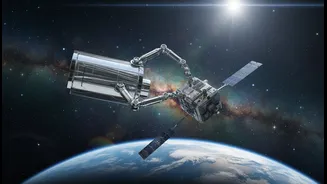
For decades, NASA has been a leader in studying Earth's changing climate. This 'Earthbound Mission' isn't a single project but a broad portfolio of research and dozens of satellites that form an intricate Earth Observing System. These missions provide
crucial, long-term data on our planet's interconnected systems: its oceans, atmosphere, ice, and land. This work started as early as 1960 with the first weather satellite, TIROS, and has evolved into a comprehensive effort to understand the impact of both natural and human-induced changes on our world.
A New Generation of Earth Watchers
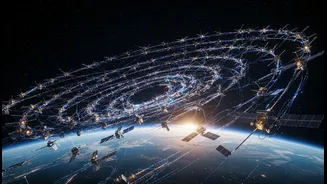
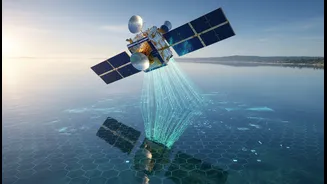
A new generation of advanced satellites is taking this mission to the next level. The Plankton, Aerosol, Cloud, ocean Ecosystem (PACE) satellite, launched in February 2024, is designed to provide revolutionary data on ocean health and its interaction with atmospheric particles. It can even distinguish between different types of phytoplankton from space, a key to understanding marine ecosystems and the global carbon cycle. It's part of a larger initiative called the Earth System Observatory, a coordinated fleet of satellites intended to create a holistic, 3D view of our planet. This observatory will tackle pressing questions about everything from climate change and severe weather to wildfires and food production.
Global Collaboration for a Global View
This ambitious undertaking isn't a solo effort. The upcoming NISAR mission, a partnership between NASA and the Indian Space Research Organisation (ISRO), is a prime example. Set to launch from India, NISAR will use advanced radar to measure changes in Earth’s land and ice surfaces with incredible precision—down to fractions of an inch. This will help scientists monitor warning signs of volcanic eruptions, track melting ice sheets, and understand the effects of groundwater use. By combining two different radar frequencies, NISAR will provide an unprecedented, detailed view of some of the planet's most complex processes. These international collaborations are essential for building a comprehensive global picture.
From Raw Data to Cultural Touchstone
The impact of NASA's Earth science extends beyond academic journals. The agency has made a concerted effort to make its data open and accessible to the public, scientists, and decision-makers worldwide. This open-source science strategy allows anyone to access and analyze the information, fostering innovation and new applications. The data helps farmers manage crops, city planners prepare for natural hazards, and health officials monitor air quality. This flow of information is changing how we see our planet. The stunning images and clear data from these missions have a powerful cultural effect, reinforcing the reality of a changing climate and making abstract environmental concepts tangible and personal.
Why Looking Homeward Matters
While the allure of exploring distant worlds is undeniable, NASA's focus on Earth is arguably its most critical work for humanity's immediate future. The agency's strategic plan explicitly aims to advance our knowledge of Earth as a system to meet the challenges of environmental change and improve life on our planet. The data gathered by missions like PACE and NISAR, and the broader Earth System Observatory, provides the bedrock of information needed to make informed decisions about climate change mitigation and adaptation. By applying the same ingenuity used to explore space to the study of our home, NASA is providing an invaluable service to us all.