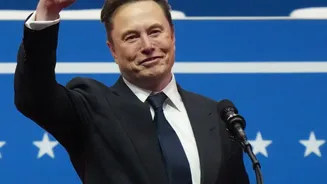







Elon Musk’s massive spending in US elections makes headlines. But how does the system that allows his nine-figure donations compare with India’s? The two democracies offer a study in contrasts on transparency, influence, and the role of money in politics.
The US System: Capped Donations, Unlimited Spending
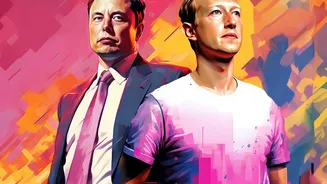
In the United States, the rules for political funding are a mix of strict limits and vast loopholes. An individual like Elon Musk can directly donate only a limited amount to a federal candidate's campaign—around $3,500 per election as of 2026. This system is built on a principle of public disclosure, with the Federal Election Commission (FEC) tracking and publishing these contributions. However, the real story of influence lies beyond direct donations. The game-changer is the 'Super PAC' (Political Action Committee). Super PACs can raise and spend unlimited amounts of money from individuals and corporations to support or oppose candidates, as long as they do not coordinate directly with the campaigns. This is where billionaires can truly flex their financial muscle. Reports from the 2026 midterm election cycle show Musk has poured hundreds of millions, including over $445 million, into such groups, making him one of the largest political donors. His spending, funnelled through entities like his 'America PAC' and others supporting Republican candidates, dwarfs what any individual could give directly, shaping the political battlefield through a torrent of advertising and voter outreach efforts.
India's Landscape: A Post-Electoral Bond Era
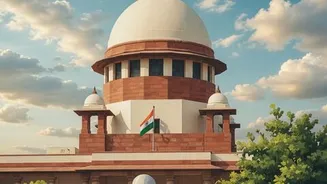
India's political funding framework is in a state of flux. For years, the system was dominated by the controversial Electoral Bonds Scheme, introduced in 2018. These bonds allowed individuals and corporations to donate anonymously to political parties. The stated goal was to curb black money by encouraging digital payments, but critics argued it created total opacity, making it impossible to see who was funding whom. In a landmark decision in February 2024, the Supreme Court of India struck down the scheme as unconstitutional, citing the voter's fundamental right to information. The ruling mandated the disclosure of past donors and recipients, aiming to pull back the curtain on political finance. In the wake of this decision, India has reverted to older mechanisms. This includes direct corporate donations, which are capped at 7.5% of a company's average net profit over the preceding three years, and must be disclosed. Additionally, donations above Rs. 20,000 must be reported to the Election Commission of India. There are also Electoral Trusts, which can receive funds from multiple donors and distribute them to parties, offering a layer of separation but requiring disclosure of donors.
Transparency vs. Anonymity
The core difference between the two systems boils down to a philosophical split on transparency. The US system, for all its flaws, operates on a bedrock of disclosure. While Super PACs allow for unlimited spending, the source of that money is, by law, public knowledge. The names of donors who give more than $200 are reported to the FEC and are publicly accessible. This allows journalists, watchdogs, and the public to 'follow the money' and scrutinize potential links between large donors and political outcomes. India’s journey has been different. The Electoral Bonds scheme was a deliberate move towards donor anonymity, based on the argument that it would protect donors from political retribution. However, the Supreme Court ultimately rejected this, arguing that the public's right to know about potential quid pro quo arrangements between donors and parties was more important. The current post-bond system is trying to re-establish a norm of transparency, but the debate over donor privacy versus public accountability continues.
The Scale of Spending and Influence
While both are massive democracies, the cost of elections in the US and India are converging in scale. The 2024 US presidential race was estimated to be the most expensive in its history, and the 2024 general election in India was projected to have a similar, if not greater, total expenditure. In the US, the narrative is often dominated by individual mega-donors like Musk, whose spending can singlehandedly prop up candidates or causes. In India, while wealthy individuals are significant players, the system has historically been more geared towards corporate funding, often from a wide array of businesses. The nowndefunct electoral bonds data revealed that a majority of funds came from corporations rather than individuals. The concern in the US is the outsized voice of a few billionaires; in India, it is the more systemic and often opaque nexus between big business and politics. For an individual in India, there is no legal mechanism to spend hundreds of millions on elections in the way Musk does in the US, as there is no direct equivalent of a Super PAC funded by a single person for unlimited expenditure.