



A Small Satellite on a Big Mission
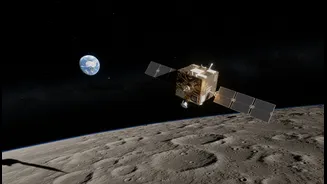
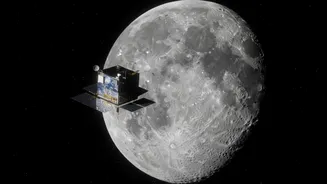
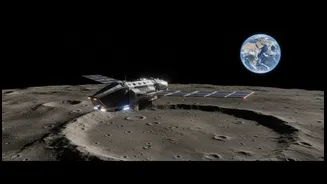
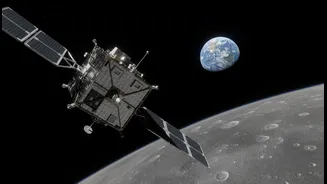
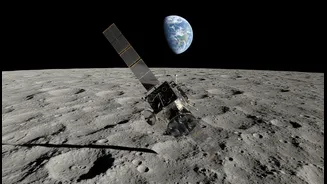
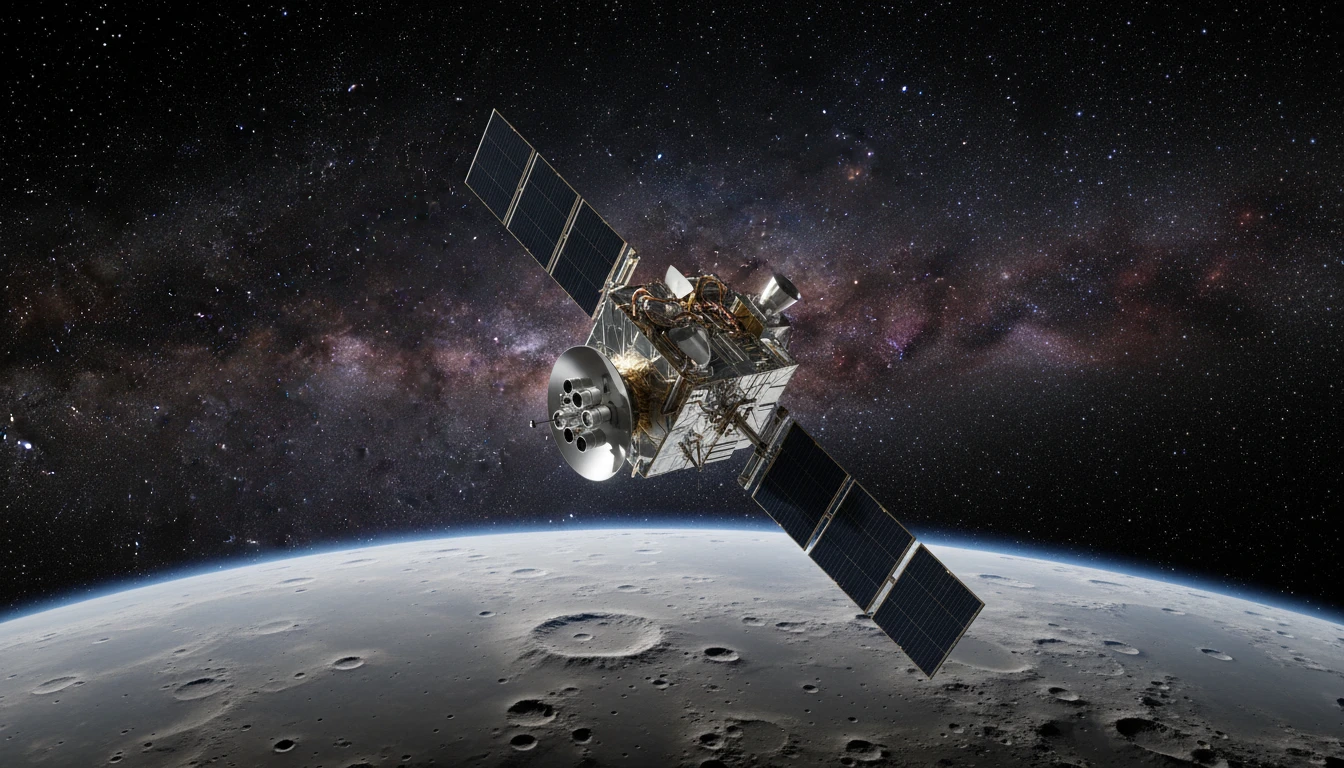
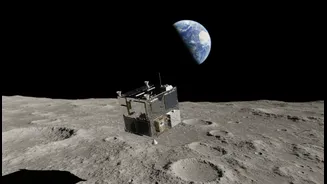
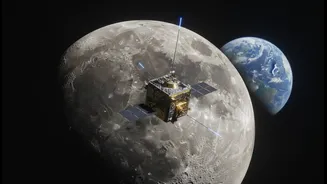
Launched in June 2022, the Cislunar Autonomous Positioning System Technology Operations and Navigation Experiment, or CAPSTONE, was a pathfinder mission with a critical job. Weighing just 55 pounds, the small satellite was the first commercial spacecraft
to operate at the Moon. It was developed as a low-cost, rapid mission to test technologies and reduce risks for future, more complex endeavors. The spacecraft is owned and operated by the Colorado-based company Advanced Space, which partnered with NASA to demonstrate key capabilities. While NASA has wrapped up its official activities, Advanced Space will continue to use the resilient spacecraft as a technology testbed, proving the value of public-private partnerships in advancing space exploration.
Taming a New Kind of Lunar Orbit
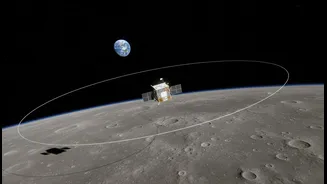
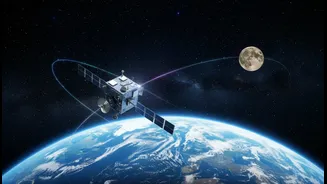
CAPSTONE’s primary goal was to be the first spacecraft to fly in a near-rectilinear halo orbit (NRHO). This highly elliptical path is located at a precise balance point between the gravities of the Earth and the Moon. The unique orbit offers long-term stability with minimal fuel required for a spacecraft to maintain its position, making it an ideal location for a future lunar space station. CAPSTONE successfully entered this orbit in November 2022 and spent its primary and extended missions verifying its characteristics, confirming that NASA's models for power and propulsion needs were accurate. By proving the stability and efficiency of the NRHO, CAPSTONE has paved the way for Gateway, the planned lunar outpost for Artemis astronauts.
De-Risking the Artemis Gateway
The entire CAPSTONE mission was designed to serve as a trailblazer for the Artemis program's Gateway. This future human-tended space station, which will serve as a staging point for missions to the lunar surface, is planned for the same NRHO that CAPSTONE tested. By successfully operating in this orbit, CAPSTONE provided invaluable real-world data, reducing the operational risks for the much larger and more expensive Gateway. It essentially acted as a scout, confirming that the orbit was as stable and manageable as simulations predicted. This experience provides a critical foundation for the logistics, station-keeping maneuvers, and operational planning required to support a sustained human presence around the Moon.
Testing Future-Forward Technologies
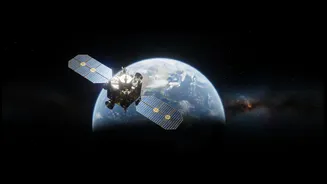
Beyond just testing an orbit, CAPSTONE's extended mission turned it into a flexible, in-space laboratory. A key success was the demonstration of autonomous navigation software, known as the Cislunar Autonomous Positioning System (CAPS). This technology allows a spacecraft to determine its own position without constantly relying on instructions from Earth, a crucial capability for a busier lunar environment. CAPSTONE tested this by communicating with NASA's Lunar Reconnaissance Orbiter (LRO). It also demonstrated delay/disruption tolerant networking (DTN), a system that stores data when communications are interrupted and forwards it once a connection is restored, ensuring no information is lost during deep space operations.