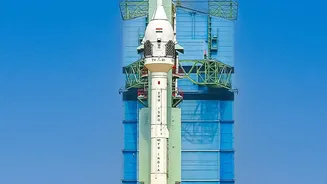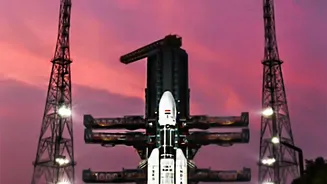




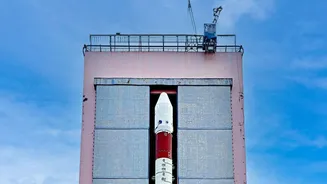
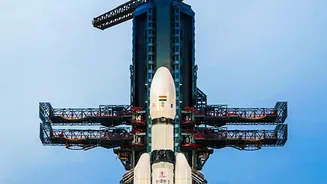

The Foundation: Agreements That Launch Ambitions
The core of this accelerating partnership rests on key agreements that have transformed the relationship from simple cooperation to deep integration. A major milestone was India signing the Artemis Accords, a US-led framework for responsible and peaceful
lunar exploration. This move signals a strategic shift for India, moving away from complete independence in space to collaborative global engagement, ensuring its technology and protocols are aligned with international standards. This is further bolstered by the U.S.-India Initiative on Critical and Emerging Technology (iCET), now expanded as TRUST (Transforming the Relationship Utilizing Strategic Technology), which smooths the path for collaboration in space, defence, and other advanced sectors. These frameworks are not just diplomatic handshakes; they are the launchpad for joint missions and commercial ventures.
Eyes on Earth: The NISAR Mission
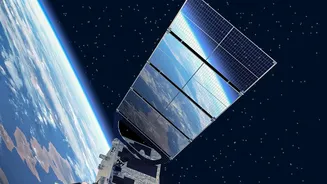
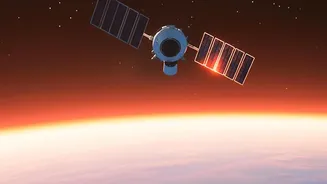
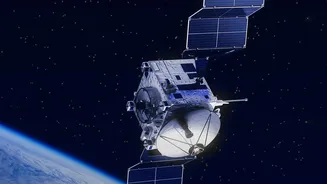
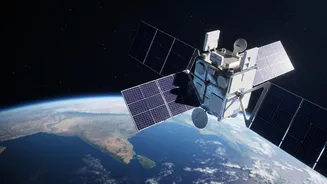
One of the most tangible results of this partnership is the NASA-ISRO Synthetic Aperture Radar (NISAR) mission, which launched in July 2025. This advanced Earth-observing satellite is the first of its kind, integrating radar systems from both NASA and ISRO to systematically map our planet's surface. NISAR's data, which is openly available, helps scientists monitor and understand land surface changes, from the likelihood of earthquakes and volcanic eruptions to the dynamics of ice sheets and the health of ecosystems. By providing crucial information for disaster management and resource monitoring, NISAR is a prime example of how the collaboration yields direct benefits for science and society.
The Commercial Frontier: Fueling India’s Startups
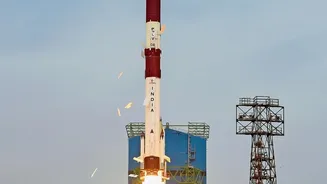
Beyond government-led missions, the partnership is a significant catalyst for India’s burgeoning private space economy. With recent policy reforms opening up the sector, Indian space-tech startups are poised for rapid growth. The collaboration with the U.S. offers access to the world's largest space market, mentorship, and investment opportunities. Initiatives are in place to remove regulatory barriers, such as stringent U.S. export controls on dual-use technology, which have historically hindered Indian firms. This easing of restrictions allows Indian companies to integrate more easily into the global space supply chain, sourcing critical components from the U.S. and offering cost-effective manufacturing and launch services in return. This synergy is expected to dramatically increase India’s share of the global space market over the next decade.
To the ISS and the Moon: The Human Element
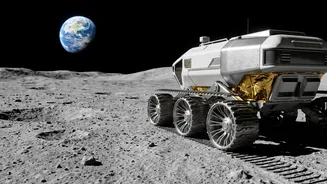
The collaboration is also rocketing into the realm of human spaceflight. A landmark plan involves sending an Indian astronaut to the International Space Station (ISS) in a joint effort with NASA, facilitated by Axiom Space. This mission provides invaluable experience and insight into long-duration spaceflights, which will directly benefit India's own ambitious Gaganyaan program. Looking further, the partnership extends towards the Moon. Following India's signing of the Artemis Accords, NASA has formally invited ISRO to participate in its Moon Base program, a project to establish a sustainable human presence on the lunar surface. This invitation opens a new dimension for deep-space cooperation, positioning India as a key partner in humanity's return to the Moon and beyond.