






The Creeping Cost of Sitting Still
Our bodies were not designed to be stationary for eight to ten hours a day. The reality of many corporate jobs, however, demands exactly that. This prolonged sitting is linked to a host of issues, from chronic back and neck pain to poor circulation and even
a dip in mental focus. The post-pandemic shift to hybrid and remote work has, for many, blurred the lines between office and home, often increasing screen time and reducing incidental movement like commuting or walking to a colleague's desk. While a gym session or a morning run is beneficial, experts increasingly warn that a single burst of exercise cannot fully undo the negative effects of being sedentary for the rest of the day. The real challenge is breaking up these long, uninterrupted periods of inactivity.
A New Trend Steps Up
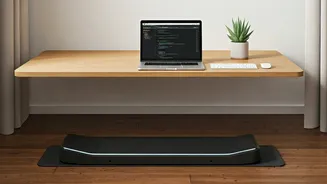
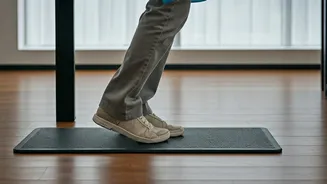
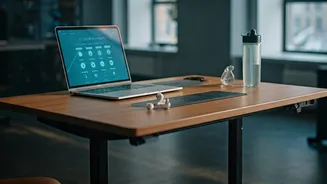
Enter the under-desk walking pad. This sleek, compact gadget is gaining popularity in home offices and even some progressive corporate spaces across India. Unlike a traditional, bulky treadmill, a walking pad is essentially a flat, motor-driven belt without the large console and handrails. It’s designed to slide neatly under a standing desk, allowing the user to walk at a slow, steady pace while handling emails, taking calls, or reading documents. The goal isn't a high-intensity workout, but rather to introduce gentle, consistent movement into the workday. It transforms static time into active time, offering a simple solution to the problem of being desk-bound.
The Science of Slow and Steady
The magic behind the walking pad lies in a concept called NEAT, or Non-Exercise Activity Thermogenesis. This is the energy we expend for everything we do that is not sleeping, eating, or dedicated exercise. It includes activities like fidgeting, standing, and, of course, walking. By using a walking pad at a low speed (typically 1-3 km/h), you are significantly boosting your daily NEAT. This low-impact activity helps improve blood circulation, preventing the sluggishness that often sets in mid-afternoon. Studies have shown that even this level of movement can help regulate blood sugar levels, burn a few extra calories, and improve mood by releasing endorphins. It’s not about replacing your workout; it's about supplementing it by making the other 8-10 hours of your day less harmful.
Can You Actually Work While Walking?
This is the most common question, and the answer is a resounding 'yes, but with a learning curve.' It’s unrealistic to expect to type a complex report or code a difficult program flawlessly from the moment you step on. Most users find a sweet spot at a very slow pace. Tasks that don't require intense fine-motor skills, like answering emails, participating in video calls (with the camera angled up), brainstorming, or reading, are perfect for the walking pad. For tasks requiring deep concentration or intricate mouse work, it's easy to simply pause the belt and stand still for a while. The key is to see it not as an all-or-nothing tool, but as a way to convert passive screen time into periods of active engagement throughout the day.
What to Consider Before Buying
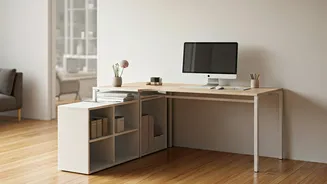
If you're tempted to join the trend, there are a few practical points to consider. First, you'll need a standing desk; a walking pad is unusable with a standard-height desk. When choosing a pad, check its speed range—most top out at around 6 km/h. Noise level is another critical factor, especially if you share your workspace at home or in the office. Look for models advertised as 'quiet' or 'whisper-quiet'. Also, consider its weight and storability. Many models are designed to be slid under a sofa or bed when not in use. Finally, price points in India vary widely, so set a budget and read reviews focusing on durability and customer service, which are crucial for an electronic device you'll use daily.