



A Sweet Discovery in a Surprising Place
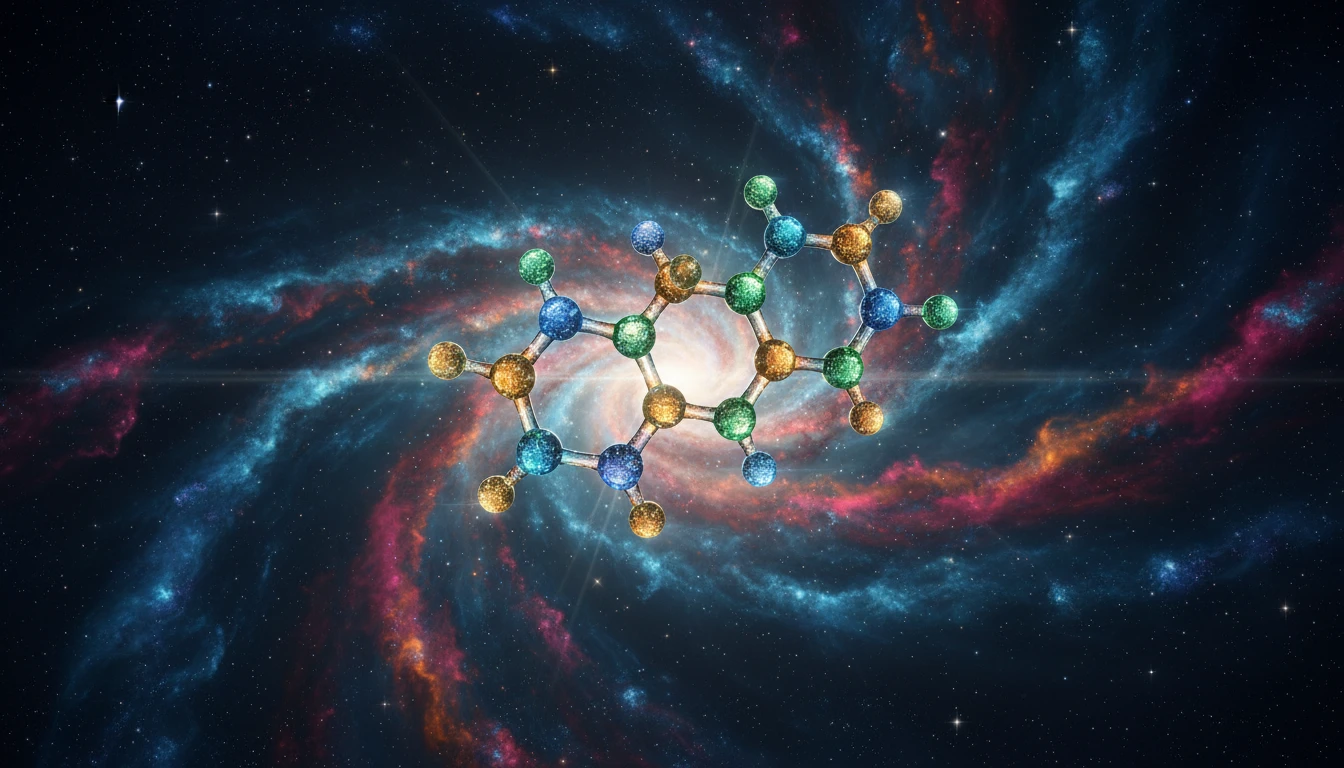
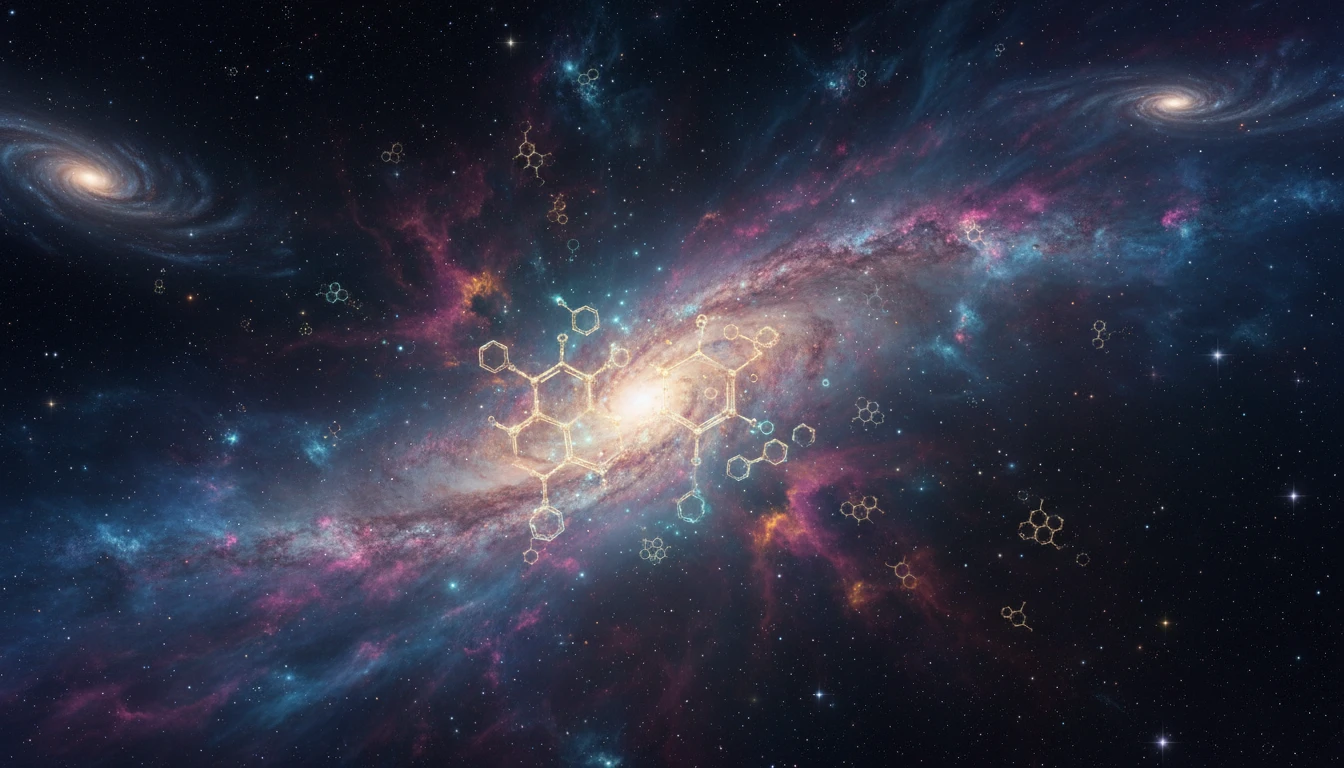
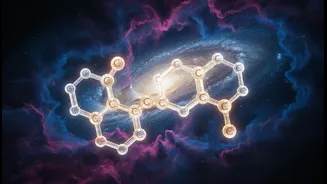
In a remarkable find, an international team of scientists has identified a type of sugar called erythrulose floating in a giant gas-and-dust cloud near the center of the Milky Way. The discovery was made using radio telescopes in Spain that detected the unique
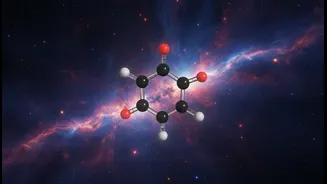
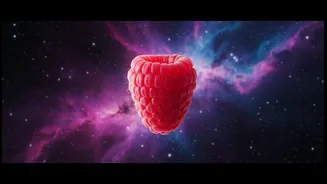
radio-wave signature of the molecule in a cloud named G+0.693-0.027, located approximately 27,000 light-years from Earth. While simpler organic compounds have been found in space before, this marks the first time a 'true sugar'—a molecule with a backbone of at least three carbon atoms—has been confirmed in the interstellar medium. Erythrulose, which has four carbon atoms, is also found in small amounts in raspberries on Earth. Its presence in such a remote and cold environment suggests that the chemistry required to build life's essential components is not unique to planets but can occur in deep space.
More Than Just a Sugar Rush
The significance of finding sugar in space goes far beyond its novelty. Sugars are fundamental to life as we know it. They serve as energy sources for cells and, most importantly, are a key structural component of nucleic acids like RNA and DNA, which carry the genetic blueprints for all living organisms. The specific sugar found, erythrulose, and its simpler cousin, glycolaldehyde—which has been detected in space previously—are considered 'prebiotic' molecules. This means they are the chemical precursors to more complex biological molecules. For instance, glycolaldehyde can react to form ribose, the sugar that forms the backbone of RNA. The RNA World Hypothesis suggests that life on Earth began with simple, self-replicating RNA molecules. Finding the raw materials for RNA in an interstellar cloud supports the idea that the ingredients for life are common throughout the cosmos.
From Cosmic Clouds to Early Planets
This discovery provides strong support for a long-held theory known as 'panspermia' or, more specifically, the model of external delivery. This model proposes that the building blocks of life did not necessarily form on Earth. Instead, they were created in vast interstellar clouds of gas and dust—the very nurseries where new stars and planets are born. According to this model, complex organic molecules like sugars and amino acids form on the surfaces of icy dust grains within these frigid clouds over millions of years. As the cloud collapses to form a new star and a surrounding protoplanetary disk, these organic-rich grains get incorporated into asteroids and comets. These celestial bodies then act as cosmic delivery vehicles, crashing into young, sterile planets and seeding them with the essential ingredients needed for life to emerge. Discoveries of sugars and other organic molecules in meteorites and asteroid samples, like those from the Bennu asteroid, have already hinted at this process.
Validating a Key Scientific Model
Finding erythrulose where stars are born is a major validation for these organic accumulation models. For decades, scientists have debated whether the complex molecules needed for life arose in Earth's 'primordial soup' or were delivered from space. While experiments show sugars are not easily produced in conditions mimicking the early Earth, they seem to form readily in the cold, low-pressure environment of space. The presence of erythrulose in a star-forming region confirms that these prebiotic molecules are available at the right place and at the right time to be included in newly forming planetary systems. It demonstrates that complex chemistry happens much earlier than previously thought, even before planets exist. This cosmic production line for life's ingredients strengthens the argument that the potential for life is not an astronomical fluke but a natural outcome of stellar evolution.