







Before You Start the Engine
A safe trip begins before you even leave home. Given the demanding conditions of the ghats during monsoon, a thorough vehicle check is non-negotiable. First, inspect your tyres. Good tread is crucial for gripping wet, slippery roads; a depth of at least
3 mm is recommended. Ensure your tyre pressure is at the vehicle's recommended level to provide optimal contact with the road. Next, check your brakes. They will be under significant strain on steep descents. If you hear any squealing or the pedal feels spongy, get them inspected by a professional. Visibility is another key factor. Make sure all your lights – headlights, taillights, fog lamps, and indicators – are working perfectly. Your wiper blades should be in top condition, able to clear heavy rain without streaking. Top up your windshield washer fluid. Finally, have your battery checked, especially if it's over three years old, as the cold and damp can affect its performance.
Understanding the Route
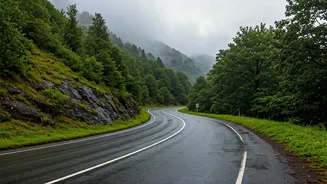
The journey from Lonavala to Mahabaleshwar, approximately 180 km, typically takes you via the Pune bypass onto National Highway 48 towards Satara. The most common route involves turning off at Wai to begin the final ascent up the Pasarni Ghat. While the highways are generally in good condition, the monsoon can cause unexpected potholes and waterlogging. The final 30-kilometre stretch up the ghat is the most challenging part of the drive. It is a series of hairpin bends and steep inclines that demand your full attention. An alternative route from the Konkan side via the Ambenali Ghat is known for being steeper and more prone to dense fog, and is not recommended for first-time monsoon drivers in the ghats.
The Golden Rules of Ghat Driving
Driving in the ghats has its own set of unwritten rules. The most important is to give way to uphill traffic. Vehicles climbing a slope are using more power and have less momentum, making it difficult for them to restart from a standstill. It is courteous and safer to pull over and let them pass. Maintain a lower gear than you normally would for a given speed. When going uphill, this provides the necessary torque to climb without stalling. When going downhill, it uses the engine to help control your speed, a technique known as engine braking. This reduces the strain on your brakes and prevents them from overheating. Never coast downhill in neutral to save fuel; it is extremely dangerous as you lose the ability to use engine braking, putting all the pressure on your brakes.
Navigating Monsoon Hazards
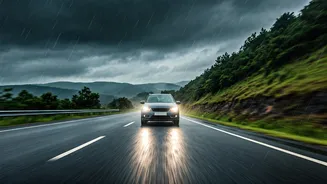
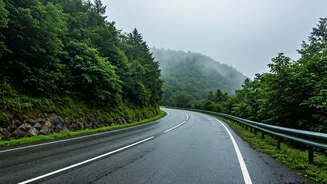
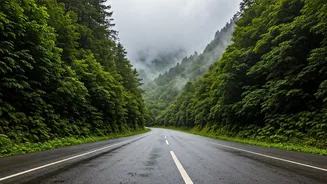
The monsoon brings specific dangers you must be prepared for. Dense fog can reduce visibility to just a few feet, especially in Mahabaleshwar which is one of the wettest places in the region. Drive slowly, use your fog lamps, and honk periodically on blind curves to alert oncoming traffic. Heavy rains make roads extremely slippery. Increase the distance between your vehicle and the one ahead to allow for longer braking distances. Avoid sudden acceleration or hard braking, which can cause your car to skid. Landslides are a real risk in the Western Ghats after prolonged heavy rain. Be wary of stopping or parking near steep hillsides. Local authorities often issue travel advisories, so it's wise to check for any warnings before you start your journey.
On the Road: Patience and Awareness
Patience is a virtue on ghat roads, especially when stuck behind a slow-moving truck or bus. Do not attempt to overtake on a blind curve. Wait for a straight stretch of road with clear visibility. Often, the driver in front will signal when it's safe for you to pass. Be mindful of where you stop. If you want to admire the view or take pictures, find a designated safe spot that doesn't obstruct traffic or sit on a narrow bend. It’s also wise to avoid driving after sunset if possible. The combination of darkness, rain, and potential fog makes the journey significantly more hazardous. Planning your drive to end in daylight hours is a simple but effective safety measure.