

The Age of the Performative Shelf
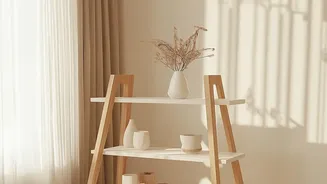
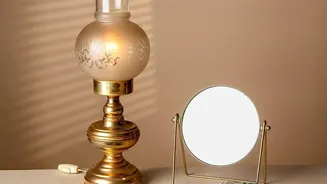
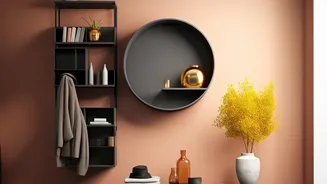
You know the look: books turned spine-in or grouped by colour, a minimalist ceramic vase just so, a single, artfully draped plant, and an abstract brass object. This was the peak of the over-styled shelf, an aesthetic born from and perfected for social
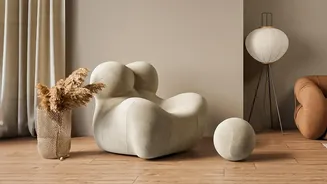
media. It was less about personal storage and more about creating a public-facing vignette that communicated a certain taste level. This trend treated shelves not as functional parts of a home, but as a blank canvas for consumption and curation, where every object was chosen to fit an exacting, often minimalist, theme. The goal was a clean, almost sterile perfection, a visual status symbol that was beautiful but often felt impersonal and disconnected from the realities of a lived-in home.
A Backlash to 'More is More'
The shift away from the hyper-styled shelf is a reaction to the pressure of maintaining this flawless facade. Designers and homeowners alike are pushing back against a look that can feel inauthentic and wasteful. A new philosophy, sometimes dubbed 'bookshelf wealth,' champions a warmer, more personal approach. This isn't about the monetary value of your belongings, but the richness of the stories they tell. It suggests that a home should reflect a life well-lived, complete with books that have actually been read, souvenirs from travels, and heirlooms that carry personal meaning. Instead of being a sterile display, the shelf becomes a narrative of your life.
Lived-In Layers Over Rigid Rules
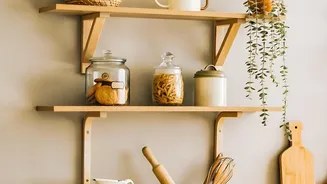
The new trend favours what designers are calling 'curated clutter' or a more mindful maximalism. It’s a move away from stark white built-ins toward warmer wood tones like oak and walnut. The goal is to create a space that feels cozy and authentic, not staged. This involves layering objects with personal significance—mixing old with new, hard textures with soft ones, and refined pieces with rustic finds. A key element is breaking up the uniformity; books are arranged both vertically and horizontally, art is casually leaned against the back of the shelf, and objects are grouped in a way that feels organic rather than forced.
A New Definition of Visual Balance
This trend reversal fundamentally changes how we think about visual balance. Traditional design often relied on symmetrical balance—a mirror image arrangement that creates a formal, orderly look. The over-styled shelf often used this for its clean, grid-like appeal. The new approach leans heavily into asymmetrical balance. This principle suggests that you can balance a large item on one side with several smaller items on the other. The visual 'weight' is distributed evenly, but the objects themselves are different, creating a more dynamic and interesting composition. This allows for more flexibility and personality, moving the focus from rigid rules to a more intuitive, feeling-based arrangement that brings harmony to a space. It's about how the collection of objects makes you feel, rather than how perfectly it adheres to a design formula.
How to Find Your Shelf's Story
Embracing this new wave doesn't mean creating chaos. Even 'curated clutter' requires thought. Start by gathering items you truly love, regardless of their trendiness. The key is editing: display your most meaningful pieces and find stylish storage for the rest. Think in layers. Place larger items like art or chunky vases first, then fill in with your book collection. Finally, add smaller, personal objects in front, creating vignettes. Mix textures and materials, and don't be afraid to leave some empty space—this 'negative space' allows your treasured items to breathe and be appreciated. The ultimate goal is to create a shelf that is uniquely you, a focal point that tells your story, not just the story of a fleeting trend.