






The Essence of Shifting in Tai Chi
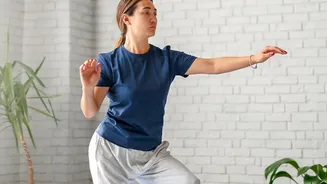
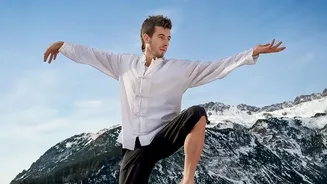
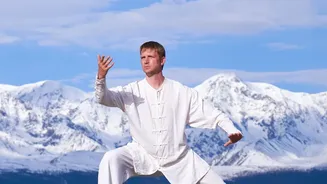
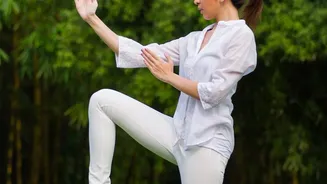
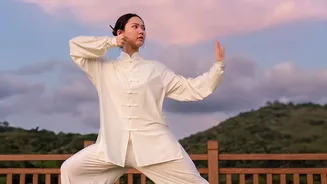
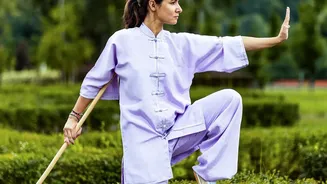
In Tai Chi, weight shifting is a deliberate, conscious, and foundational skill. Practitioners learn to distinguish between 'full' and 'empty' limbs, where the 'full' leg bears all the body's weight while the 'empty' leg is light and free to move. This
transfer is not a fall into the next step but a controlled flow of mass from one foot to the other. The principle, known as 'separating Yin and Yang', is the key to both stability and movement. The goal is to feel 'rooted' into the ground through the weight-bearing leg, creating a solid yet relaxed foundation from which all movement originates. This process is slow, allowing the practitioner to develop deep body awareness, sensing the connection from the foot, up through the leg, and directed by the waist. This mindful practice strengthens the legs, improves proprioception—the body's sense of its position in space—and builds incredible balance.
Weight Shifting on Wheels and Blades
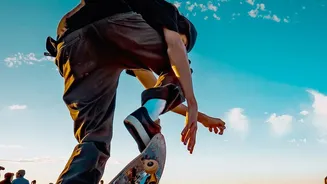
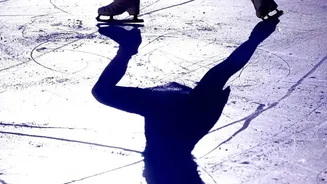
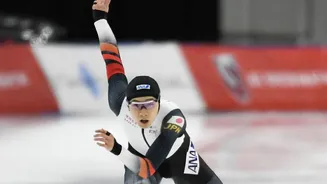
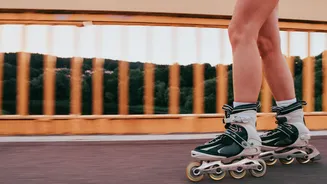
Skating, whether on ice or with rollers, is all about managing momentum on a low-friction surface. Here, weight shifting is dynamic and reactive, serving propulsion and steering. A skater pushes off with the edge of one skate, transferring their body weight onto the gliding skate to generate forward motion. Unlike the slow, complete transfer in Tai Chi, this shift is often rapid and part of a continuous side-to-side rhythm that saves energy. Efficient skaters learn to use their body weight to their advantage, leaning into turns and adjusting their posture to maintain balance while in motion. Crouching low lowers the center of gravity, increasing stability, while shifts from the ball of the foot to the mid-foot can help navigate different surfaces or prepare for maneuvers. It's a constant, fluid conversation between the skater's mass and the forces of motion and friction.
Core Similarities: Finding Your Center
Despite their different tempos, both disciplines place immense importance on the body's core and center of gravity. In Tai Chi, all movements are said to be initiated from the waist, or 'dantien', which acts as the body's ruler. Similarly, a skater's core strength is crucial for stability, especially when executing complex moves or adjusting to sudden changes. Both practices teach that a stable, well-aligned posture is the key to efficient movement. An upright spine in Tai Chi allows energy, or 'qi', to flow freely, while a 'stacked' posture in skating ensures the upper body is properly supported over the lower body for maximum agility. In both arts, the athlete learns to move their body as a single, coordinated unit, where a shift in the hips influences the entire frame.
Key Differences: Ground vs. Glide
The most significant difference lies in the relationship with the ground. Tai Chi is rooted in static friction; the goal is to connect firmly with the earth. The weight shift is often 100% to one leg before the other moves, ensuring the body is completely stable before transitioning. This creates a feeling of being unmovable. Skating, by contrast, thrives on the near absence of friction. Weight is rarely ever fully static. It is perpetually in transit, leveraging momentum to glide across a surface. A skater is always managing a state of controlled instability, whereas a Tai Chi practitioner is cultivating a state of profound stability. The energy in Tai Chi comes from the ground up, while in skating, it is generated by pushing sideways against the ice or pavement.
How Each Practice Can Inform the Other
The lessons from each discipline are remarkably transferable. Skaters who practice Tai Chi can develop superior balance, a calmer mind, and a deeper awareness of their posture and alignment. The slow, mindful weight shifts of Tai Chi can teach a skater to feel their balance more acutely, leading to smoother, more controlled movements on the ice. Conversely, a Tai Chi practitioner can learn from skating's dynamic nature. Understanding how a skater manages momentum and makes micro-adjustments at speed can provide new insights into the martial applications of Tai Chi, where yielding and redirecting force are key. One figure skater even noted that the physical demands of skating led to a deeper understanding of Tai Chi principles. Both arts, in their own way, are a study in applied physics and mindful movement.