







Rethinking Willpower
We often blame personal failing when a new habit doesn't stick. We believe if we just had more discipline, we’d wake up for that 6 a.m. run or finally use that expensive yoga pass. However, behavioral science suggests we're focusing on the wrong thing.
Relying on willpower alone is like trying to swim against a strong current—exhausting and often futile. The real culprit is often 'friction,' the small obstacles that stand between you and your desired action. Having to find your running shoes, dig out your yoga mat, or clear a space on the floor are all points of friction that can derail your intentions before you even start.
Your Environment Is the Cue
Our brains are wired to respond to environmental cues, often automatically. This process is part of a neurological 'habit loop': a cue triggers a routine, which leads to a reward. Think about how walking into a kitchen and seeing cookies on the counter can trigger an unplanned snack. This happens subconsciously, with our surroundings nudging us toward certain behaviors. The good news is we can hijack this system. By intentionally designing our environment, we make our desired habits the path of least resistance. The space itself becomes the cue, prompting the action without needing a surge of motivation.
Crafting an Enjoyable Space
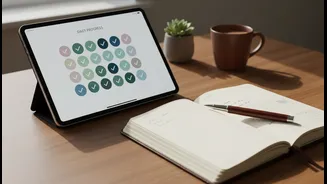
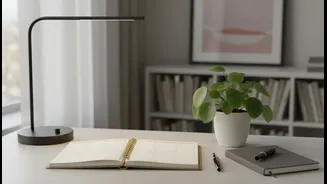
The key is to make the space for your routine not just functional, but actively enjoyable and inviting. A cluttered, unappealing area creates mental friction, while a pleasant space can actually make you look forward to your routine. If you want to read more, don't just stack books on a dusty shelf. Create a comfortable reading nook with a good chair, soft lighting, and a cozy blanket. Want to start journaling? Keep a beautiful notebook and a favorite pen on a clean, clear nightstand. The goal is to associate the habit with a positive feeling, which the space itself can help provide. Even small changes, like better lighting or decluttering, can transform a task from a chore into a calming ritual.
The Power of Easy Access
An 'enjoyable' space is useless if it's not also easily reachable. This is the second half of the equation: consistency. A state-of-the-art home gym in the basement is less effective than a simple yoga mat that you keep in the living room where you see it every day. Proximity matters. Behavioral experts suggest that making good habits physically closer and bad habits farther away drastically influences our choices. If your goal is to stretch every morning, leaving your yoga mat unrolled by your bed reduces the friction to nearly zero. The most successful routines are built in spaces that are already part of our daily geography, requiring little to no travel or special effort to access.
Start Small, Design Smart
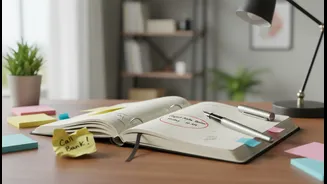
To put this into practice, pick one habit you want to build. Now, think like a designer. Where will you perform this habit? How can you make that space obvious, attractive, and incredibly easy to use? If you want to drink more water, don't just hope you'll remember. Place a sleek water bottle on your desk, right in your line of sight. If you want to prepare healthier meals, organize your kitchen so fresh ingredients are visible and easy to grab, while junk food is hidden away. Reduce the number of steps between you and the habit. By curating your environment, you're not just hoping you'll have a good day; you're building a system that makes good days the default.