



1983 World Cup Final: The Win That Started It All
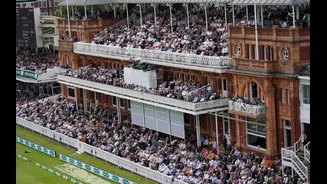
On June 25, 1983, when India faced the mighty West Indies in the World Cup final at Lord's, they were colossal underdogs. The West Indies were two-time defending champions, chasing a third consecutive title, while India had a dismal record in the previous
tournaments. After being bowled out for a paltry 183, the writing seemed on the wall. But what followed was a display of sheer determination that stunned the world. The Indian bowlers, led by Mohinder Amarnath and Madan Lal, dismantled the formidable West Indies batting lineup for just 140 runs. Kapil Dev's spectacular running catch to dismiss Viv Richards remains one of cricket's most enduring images. This 43-run victory was not just a win; it was a revolution. It turned cricket from a sport into a national passion in India, sparking a belief that anything was possible and laying the foundation for the country's rise as a global cricket superpower.
1985 World Championship: Proving 1983 Was No Fluke
Two years after the miracle at Lord's, many still viewed India's World Cup win as a one-off. The 1985 Benson & Hedges World Championship of Cricket in Australia was the perfect stage to prove the critics wrong. Featuring all seven Test-playing nations, it was a mini-World Cup. India, led by Sunil Gavaskar, played flawlessly throughout the tournament, remaining undefeated. The final against arch-rivals Pakistan at the Melbourne Cricket Ground was the ultimate test. India's bowlers, particularly Kapil Dev and the young leg-spinner Laxman Sivaramakrishnan, restricted Pakistan to a modest 176. The chase was anchored by a superb century partnership between Kris Srikkanth and Ravi Shastri. India's comfortable 8-wicket victory cemented its status as a dominant ODI force. Shastri being named the 'Champion of Champions' and driving his new car around the MCG with the entire team became a symbol of a new, confident Indian cricket era.
2002 NatWest Final: The Dawn of a Fearless New India
Chasing 326 at Lord's was considered impossible in 2002. When India slumped to 146 for 5 after a blistering start by Sourav Ganguly and Virender Sehwag, with Sachin Tendulkar gone, defeat seemed inevitable. This match, however, came to define the spirit of the 'New India' that Ganguly was building – a team that wouldn't back down. Two young guns, Yuvraj Singh and Mohammad Kaif, scripted one of the most incredible comebacks in ODI history. Their fearless partnership of 121 runs turned the game on its head. After Yuvraj fell, Kaif marshalled the tail-enders with remarkable composure, steering India to a thrilling two-wicket victory with just three balls to spare. The win is remembered as much for the chase as for Ganguly's iconic, defiant shirt-wave from the Lord's balcony, a gesture that announced India's arrival as an aggressive, fearless unit.
2011 World Cup Final: A Nation's Dream Fulfilled
The pressure was immense. India, co-hosting the World Cup, was expected to win on home soil. The final against Sri Lanka at Mumbai's Wankhede Stadium on April 2, 2011, was the culmination of a 28-year wait. Chasing a challenging 275, India lost both Sehwag and Tendulkar early, silencing the packed stadium. But Gautam Gambhir played a gritty, selfless innings of 97 to steady the ship. The masterstroke came when captain MS Dhoni promoted himself up the order. He absorbed the pressure and built a match-winning partnership of 109 with Gambhir. The defining moment came when Dhoni, with his trademark calm, launched a massive six into the Mumbai night sky to seal the victory. Ravi Shastri's commentary, "Dhoni finishes off in style!" is etched in history. This win cemented India's position as the undisputed powerhouse of world cricket and was a fitting tribute to Sachin Tendulkar, who finally achieved his lifelong dream of winning a World Cup.