


What Exactly Is a Planetary Cluster?
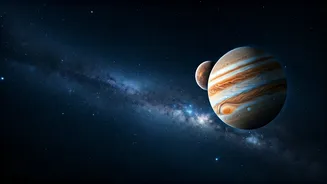
In astronomy, this event is often called a conjunction. It occurs when two or more celestial objects appear to be very close to one another in the sky, as seen from our vantage point on Earth. It's important to remember that this is a line-of-sight phenomenon.
The planets aren't actually close to each other in space; they are millions of kilometres apart. They just happen to be aligned in a way that makes them look like cosmic neighbours for a short while. Think of it like seeing two distant mountains line up perfectly from a certain spot on a highway—they look close, but in reality, they are far apart. These alignments offer a wonderful opportunity to appreciate the grand, clockwork motion of our solar system.
Your Step-by-Step Viewing Guide
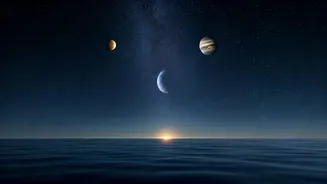
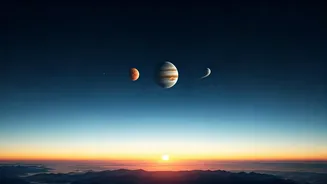
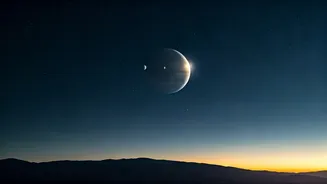
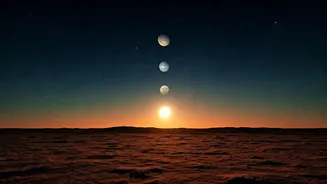
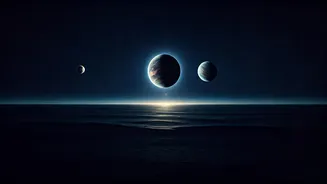
Spotting this planetary trio is surprisingly easy, and you won't need any special equipment. **When to Look:** The best time to view the cluster is during twilight, roughly 30 to 60 minutes after sunset. This is the window when the sky is dark enough for the planets to shine brightly, but before they dip below the horizon. **Where to Look:** Face the western horizon, the same direction where the sun just set. The planets will be relatively low in the sky, so a clear, unobstructed view without tall buildings or trees is ideal. If you live in a city, try to find a park, a rooftop, or a balcony with a clear western view. **What to Look For:** Venus will be your anchor. As the brightest object in the night sky after the Moon, it will be impossible to miss, shining like a brilliant, steady jewel. Jupiter will be the next brightest, appearing slightly above or to the side of Venus. Mercury is the trickiest of the three as it's the faintest and closest to the horizon. Look for a smaller, star-like point of light near the other two. They will form a compact triangle or a slightly scattered line.
Do I Need a Telescope?
Absolutely not! All three planets—Venus, Jupiter, and Mercury—are bright enough to be seen with the naked eye. This is what makes planetary conjunctions so accessible and magical for everyone. However, if you have a pair of binoculars, they will certainly enhance the view. Through binoculars, you might be able to see the planets as distinct discs rather than points of light. If you have a telescope, you could even get a glimpse of Jupiter’s four largest moons—Io, Europa, Ganymede, and Callisto—appearing as tiny pinpricks of light flanking the giant planet. But even without any gear, the sight of three planets hanging together in the fading twilight is a memorable experience.
Meet the Celestial Trio
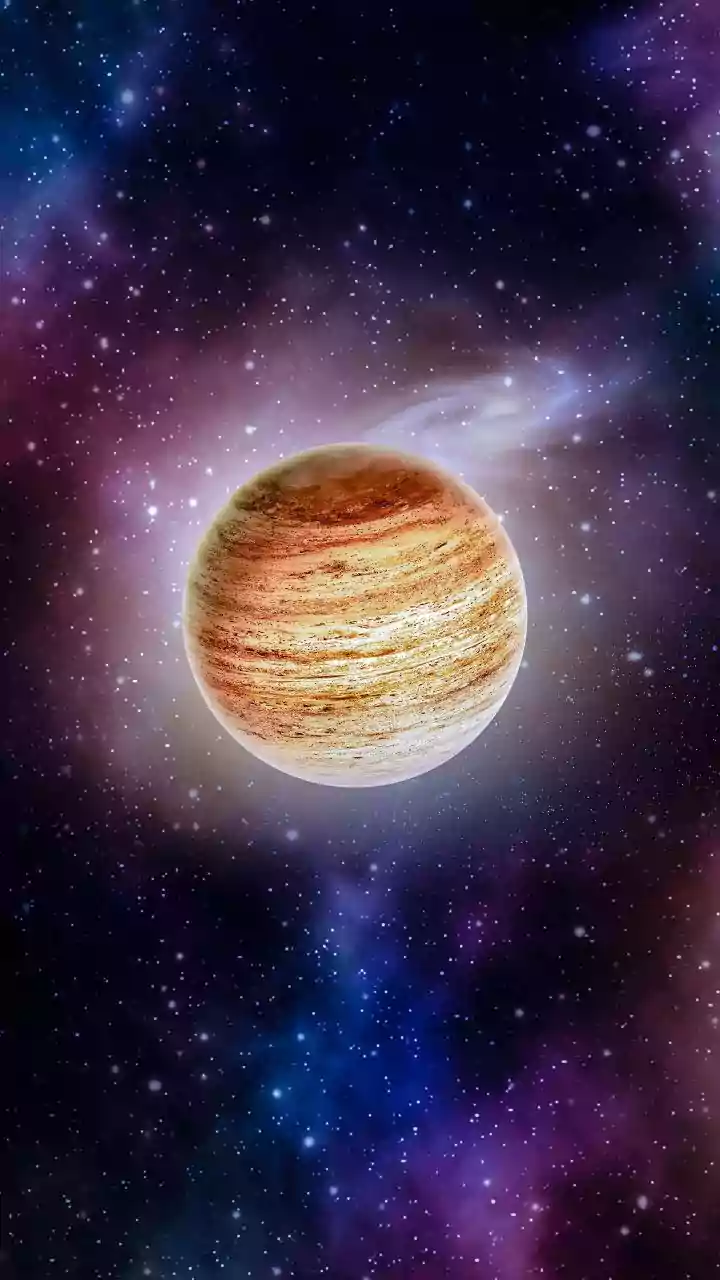
Each of these planets brings its own character to the celestial stage. **Venus (Shukra):** Often called the 'Evening Star' or 'Morning Star', Venus is the second planet from the Sun and is shrouded in thick, toxic clouds that make it incredibly reflective, hence its brilliance. **Jupiter (Brihaspati or Guru):** The king of the planets, Jupiter is the largest body in our solar system after the Sun. It's a gas giant more than twice as massive as all the other planets combined. **Mercury (Budha):** The smallest and innermost planet, Mercury is a world of extremes, with scorching hot days and freezing cold nights. It orbits the Sun faster than any other planet, making it a fleeting and often difficult-to-spot target in our sky.
A Meeting of 'Gurus' in the Sky
For many in India, this event carries more than just astronomical significance. In Jyotish, or Vedic astrology, these three planets are highly influential. Jupiter is 'Guru' (the teacher or guide), Venus is 'Shukra' (the guru of the asuras, representing luxury and relationships), and Mercury is 'Budha' (representing intellect and communication). A conjunction of these planets is seen as a potent astrological event, symbolizing a convergence of wisdom, diplomacy, and intellect. Regardless of one's beliefs, this cultural lens adds another layer of wonder to the celestial gathering, connecting ancient traditions with the timeless beauty of the night sky.