


A Cosmic Monster Awakens
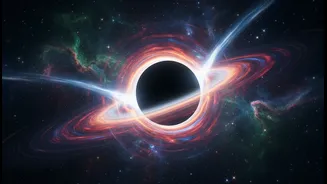
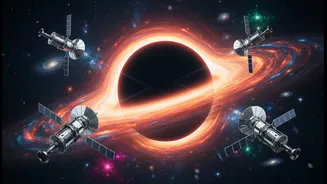
When astronomers talk about a black hole 'activation', they often refer to a spectacular and violent celestial event known as a Tidal Disruption Event, or TDE. This occurs when an unlucky star wanders too close to a supermassive black hole. The black hole's
immense gravitational pull is so much stronger on the near side of the star than the far side that it literally tears the star apart, shredding it into long streams of gas. As this stellar material spirals into the black hole, it heats up and creates an incredibly bright flare of energy across the electromagnetic spectrum, from X-rays to radio waves. This sudden, brilliant outburst is the 'activation'—a cosmic feast that briefly illuminates the darkness and gives scientists a rare chance to study the beast that is usually invisible.
The New Eyes on the Sky
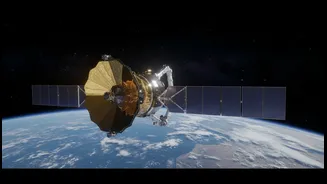
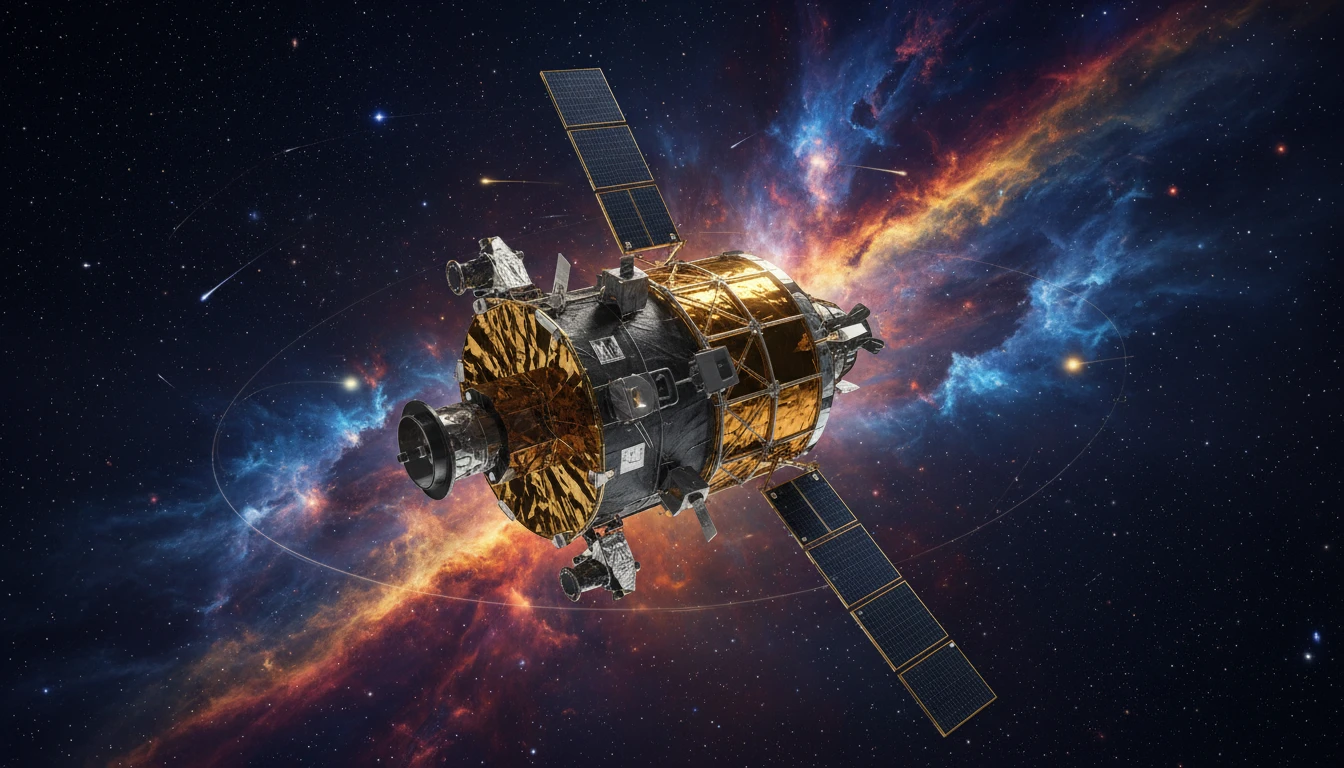
The excitement is amplified because we now have unprecedented tools to watch these events unfold. The James Webb Space Telescope (JWST) has been a game-changer. Its powerful infrared vision allows it to peer through the cosmic dust that often shrouds the centers of galaxies, giving us a clear view of the regions around black holes. Astronomers are using Webb to see exactly how these cosmic behemoths shape their surroundings. Joining the hunt is the soon-to-launch Nancy Grace Roman Space Telescope. While Webb excels at deep, focused looks, Roman is designed to scan vast swathes of the sky. Scientists anticipate it will be 'transformative' for science, capable of discovering thousands of TDEs, some of which occurred up to 11 billion years ago, providing a treasure trove of data on how black holes grow.
India's Crucial Role in the Cosmos
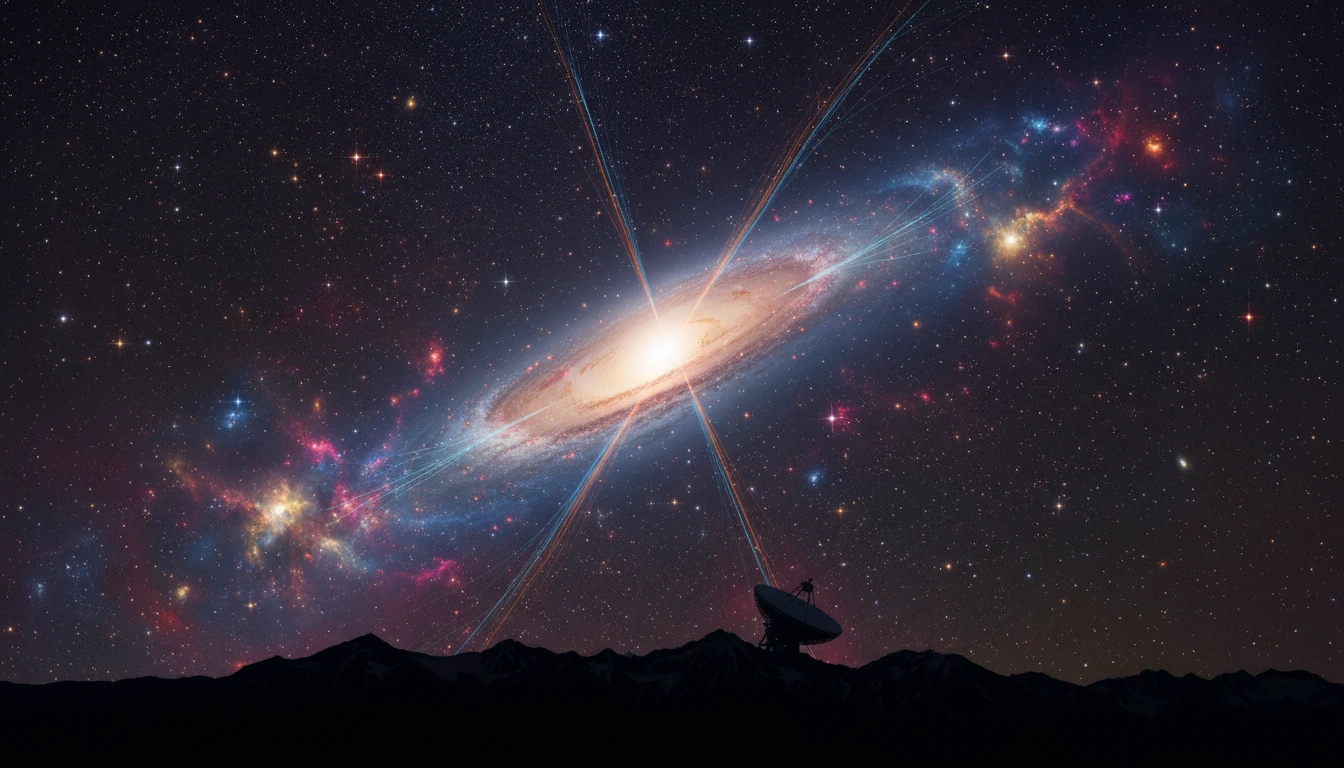
This global endeavour has significant Indian contributions, placing the nation at the forefront of modern astronomy. India's own upgraded Giant Metrewave Radio Telescope (uGMRT) was recently part of an international team that observed a 'reborn' dormant black hole, showcasing the nation's world-class radio astronomy capabilities. Furthermore, the success of the James Webb Space Telescope has been shaped by brilliant Indian and Indian-origin scientists. Figures like Dr. Hashima Hasan, a NASA Deputy Program Scientist for the mission, and Kalyani Sukhatme, who was a project manager for Webb's Mid-Infrared Instrument (MIRI), have played key roles. Their work, alongside other scientists like Manoj Puravankara who have secured observation time on Webb, ensures a strong Indian connection to the biggest discoveries in the universe.
A Symphony of Cosmic Signals
The true revolution, and the reason for so much praise, is the dawn of 'multi-messenger astronomy'. For the first time, we're not just 'seeing' these events; we're observing them through multiple channels. When a black hole shreds a star, it doesn't just produce light. It can also produce a shower of ghostly particles called neutrinos and, most profoundly, send ripples through the fabric of spacetime itself, known as gravitational waves. Instruments like LIGO and Virgo act as cosmic ears. By combining the 'sight' from telescopes like Webb and Roman with the 'sound' from gravitational wave detectors, scientists can get a complete, 360-degree understanding of a black hole activation that was previously impossible.
From Science Fiction to Fact
This coordinated approach is turning science fiction into observational fact. We are moving from cosmic archaeology—studying the cold aftermath of events—to witnessing them in real-time. With improved sensitivity, observatories can now potentially detect the gravitational waves from two black holes spiraling towards a merger and send out an alert, allowing every major telescope on and off the planet to point at that exact spot in the sky to watch the fireworks. This allows scientists to test Einstein's theory of relativity in the most extreme environments in the universe, right at the edge of a black hole's event horizon. These new observations are already challenging and refining our models of how the very first galaxies and their central black holes formed just after the Big Bang.