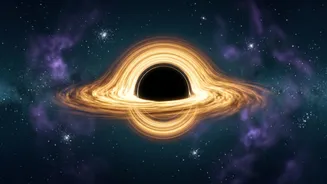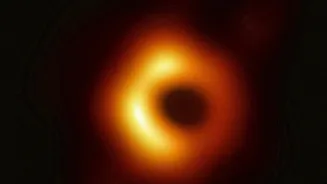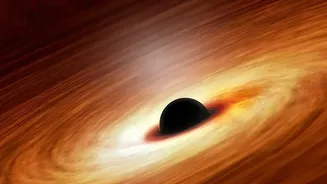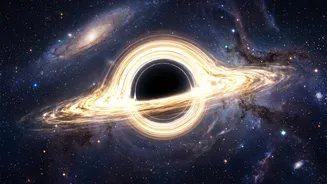




The Milky Way is filled with millions of hidden black holes, but scientists have only found about 70. Now, a project called Black Hole Hunters invites you to help find the rest, no experience necessary, right from your computer.
A Galaxy of Invisible Monsters
Our galaxy is haunted.
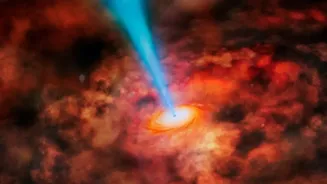
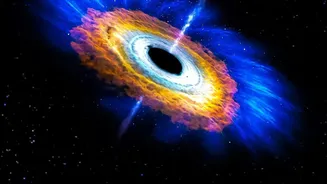
Astronomers estimate that up to 100 million stellar-mass black holes—the collapsed cores of massive stars—drift silently through the Milky Way. Yet, these objects are fundamentally invisible; with gravity so strong that not even light can escape, they don't shine or radiate energy. We typically find black holes only when they're 'feeding' on a nearby star, a violent process that releases bright X-rays. But most black holes are not actively feeding, leaving millions of them completely hidden from our view. This enormous gap between theory and observation is one of the biggest mysteries in modern astronomy. The Black Hole Hunters project aims to solve it by looking for these quiet giants in a completely different way.
Your Mission: Spot the Magnifying Glass Effect
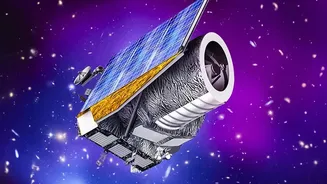
Instead of looking for X-rays from feeding black holes, this project searches for a subtle effect of their gravity. Many black holes exist in binary systems, orbiting a companion star. If the alignment is just right, the black hole will periodically pass between its star and Earth. When this happens, its immense gravity acts like a magnifying glass, bending and focusing the star's light in an effect called 'gravitational microlensing'. To an observer, the star briefly appears to get brighter in a distinct, symmetrical peak. Your mission, as a volunteer, is to spot these tell-tale peaks in graphs showing the brightness of stars over time. Data is collected by powerful telescopes like the Transiting Exoplanet Survey Satellite (TESS).
Why Human Eyes Are the Secret Weapon
In an age of artificial intelligence, you might wonder why scientists need your help. While computers perform an initial scan of the data, they often struggle to distinguish a true microlensing event from other cosmic phenomena like stellar flares or the natural pulsations of a star. The human brain remains superior at this kind of nuanced pattern recognition. The task is straightforward: volunteers are shown graphs of star brightness and asked if they see a clear, symmetrical peak. To ensure accuracy, every graph is reviewed by multiple people. By harnessing the collective power of thousands of volunteers, the project can process vast datasets far faster than a small team of professional astronomers ever could.
The Team Behind the Hunt
The Black Hole Hunters project is a collaborative effort led by researchers from institutions like the University of Southampton and The Open University in the UK. The initiative is hosted on Zooniverse, a popular online platform for people-powered research. Project co_lead Dr. Adam McMaster emphasizes the vital role of the public, stating that any volunteer could be the one to discover the first of this new population of black holes. The project has already attracted thousands of volunteers who have made millions of classifications, helping to refine the search and even train future machine_learning models.
How to Join the Search Today
Getting started as a black hole hunter is simple and requires no previous scientific knowledge. All you need is a computer or tablet with an internet connection. Simply visit the Black Hole Hunters project page on the Zooniverse website. A brief, interactive tutorial will walk you through what to look for, showing you examples of the symmetrical light peaks that signal a potential black hole. After the tutorial, you can immediately start classifying real data from the TESS satellite. Every classification you make helps scientists narrow down where to point their powerful telescopes next for followup observations.