
From Remote Control to Onboard Brains
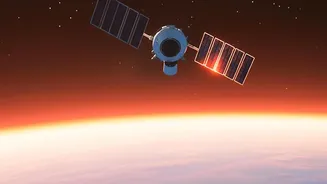
Traditionally, satellites are sophisticated but relatively passive observers. They collect vast amounts of data—images of weather patterns, signals from GPS, observations of distant galaxies—and beam it all back to ground stations on Earth. Here, teams
of human operators and powerful computers sift through the information, make decisions, and send commands back up to the satellite. This model has served us well, but it has significant limitations. The communication delay, even at the speed of light, can make real-time control impossible for deep-space missions. Furthermore, the sheer volume of data being downlinked can create a bottleneck, overwhelming ground systems and delaying crucial insights. Imagine a satellite capturing images of a flooded region during a natural disaster; by the time the images are sent to Earth, processed, and analyzed, the situation on the ground may have already changed. This is the problem India, through its Indian Space Research Organisation (ISRO), is determined to solve.
The AI To-Do List in Orbit
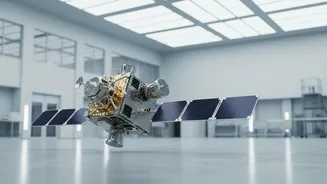
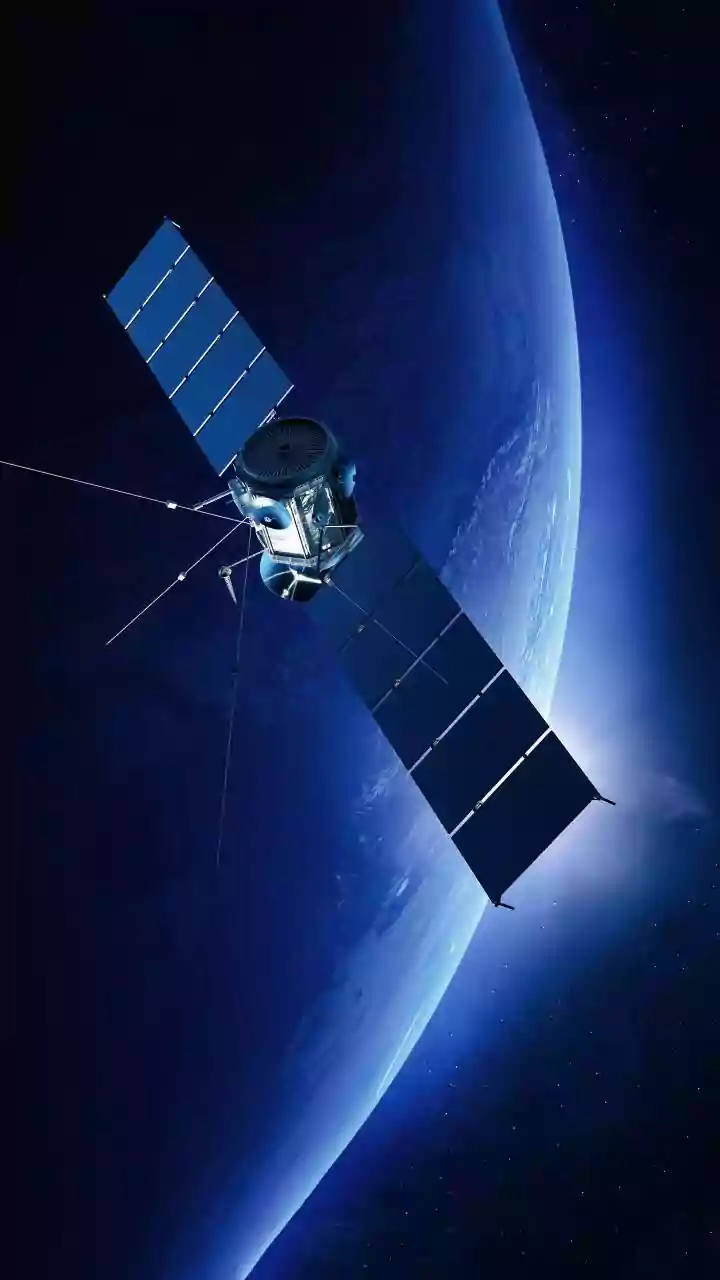
So, what exactly will an AI-powered Indian satellite do? The tasks range from enhancing efficiency to enabling entirely new capabilities. A primary function is on-board data processing. Instead of sending petabytes of raw data, an AI can analyze images directly in orbit, filtering out clouded or irrelevant pictures and only sending back actionable information. For security and defense, this means an AI-enabled satellite can autonomously detect changes along a border or spot suspicious activity without waiting for a human analyst. Another key task is autonomous navigation and health monitoring. AI systems can independently make course corrections, dodge space debris, and monitor the satellite's own systems for faults, potentially extending its operational lifespan. This was demonstrated in principle during the successful Chandrayaan-3 moon mission, where AI helped the lander identify hazards and navigate a safe touchdown. These same principles are now being applied to Earth-orbiting satellites.
Smarter Satellites for a Smarter Planet
The phrase "smarter missions" isn't just jargon; it translates to tangible benefits. For a country like India, which relies heavily on satellite data for agriculture, disaster management, and weather forecasting, the impact is enormous. An AI-powered satellite can deliver faster and more precise information, enabling quicker responses to cyclones or floods. In agriculture, it can analyze crop health with greater accuracy, providing insights for precision farming. ISRO plans to launch a fleet of around 50 new AI-powered satellites specifically to gather enhanced geo-intelligence. This move is not just about improving existing services. Private Indian startups are also entering the fray, with plans to launch orbital data centers that use AI to analyze everything from climate patterns to urban growth directly in space. This reduces reliance on ground infrastructure and speeds up the delivery of insights, transforming satellites from simple data collectors into in-orbit analytical engines.
India's Ascent in the Global Space Order
India has long been known for its cost-effective approach to space exploration, achieving remarkable feats like its Mars and Moon missions on budgets that are a fraction of NASA's. The pivot to AI represents a strategic move to transition from being a frugal space power to a technologically pioneering one. By developing these capabilities indigenously, India reduces its reliance on foreign technology and data, a crucial step toward self-sufficiency in an arena with significant national security implications. While space agencies worldwide are exploring AI, ISRO's focused push, combined with a burgeoning private space-tech ecosystem in hubs like Bengaluru, positions India to become a leader in this next chapter of space technology. The development of AI-enabled systems for missions like Chandrayaan and the upcoming Gaganyaan human spaceflight program shows that this is a core part of the nation's long-term vision.